


Development of an early-warning system for high-risk patients for suicide attempt using deep learning and electronic health records
- PMID: 32080165
- PMCID: PMC7033212
- DOI: 10.1038/s41398-020-0684-2
Development of an early-warning system for high-risk patients for suicide attempt using deep learning and electronic health records
Abstract
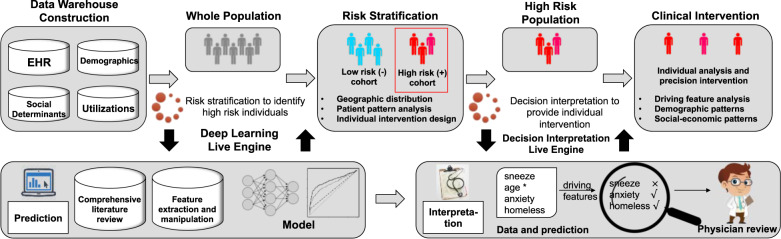
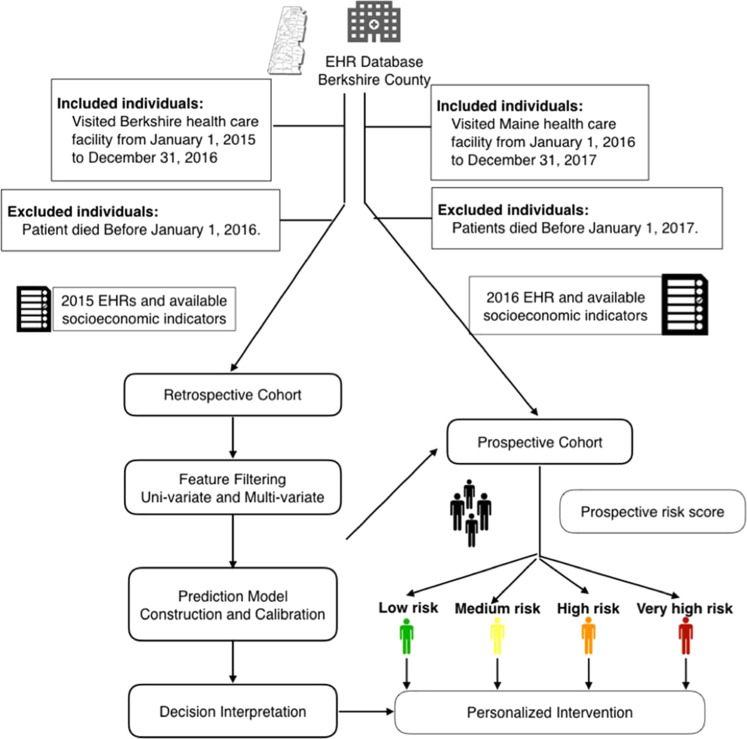
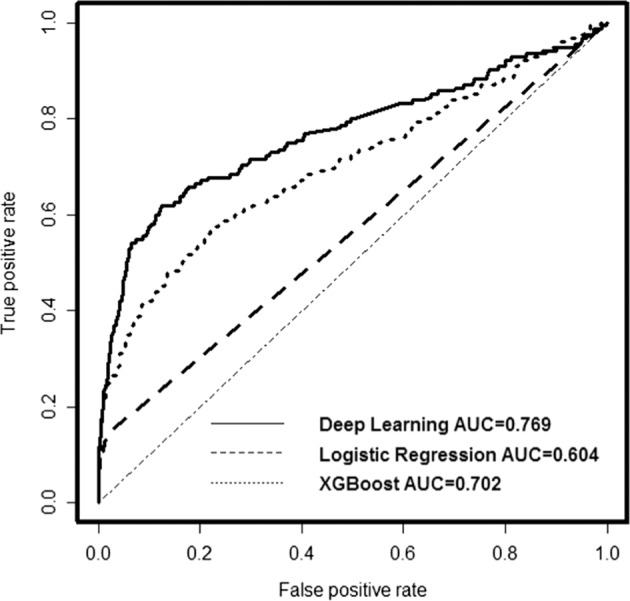
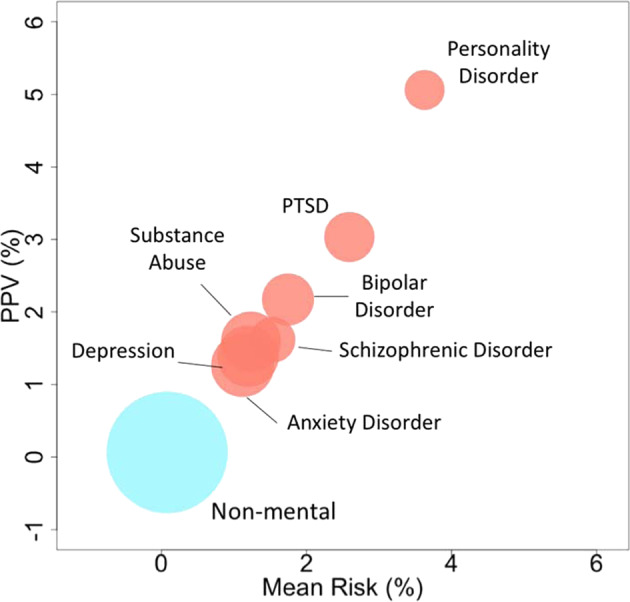
Suicide is the tenth leading cause of death in the United States (US). An early-warning system (EWS) for suicide attempt could prove valuable for identifying those at risk of suicide attempts, and analyzing the contribution of repeated attempts to the risk of eventual death by suicide. In this study we sought to develop an EWS for high-risk suicide attempt patients through the development of a population-based risk stratification surveillance system. Advanced machine-learning algorithms and deep neural networks were utilized to build models with the data from electronic health records (EHRs). A final risk score was calculated for each individual and calibrated to indicate the probability of a suicide attempt in the following 1-year time period. Risk scores were subjected to individual-level analysis in order to aid in the interpretation of the results for health-care providers managing the at-risk cohorts. The 1-year suicide attempt risk model attained an area under the curve (AUC ROC) of 0.792 and 0.769 in the retrospective and prospective cohorts, respectively. The suicide attempt rate in the "very high risk" category was 60 times greater than the population baseline when tested in the prospective cohorts. Mental health disorders including depression, bipolar disorders and anxiety, along with substance abuse, impulse control disorders, clinical utilization indicators, and socioeconomic determinants were recognized as significant features associated with incident suicide attempt.
Conflict of interest statement
K.G.S., E.W. and X.B.L. are co-founders and equity holders of HBI Solutions, Inc., which is currently developing predictive analytics solutions for health-care organizations. The research and research results are not, in any way, associated with Stanford University. There are no patents, further products in development or marketed products to declare. This does not alter our adherence to all the journal policies on sharing data and materials, as detailed online in the guide for authors.
Figures

References
-
- Murphy SL, Xu J, Kochanek KD, Curtin SC, Arias E. Deaths: final data for 2015. Natl. Vital-. Stat. Rep. 2017;66:75. - PubMed
-
- National Institute of Mental Health. Suicide is a leading cause of death in the United States. https://www.nimh.nih.gov/health/statistics/suicide/index.shtml (2017).
-
- Crosby AE, Han Beth, Ortega LaVonneAG, Parks SharynE, Gfroerer Joseph. Suicidal thoughts and behaviors among adults aged ≥18 years—United States, 2008−2009. Surveill. Summaries. 2011;60(SS13):1–22. - PubMed
-
- American Foundation of Suicide Prevention. Suicide statistics. https://afsp.org/about-suicide/suicide-statistics/ (2016).
MeSH terms
LinkOut - more resources
Full Text Sources
