


Association of peripheral artery disease with life-space mobility restriction and mortality in community-dwelling older adults
- PMID: 32081483
- PMCID: PMC7608545
- DOI: 10.1016/j.jvs.2019.08.276
Association of peripheral artery disease with life-space mobility restriction and mortality in community-dwelling older adults
Abstract
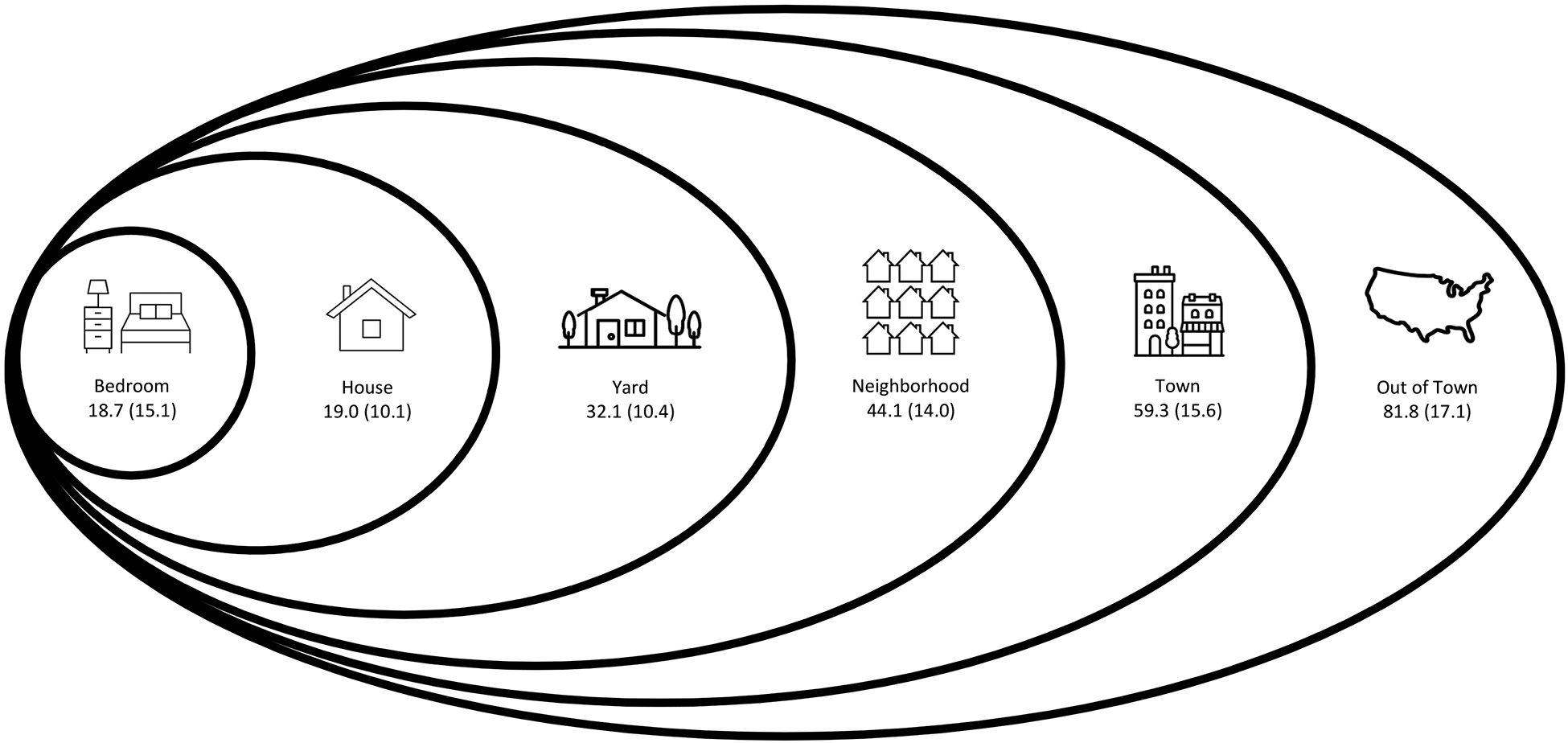
Objective: Symptomatic peripheral artery disease (PAD) impairs walking, but data on the impact of PAD on community mobility is limited. Life-space mobility measures the distance, frequency, and assistance needed as older adults move through geographic areas extending from their bedroom (life-space mobility score: 0) to beyond their town (life-space mobility score: 120). We evaluated the association of PAD with longitudinal life-space mobility trajectory.
Methods: Participants were part of the University of Alabama at Birmingham Study of Aging, a longitudinal study of community-dwelling older adults who were observed from 2001 to 2009. We limited our analysis to those who survived at least 6 months (N = 981). PAD was based on self-report with verification by physician report and hospital records. Our primary outcome was life-space mobility score assessed every 6 months. A multilevel change model (mixed model) was used to determine the association between PAD and life-space mobility trajectory during a median 7.9 years of follow-up.
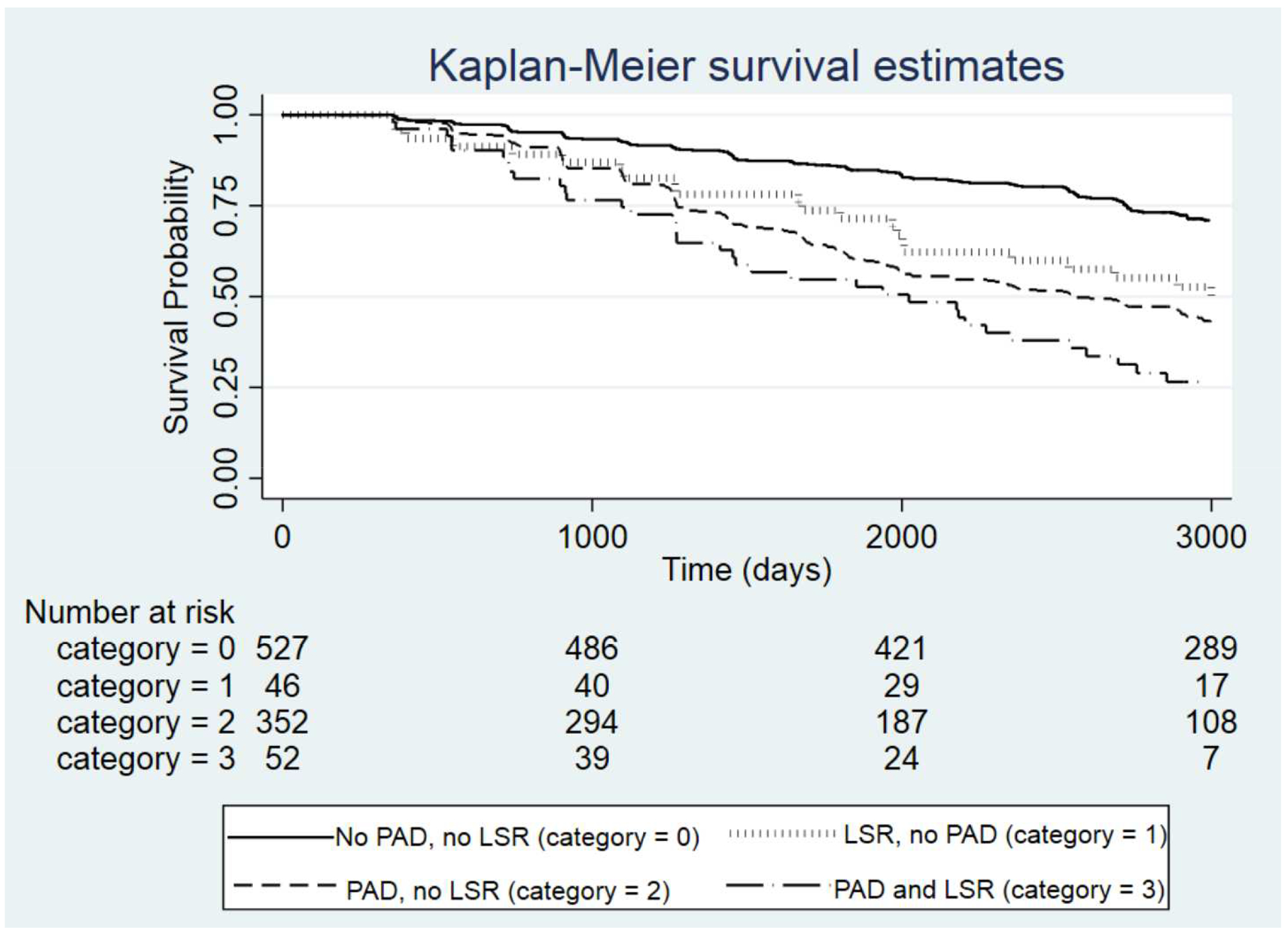
Results: Participants had a mean age of 75.7 (standard deviation, 6.7) years; 50.5% were female, and 50.4% were African American. PAD prevalence was 10.1%, and 57.1% of participants with PAD died. In participants with both PAD and life-space restriction, defined as life-space mobility score <60, we observed the highest mortality (73.1%). In a multivariable adjusted mixed effects model, participants with PAD had a more rapid decline in life-space mobility by -1.1 (95% confidence interval [CI], -1.9 to -0.24) points per year compared with those without PAD. At 5-year follow-up, model-adjusted mean life-space mobility was 48.1 (95% CI, 43.5-52.7) and 52.4 (95% CI, 50.9-53.8) among those with and without PAD, respectively, corresponding to a restriction in independent life-space mobility at the level of one's neighborhood.
Conclusions: Life-space mobility is a novel patient-centered measure of community mobility, and PAD is associated with significant life-space mobility decline among community-dwelling older adults. Further study is needed to mechanistically confirm these findings and to determine whether better recognition and treatment of PAD alter the trajectory of life-space mobility.
Keywords: Life-space mobility; Mortality; Peripheral artery disease.
Published by Elsevier Inc.
Figures

Comment in
-
Doctor meets world.J Vasc Surg. 2020 Jun;71(6):2107. doi: 10.1016/j.jvs.2019.09.031. J Vasc Surg. 2020. PMID: 32446514 No abstract available.
References
-
- Allison MA, Ho E, Denenberg JO, Langer RD, Newman AB, Fabsitz RR, et al. Ethnic-specific prevalence of peripheral arterial disease in the United States. Am J Prev Med. 2007;32(4):328–33. - PubMed
-
- Criqui MH, Aboyans V. Epidemiology of peripheral artery disease. Circ Res. 2015;116(9):1509–26. - PubMed
-
- McDermott MM, Liu K, Guralnik JM, Martin GJ, Criqui MH, Greenland P. Measurement of walking endurance and walking velocity with questionnaire: validation of the walking impairment questionnaire in men and women with peripheral arterial disease. J Vasc Surg. 1998;28(6):1072–81. - PubMed
-
- Myers SA, Johanning JM, Stergiou N, Lynch TG, Longo GM, Pipinos II. Claudication distances and the Walking Impairment Questionnaire best describe the ambulatory limitations in patients with symptomatic peripheral arterial disease. J Vasc Surg. 2008;47(3):550–5. - PubMed
-
- McDermott MM, Liu K, Greenland P, Guralnik JM, Criqui MH, Chan C, et al. Functional decline in peripheral arterial disease: associations with the ankle brachial index and leg symptoms. JAMA. 2004;292(4):453–61. - PubMed
Publication types
MeSH terms
Grants and funding
LinkOut - more resources
Full Text Sources
Medical
