. 2020 Apr:176:104749.
doi: 10.1016/j.antiviral.2020.104749. Epub 2020 Feb 17.

Antiviral activity of the natural alkaloid anisomycin against dengue and Zika viruses

Affiliations

Antiviral activity of the natural alkaloid anisomycin against dengue and Zika viruses

V M Quintana et al. Antiviral Res. 2020 Apr.

Abstract

Flaviviruses constitute a public health concern because of their global burden and the lack of specific antiviral treatment. Here we investigated the antiviral activity of the alkaloid anisomycin against dengue (DENV) and Zika (ZIKV) viruses. At non-cytotoxic concentrations, anisomycin strongly inhibited the replication of reference strains and clinical isolates of all DENV serotypes and Asian and African strains of ZIKV in Vero cells. Anisomycin also prevented DENV and ZIKV multiplication in human cell lines. While initial steps of DENV and ZIKV replicative cycle were unaffected, a high inhibition of viral protein expression was demonstrated after treatment with anisomycin. DENV RNA synthesis was strongly reduced in anisomycin treated cultures, but the compound did not exert a direct inhibitory effect on 2' O-methyltransferase or RNA polymerase activities of DENV NS5 protein. Furthermore, anisomycin-mediated activation of p38 signaling was not related to the antiviral action of the compound. The evaluation of anisomycin efficacy in a mouse model of ZIKV morbidity and mortality revealed that animals treated with a low dose of anisomycin exhibited a significant reduction in viremia levels and died significantly later than the control group. This protective effect was lost at higher doses, though. In conclusion, anisomycin is a potent and selective in vitro inhibitor of DENV and ZIKV that impairs a post-entry step of viral replication; and a low-dose anisomycin treatment may provide some minimal benefit in a mouse model.

Keywords: Anisomycin; Antiviral; Dengue; Flavivirus; Zika; p38.


Figures

Figure 1:
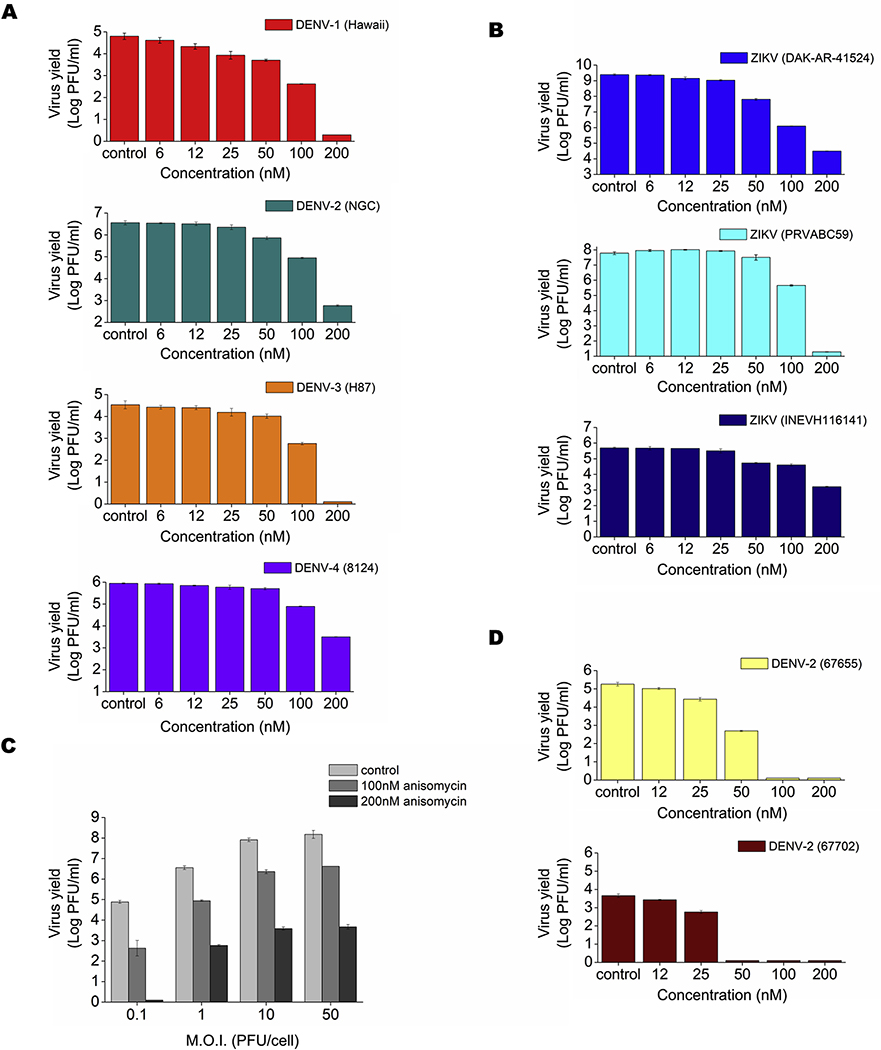
Figure 1:. Inhibitory effect of anisomycin against DENV and ZIKV multiplication in Vero cells.
Vero cells were infected with (A) DENV-1 (Hawaii), DENV-2 (NGC), DENV-3 (H87) or DENV-4 (8124) (MOI = 1), (B) ZIKV (strains DAK-AR-41524 or PRVABC59) or ZIKV clinical isolate (INEVH116141) (MOI = 1), (C) DENV-2 (NGC) at different MOIs and (D) DENV-2 clinical isolates (MOI=1). After 1h adsorption at 37°C, cells were incubated in MM containing different concentrations of anisomycin. At 48 h p.i. extracellular virus yield was quantified by plaque assay. Data are mean values from three independent experiments ± standard deviation (SD).
Figure 2:
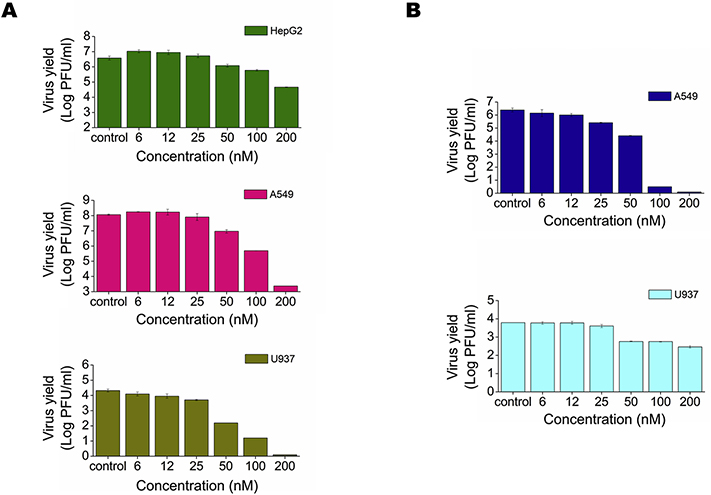
Figure 2:. Inhibitory effect of anisomycin against DENV and ZIKV multiplication in human cell lines.
(A) HepG2, A549 or U937 cells were infected with DENV-2 (MOI = 1) and (B) A549 or U937 cells were infected with ZIKV (PRVABC59) (MOI = 1). After 1 h adsorption at 37°C, cells were covered with MM containing different concentrations of anisomycin. At 48 h p.i. extracellular virus yield was quantified by plaque assay. Data are mean values from three independent experiments ± SD.
Figure 3:
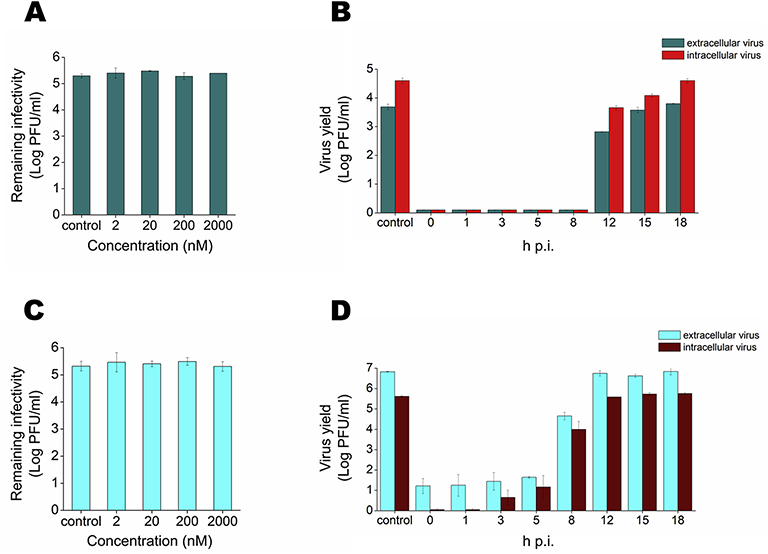
Figure 3:. Characterization of anisomycin antiviral effect.
(A) DENV-2 or (C) ZIKV were incubated with different concentrations of anisomycin for 2 h at 37°C and remaining infectivity was determined by plaque assay. Vero cells were infected with (B) DENV-2 or (D) ZIKV (MOI= 1) and anisomycin (200 nM) was added at different times p.i. At 24 h p.i. intracellular and extracellular virus yields were determined by plaque assay. Data are mean values from three independent experiments ± SD.
Figure 4:
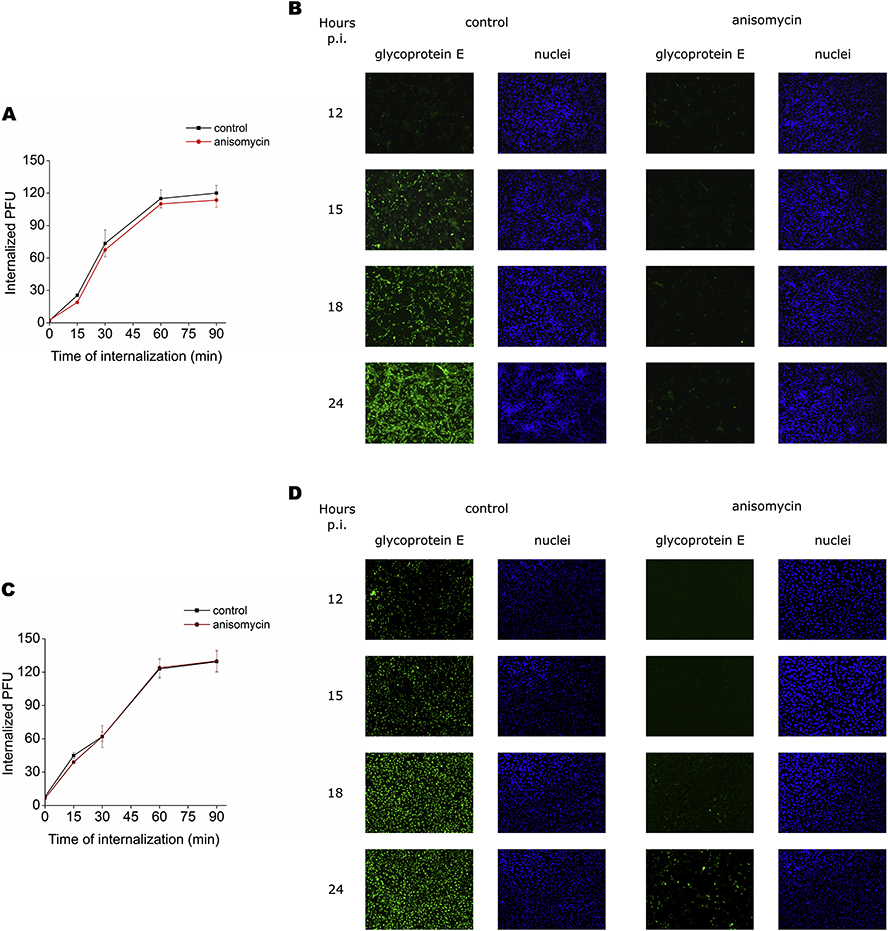
Figure 4:. Mode of anisomycin antiviral action.
Vero cells were exposed to 100 PFU of (A) DENV-2 or (C) ZIKV during 1 h at 4°C, then covered with MM in presence or absence of anisomycin (200 nM) and transferred to 37°C. At the indicated times, non-internalized virus was inactivated and internalized particles were determined by plaque assay. Data are mean values from three independent experiments ± SD. (B) DENV-2 or (D) ZIKV infected Vero cells (MOI= 1) were treated with anisomycin (200 nM) and at different times p.i., cells expressing viral E glycoprotein were detected by an immunofluorescence assay. Cell nuclei were stained with Hoechst. Magnification 100x.
Figure 5:
Figure 5:. Effect of anisomycin on DENV-2 macromolecular synthesis.
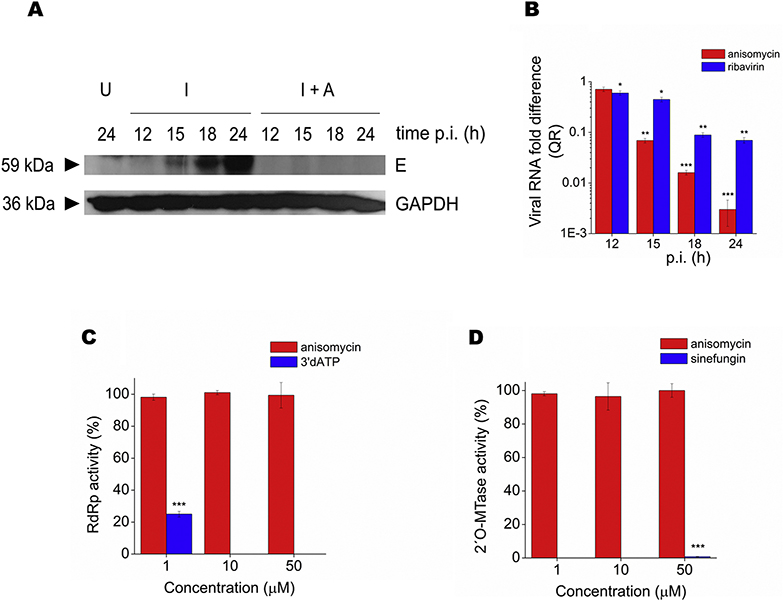
(A) DENV-2 infected Vero cells (MOI= 1) were treated with anisomycin (200 nM) and at different times p.i. E glycoprotein expression was analyzed by Western blot. U: uninfected cells; I: infected cells; I+A: infected cells treated with anisomycin. GAPDH was revealed as loading control. A representative experiment is shown. (B) DENV-2 infected Vero cells (MOI= 1) were treated with anisomycin (200 nM) or ribavirin (80 μM) and at different times p.i. total RNA was extracted and qRT-PCR was performed to determine the relative amount of viral RNA with respect to untreated infected cultures, using actin for normalization. Data are mean values from three independent experiments ± SD (***p <0.001, **p < 0.01, *p < 0.05). (C) Quantification of RdRp and (D) 2′O-MTase activities of DENV NS5 in presence of different concentrations of anisomycin. Compounds 3’dATP and sinefungin were used as reference inhibitors of RdRp and 2′O-MTase activities, respectively. Data, expressed as percentage of enzyme activity with respect to untreated control, are mean values from triplicates ± SD (***p <0.001).
Figure 6:
Figure 6:. Involvement of p38 activation on anisomycin antiviral activity.
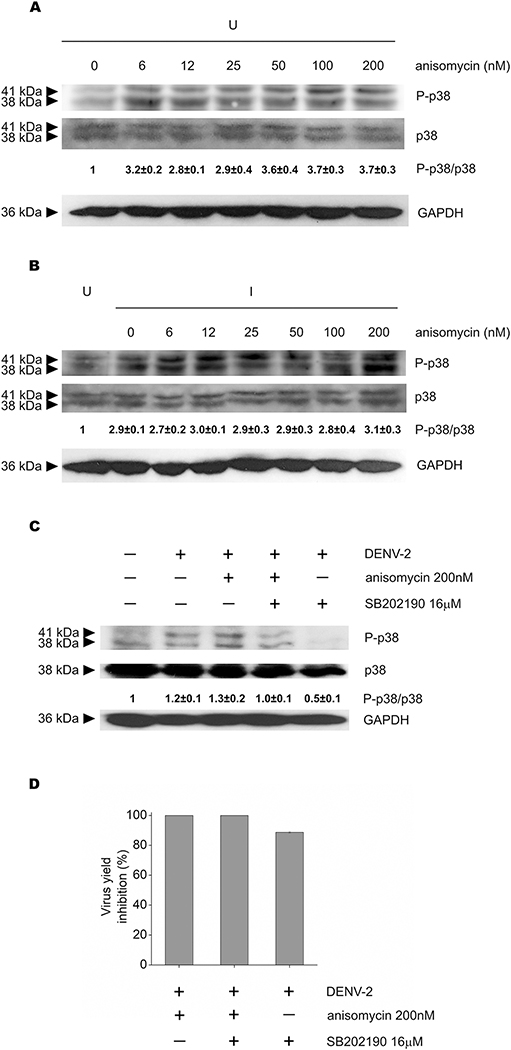
(A) Uninfected or (B) DENV-2 infected Vero cells were treated with different concentrations of anisomycin and p38 phosphorylation was analyzed by Western blot. The relative intensity of P-p38/p38 bands of each sample with respect to uninfected untreated cells is shown. GAPDH was revealed as loading control. U: uninfected cells, I: infected cells. (C and D) DENV-2 infected Vero cells untreated or treated with anisomycin (200 nM), SB202190 (16 μM) or a combination of both compounds were incubated for 24 h at 37°C. (C) p38 activation was analyzed by Western blot and the relative intensity of P-p38/p38 bands of each sample with respect to uninfected untreated cells is shown. GAPDH was used as loading control. (D) Viral yields were determined by plaque assay and results are expressed as percentage of inhibition in treated cells with respect to untreated infected cells. In (A), (B) (C) and (D) each value represents the mean ± SD of three independent experiments.
Figure 7:
Figure 7:. In vivo antiviral activity of anisomycin against ZIKV.
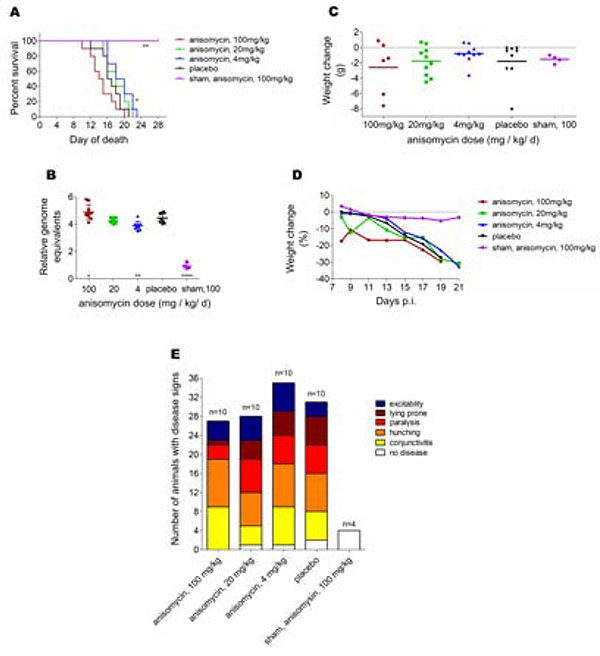
(A) Survival of AG129 mice after treatment with various doses of anisomycin administered for 10 days beginning 4 h after challenge with ZIKV (**p<0.01, *p<0.05). (B) Viral RNA obtained at 5dpi from serum of AG129 mice treated with various doses of anisomycin administered for 10 days beginning 4 h after challenge with ZIKV (**** p<0.0001, ** p<0.01, * p<0.05). (C) Weight change between 8 and 13 dpi, (D) time course weight change between 8 and 21 dpi and (E) disease signs of AG129 mice treated with various doses of anisomycin administered for 10 days beginning 4 h after challenge with ZIKV.

References

    1. Baud D, Gubler DJ, Schaub B, Lanteri MC, Musso D. An update on Zika virus infection. Lancet. 2017; 390(10107):2099–2109. - PubMed
    1. Benmansour F, Eydoux C, Querat G, de Lamballerie X, Canard B, Alvarez K, Guillemot JC, Novel Barral K. 2-phenyl-5-[(E)-2-(thiophen-2-yl)ethenyl]-1,3,4-oxadiazole and 3-phenyl-5-[(E)-2-(thiophen-2-yl)ethenyl]-1,2,4-oxadiazole derivatives as dengue virus inhibitors targeting NS5 polymerase. Eur J Med Chem. 2016; 109:146–56. - PubMed
    1. Brunetti JE, Foscaldi S, Quintana VM, Scolaro LA, López N, Castilla V. Role of the ERK1/2 Signaling Pathway in the Replication of Junín and Tacaribe Viruses. Viruses. 2018. April 17; 10(4). pii: E199. - PMC - PubMed
    1. Carpp LN, Rogers RS, Moritz RL, Aitchison JD. Quantitative proteomic analysis of host-virus interactions reveals a role for Golgi brefeldin A resistance factor 1 (GBF1) in dengue infection. Mol Cell Proteomics. 2014; 13(11):2836–54. - PMC - PubMed
    1. Ceballos-Olvera I, Chávez-Salinas S, Medina F, Ludert JE, del Angel RM. JNK phosphorylation, induced during dengue virus infection, is important for viral infection and requires the presence of cholesterol. Virology. 2010; 396(1):30–6. - PubMed

Publication types