Review
. 2020 Jan 31:8:32.
doi: 10.3389/fbioe.2020.00032. eCollection 2020.

A Review of Nanotechnology for Targeted Anti-schistosomal Therapy

Affiliations
Review

A Review of Nanotechnology for Targeted Anti-schistosomal Therapy

Tayo Alex Adekiya et al. Front Bioeng Biotechnol. .

Abstract

Schistosomiasis is one of the major parasitic diseases and second most prevalent among the group of neglected diseases. The prevalence of schistosomiasis may be due to environmental and socio-economic factors, as well as the unavailability of vaccines for schistosomiasis. To date, current treatment; mainly the drug praziquantel (PZQ), has not been effective in treating the early forms of schistosome species. The development of drug resistance has been documented in several regions globally, due to the overuse of PZQ, rate of parasitic mutation, poor treatment compliance, co-infection with different strains of schistosomes and the overall parasite load. Hence, exploring the schistosome tegument may be a potential focus for the design and development of targeted anti-schistosomal therapy, with higher bioavailability as molecular targets using nanotechnology. This review aims to provide a concise incursion on the use of various advance approaches to achieve targeted anti-schistosomal therapy, mainly through the use of nano-enabled drug delivery systems. It also assimilates the molecular structure and function of the schistosome tegument and highlights the potential molecular targets found on the tegument, for effective specific interaction with receptors for more efficacious anti-schistosomal therapy.

Keywords: antibody; aptamers; drug delivery; molecular receptors; nanoparticles; schistosomiasis; targeted agents.


Figures

FIGURE 1
FIGURE 1
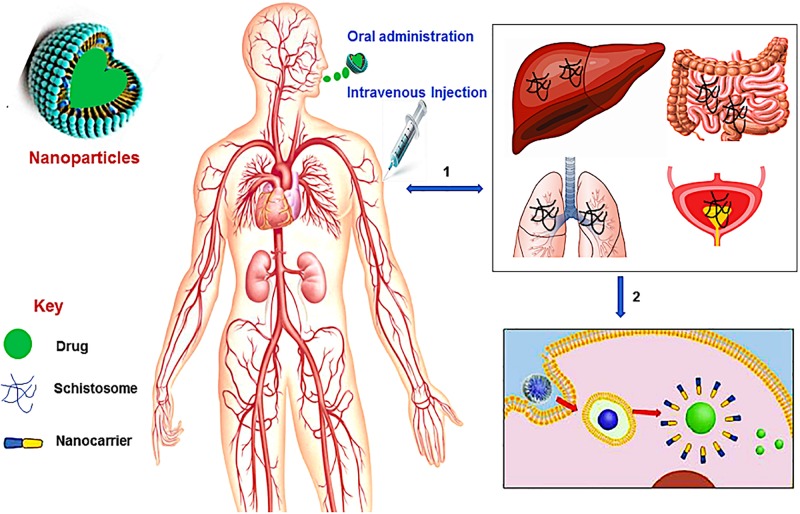
A schematic overview of nanotechnology in schistosomiasis treatment. (1) The Schistosoma parasites penetrates the human skin and enter the bloodstream where they travel via the blood vessels of the liver and lungs, and then to the vein around the intestines and bladder, (2) the administration (oral or intravenous injection) of nanotechnological-based drug leads to the disruption of the membrane (tegument) of the worms thereby releasing the drug to kill the worms.
FIGURE 2
FIGURE 2
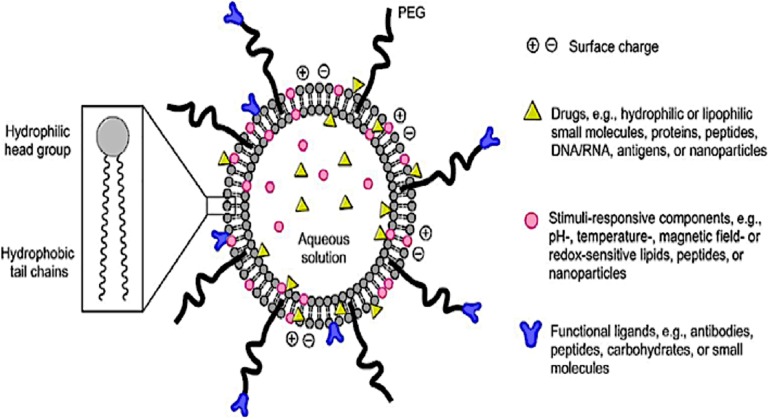
A schematic diagram of a smart lipid-based nanoparticles system as a nano-enabled drug delivery platform (reprinted with permission from Li and Takeoka, 2018).
FIGURE 3
FIGURE 3
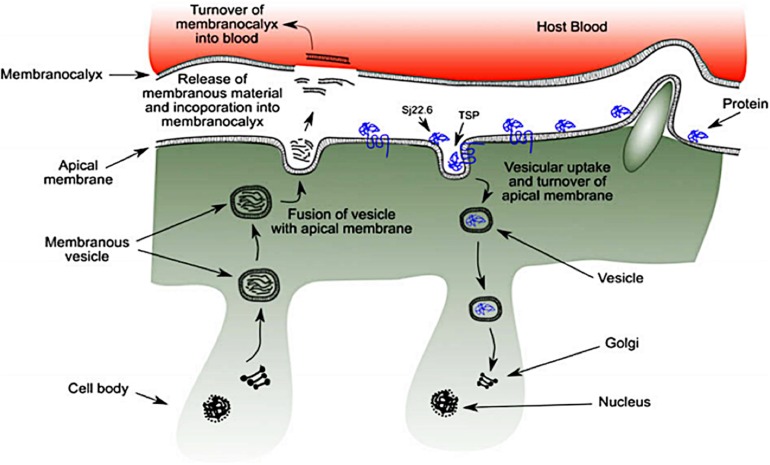
Schematic diagram of schistosome tegument structure with several organelles and the position of targeted proteins (as seen in blue) (reprinted with permission from Mulvenna et al., 2010).
FIGURE 4
FIGURE 4
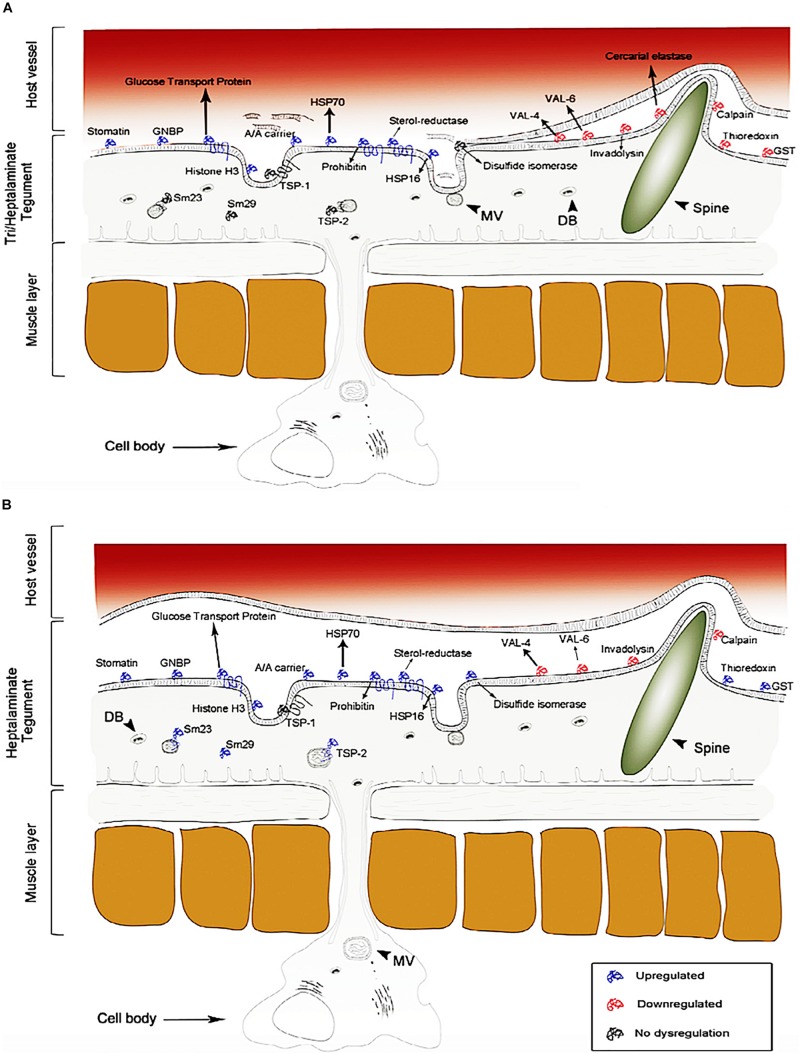
Proteome identification of upregulated, downregulated and no dysregulation proteins found on the tegument of S. mansoni (schistosomula). The dysregulation of these proteins changes over time. (A) 3 h of infection and (B) 5 days of infection (reprinted with permission from Sotillo et al., 2015).
FIGURE 5
FIGURE 5
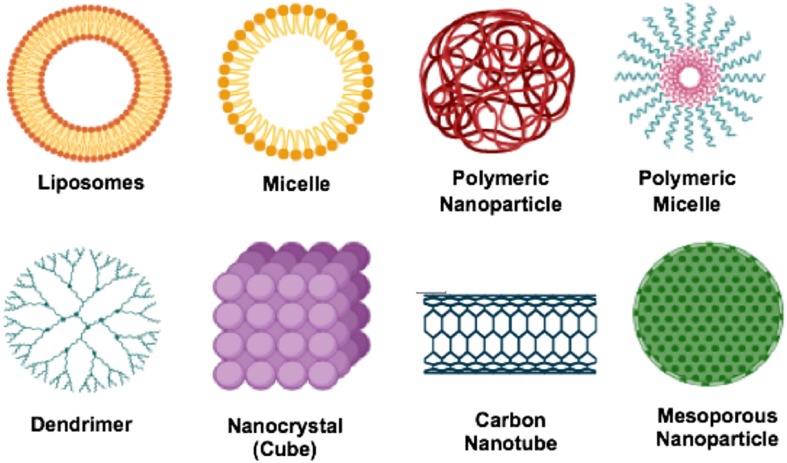
Types of nanocarriers for drug delivery.
FIGURE 6
FIGURE 6
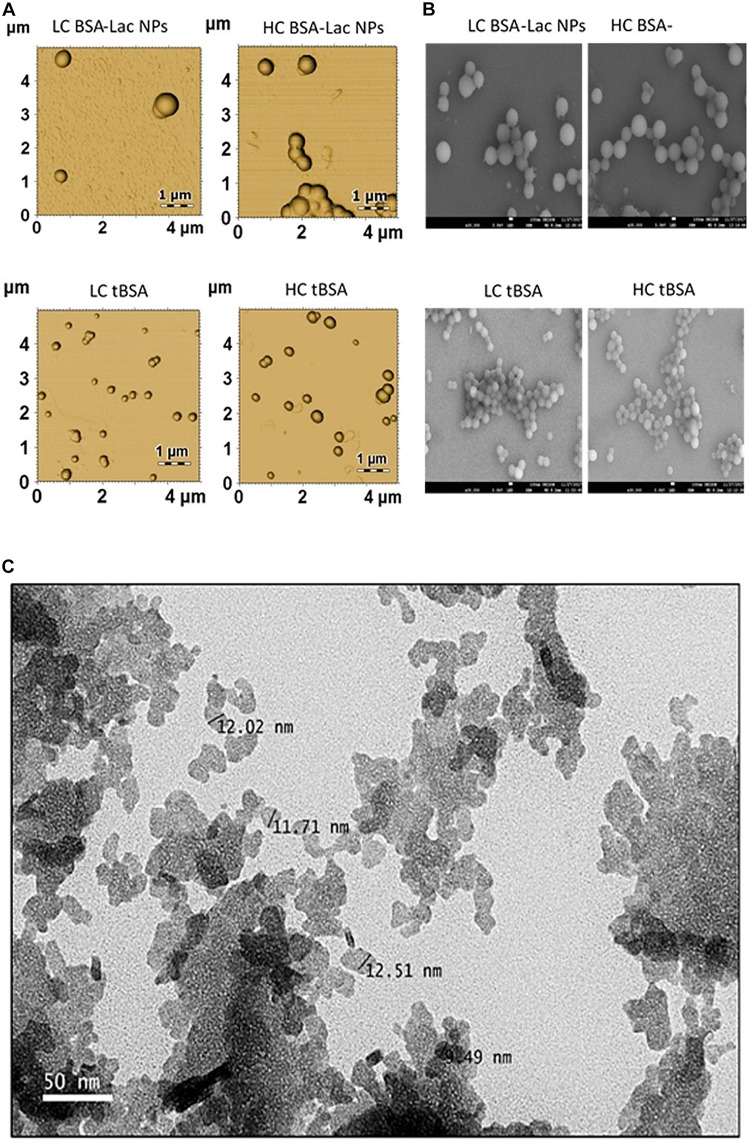
Morphology of HC and LC BSA-Lac and tBSA NPs (A) atomic force microscopy (AFM) and (B) Scanning electron microscopy (SEM). (C) Transmission electron microscopy (TEM) image of Citral-loaded self nano-emulsifying drug delivery system (CIT-SNEDDS). Adapted from Izham et al. (2019) and Teran-Saavedra et al. (2019).
FIGURE 7
FIGURE 7
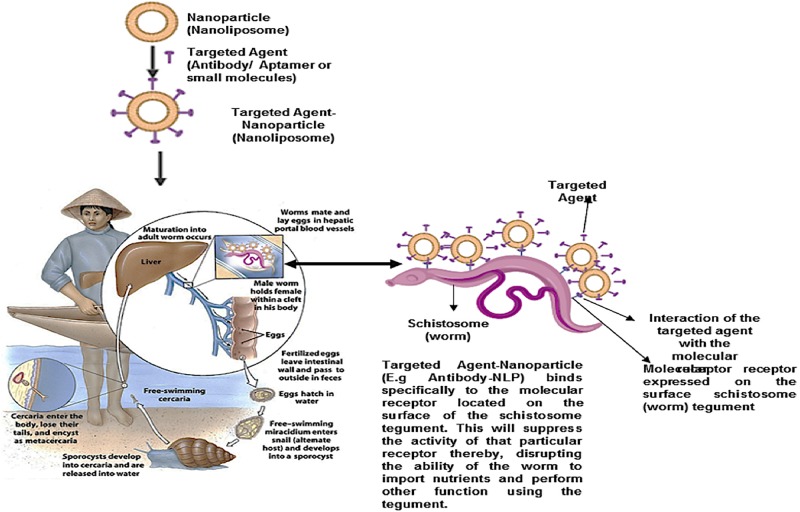
Proposed schematic for nanoparticle (nanoliposome) surface engineered (functionalized) with targeted agents (Antibodies, aptamers, antibody-like ligands or small molecules). This targeted nanoparticle localized/detected as molecular receptors, located within the exterior of the schistosome tegument, and specifically binds to it. Thus, suppressing the activity of the receptor, as well as disrupt the ability of the worm to import nutrients from the host, and perform other activities.

References

    1. Abruzzi A., Fried B. (2011). Coinfection of Schistosoma (Trematoda) with bacteria, protozoa and helminths. Adv. Parasitol. 77 1–85. 10.1016/B978-0-12-391429-3.00005-8 - DOI - PubMed
    1. Adekiya T. A., Kappo A. P., Okosun K. O. (2017). Temperature and rainfall impact on schistosomiasis. Glob. J. Pure Appl. Math. 13 8453–8469.
    1. Ahlschwede K. M., Curran G. L., Rosenberg J. T., Grant S. C., Sarkar G., Jenkins R. B., et al. (2019). Cationic carrier peptide enhances cerebrovascular targeting of nanoparticles in Alzheimer’s disease brain. Nanomed. Nanotechnol. Biol. Med. 16 258–266. 10.1016/j.nano.2018.09.010 - DOI - PubMed
    1. Ahmadpour E., Godrati-Azar Z., Spotin A., Norouzi R., Hamishehkar H., Nami S., et al. (2019). Nanostructured lipid carriers of ivermectin as a novel drug delivery system in hydatidosis. Parasit. Vectors 12 1–9. 10.1186/s13071-019-3719-x - DOI - PMC - PubMed
    1. Albuquerque E. X., Pereira E. F., Alkondon M., Rogers S. W. (2009). Mammalian nicotinic acetylcholine receptors: from structure to function. Physiol. Rev. 89 73–120. 10.1152/physrev.00015.2008 - DOI - PMC - PubMed

LinkOut - more resources