


Floods, Hurricanes, and Other Catastrophes: A Challenge for the Immune System of Livestock and Other Animals
- PMID: 32083100
- PMCID: PMC7004950
- DOI: 10.3389/fvets.2020.00016
Floods, Hurricanes, and Other Catastrophes: A Challenge for the Immune System of Livestock and Other Animals
Abstract
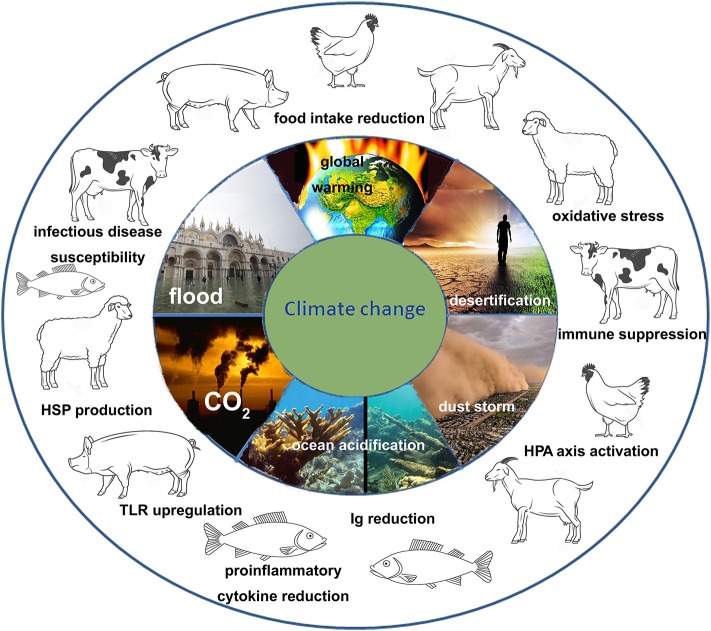
Climate change involves different dramatic phenomena including desertification and wildfires, severe storms such as hurricanes and blizzards, increased sea levels resulting in flooding coastal cities and rise of atmospheric CO2 concentration. The alteration of the climate in a specific region affects the life of indigenous animals and humans. The climate changes influence living beings both directly and indirectly. The immune system of animals dramatically suffers the climate instability, making animals more susceptible to infectious and not infectious diseases. Different species of livestock animals respond with similar mechanisms to global warming, but some of them are more susceptible depending on their age, metabolism, and genetic conditions. The selection and study of autochthonous species and breeds, more easily adapted to specific environmental conditions could be an interesting strategy to face livestock rearing in the future.
Keywords: climate change; global warming; immune system; inflammatory response; livestock.
Copyright © 2020 Filipe, Herrera, Curone, Vigo and Riva.
Figures
References
-
- NASA NOAA Analyses Reveal 2019 Second Warmest Year on Record. (2020). Available online at: https://www.nasa.gov/press-release/nasa-noaa-analyses-reveal-2019-second...
-
- Intergovernmental Panel on Climate Change (IPCC) Climate Change: Synthesis Report. (2007). 10.1017/CBO9780511546013 - DOI
-
- National Research Council (US) Subcommittee on Environmental Stress Effect of Environment on Nutrient Requirements of Domestic Animals. (1981). National Academies Press; (US: ). Retrieved from https://www.ncbi.nlm.nih.gov/books/NBK232338/ - PubMed
-
- Mount LE. The concept of thermal neutrality. Heat Loss Animals Man. (1974) 425–39. 10.1016/B978-0-408-70652-0.50027-5 - DOI
