


Postoperative anaemia might be a risk factor for postoperative delirium and prolonged hospital stay: A secondary analysis of a prospective cohort study
- PMID: 32084207
- PMCID: PMC7034819
- DOI: 10.1371/journal.pone.0229325
Postoperative anaemia might be a risk factor for postoperative delirium and prolonged hospital stay: A secondary analysis of a prospective cohort study
Abstract
Background: Postoperative anaemia is a frequent surgical complication and in contrast to preoperative anaemia has not been validated in relation to mortality, morbidity and its associated health economic effect. Postoperative anaemia can predispose postoperative delirium through impairment of cerebral oxygenation. The aim of this secondary analysis is to investigate the association of postoperative anaemia in accordance with the sex specific World Health Organization definition of anaemia to postoperative delirium and its impact on the duration of hospital stay.
Methods: A secondary analysis of the prospective multicentric observational CESARO-study was conducted. 800 adult patients undergoing elective surgery were enrolled from various operative disciplines across seven hospitals ranging from university hospitals, district general hospitals to specialist clinics of minimally invasive surgery in Germany. Patients were classified as anaemic according to the World Health Organization parameters, setting the haemoglobin level cut off below 12g/dl for females and below 13g/dl for males. Focus of the investigation were patients with acute anaemia. Patients with present preoperative anaemia or missing haemoglobin measurement were excluded from the sample set. Delirium screening was established postoperatively for at least 24 hours and up to three days, applying the validated Nursing Delirium Screening Scale.
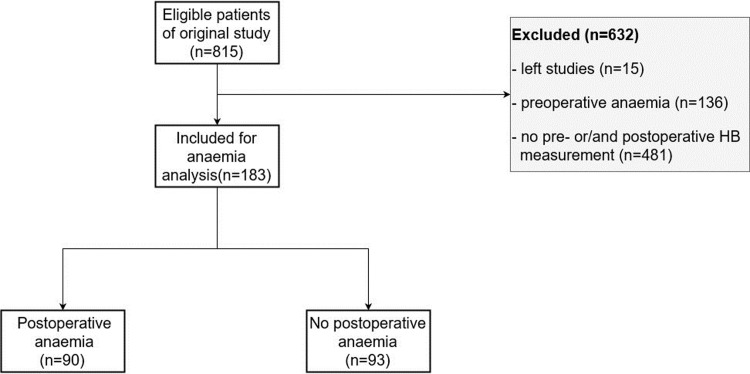
Results: The initial sample set contained 800 patients of which 183 were suitable for analysis in the study. Ninety out of 183 (49.2%) suffered from postoperative anaemia. Ten out of 93 (10.9%) patients without postoperative anaemia developed a postoperative delirium. In the group with postoperative anaemia, 28 (38.4%) out of 90 patients suffered from postoperative delirium (odds ratio 3.949, 95% confidence interval, (1.358-11.480)) after adjustment for NYHA-stadium, severity of surgery, cutting/suture time, duration of anaesthesia, transfusion of packed red cells and sedation status with Richmond Agitation Scale after surgery. Additionally, patients who suffered from postoperative anaemia showed a significantly longer duration of hospitalisation (7.75 vs. 12.42 days, odds ratio = 1.186, 95% confidence interval, 1.083-1.299, after adjustments).
Conclusion: The study results reveal that postoperative anaemia is not only a frequent postsurgical complication with an incidence probability of almost 50%, but could also be associated with a postoperative delirium and a prolonged hospitalisation.
Conflict of interest statement
The CESARO study group received funding from “Dr. Franz Köhler Chemie GmbH” (Bensheim, Germany). This does not alter our adherence to PLOS ONE policies on sharing data and materials.
References
-
- Organization WH. Nutritional anaemias: report of a WHO scientific group. Geneva. World Health Organization: technical report series; no. 405.: 1968. - PubMed
-
- Lasocki S, Krauspe R, von Heymann C, Mezzacasa A, Chainey S, Spahn DR. PREPARE: the prevalence of perioperative anaemia and need for patient blood management in elective orthopaedic surgery: a multicentre, observational study. Eur J Anaesthesiol. 2015;32(3):160–7. Epub 2015/01/08. 10.1097/EJA.0000000000000202 . - DOI - PubMed
Publication types
MeSH terms
LinkOut - more resources
Full Text Sources
Medical
