


Activation of Preoptic GABAergic or Glutamatergic Neurons Modulates Sleep-Wake Architecture, but Not Anesthetic State Transitions
- PMID: 32084397
- PMCID: PMC7156032
- DOI: 10.1016/j.cub.2019.12.063
Activation of Preoptic GABAergic or Glutamatergic Neurons Modulates Sleep-Wake Architecture, but Not Anesthetic State Transitions
Abstract
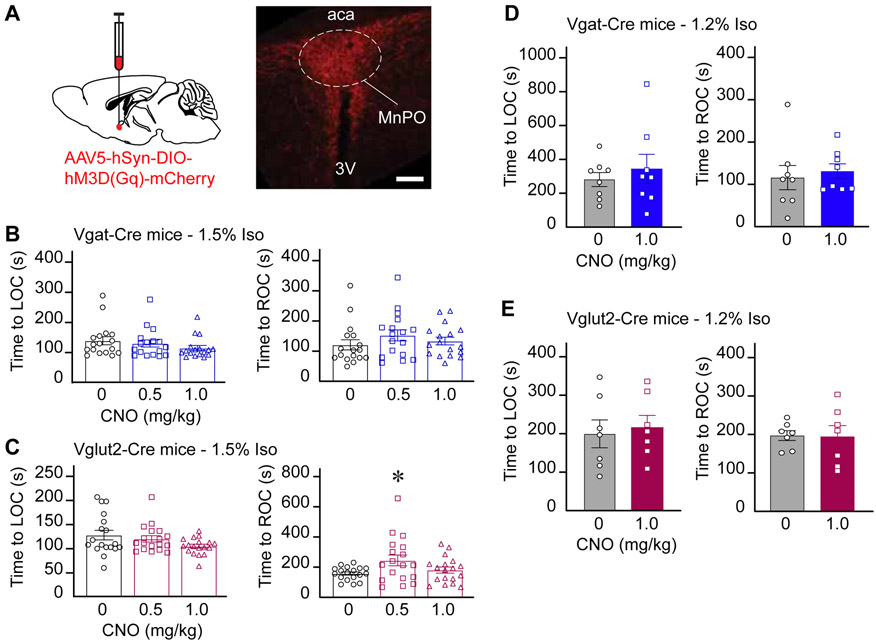
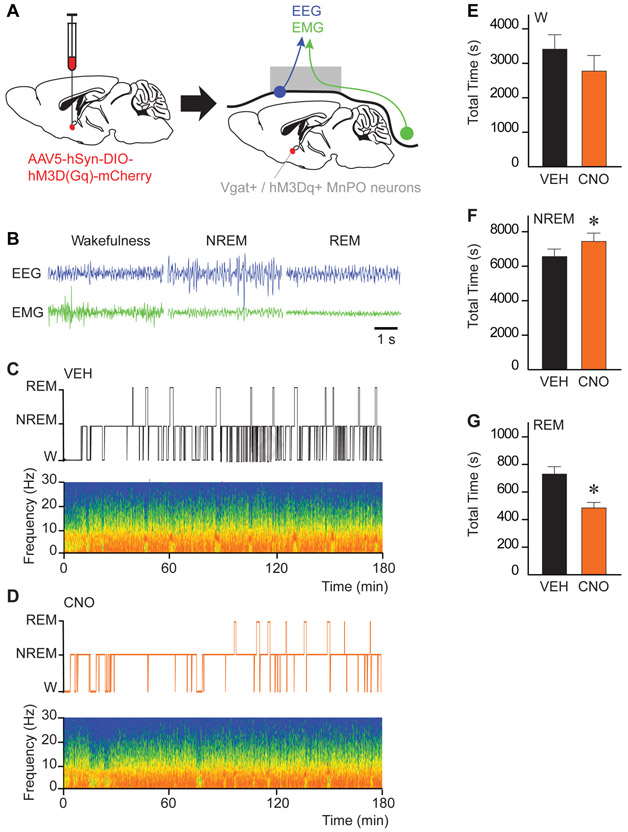
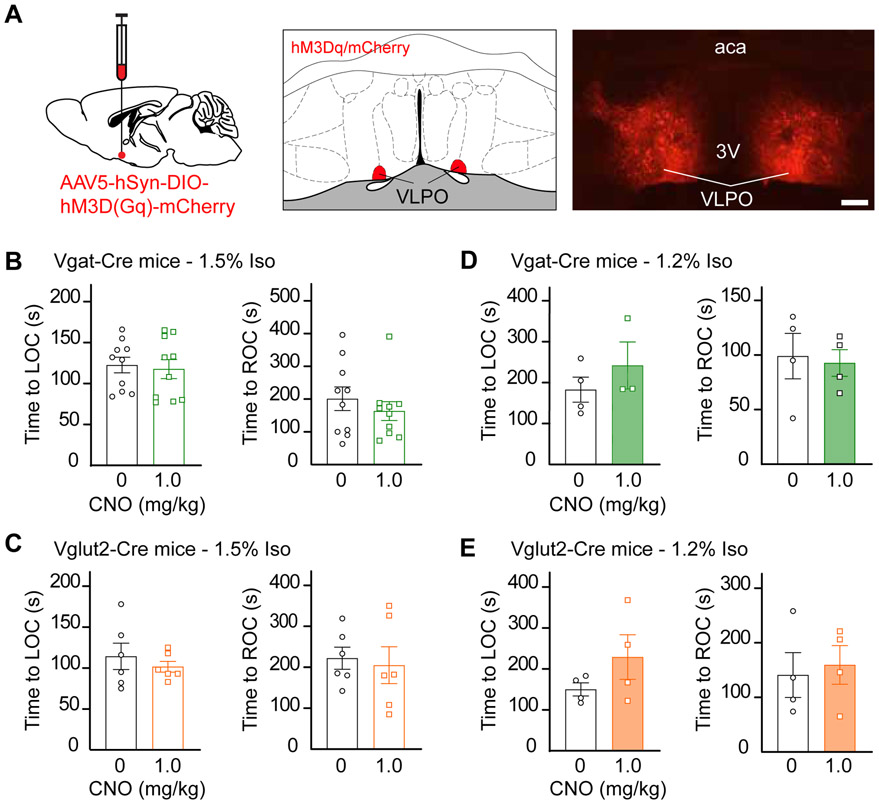
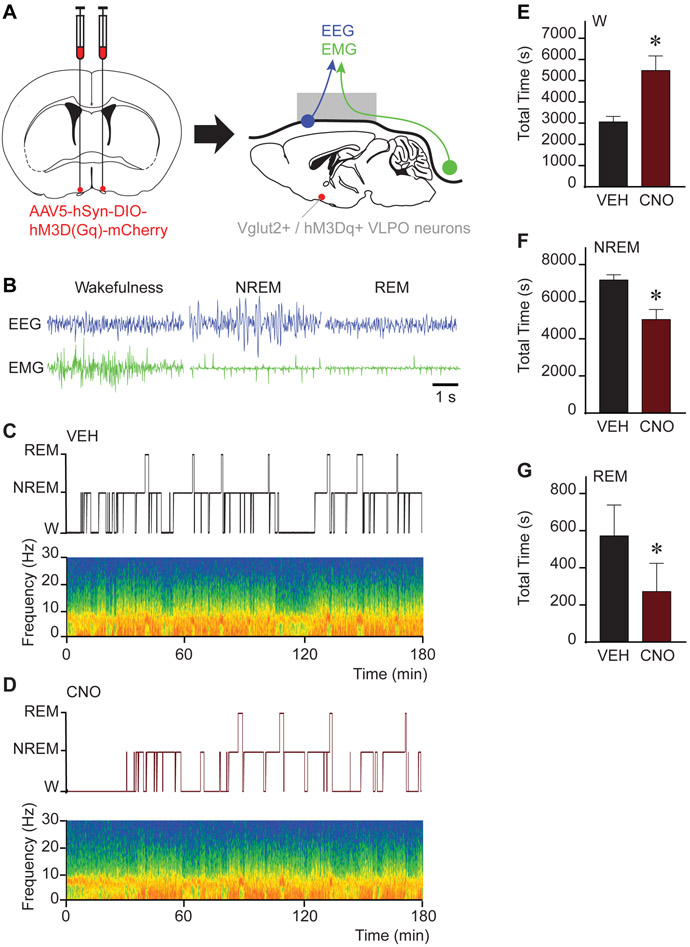
The precise mechanism of general anesthesia remains unclear. In the last two decades, there has been considerable focus on the hypothesis that anesthetics co-opt the neural mechanisms regulating sleep. This hypothesis is supported by ample correlative evidence at the level of sleep-promoting nuclei, but causal investigations of potent inhaled anesthetics have not been conducted. Here, we tested the hypothesis that chemogenetic activation of discrete neuronal subpopulations within the median preoptic nucleus (MnPO) and ventrolateral preoptic nucleus (VLPO) of the hypothalamus would modulate sleep/wake states and alter the time to loss and resumption of consciousness associated with isoflurane, a potent halogenated ether in common clinical use. We show that activating MnPO/VLPO GABAergic or glutamatergic neurons does not alter anesthetic induction or recovery time. However, activation of these neuronal subpopulations did alter sleep-wake architecture. Notably, we report the novel finding that stimulation of VLPO glutamatergic neurons causes a strong increase in wakefulness. We conclude that activation of preoptic GABAergic or glutamatergic neurons that increase sleep or wakefulness does not substantively influence anesthetic state transitions. These data indicate that the correlative evidence for a mechanistic overlap of sleep and anesthesia at the level of an individual nucleus might not necessarily have strong causal significance.
Keywords: DREADD; arousal; consciousness; general anesthesia; isoflurane; sleep; wakefulness.
Copyright © 2020 The Authors. Published by Elsevier Inc. All rights reserved.
Conflict of interest statement
Declaration of Interests The authors declare no competing interests.
Figures
Comment in
-
Sleep and Anesthesia: The Shared Circuit Hypothesis Has Been Put to Bed.Curr Biol. 2020 Mar 9;30(5):R219-R221. doi: 10.1016/j.cub.2020.01.057. Curr Biol. 2020. PMID: 32155424
References
-
- Lydic R, and Biebuyck JF (1994). Sleep neurobiology: relevance for mechanistic studies of anaesthesia. Br J Anaesth 72, 506–508. - PubMed
-
- Nelson LE, Guo TZ, Lu J, Saper CB, Franks NP, and Maze M (2002). The sedative component of anesthesia is mediated by GABA(A) receptors in an endogenous sleep pathway. Nat Neurosci 5, 979–984. - PubMed
-
- Tung A, Bluhm B, and Mendelson WB (2001). The hypnotic effect of propofol in the medial preoptic area of the rat. Life Sci 69, 855–862. - PubMed
Publication types
MeSH terms
Substances
Grants and funding
LinkOut - more resources
Full Text Sources
Molecular Biology Databases
Research Materials
