


Mitochondrial DNA Repair in an Arabidopsis thaliana Uracil N-Glycosylase Mutant
- PMID: 32085412
- PMCID: PMC7076443
- DOI: 10.3390/plants9020261
Mitochondrial DNA Repair in an Arabidopsis thaliana Uracil N-Glycosylase Mutant
Abstract
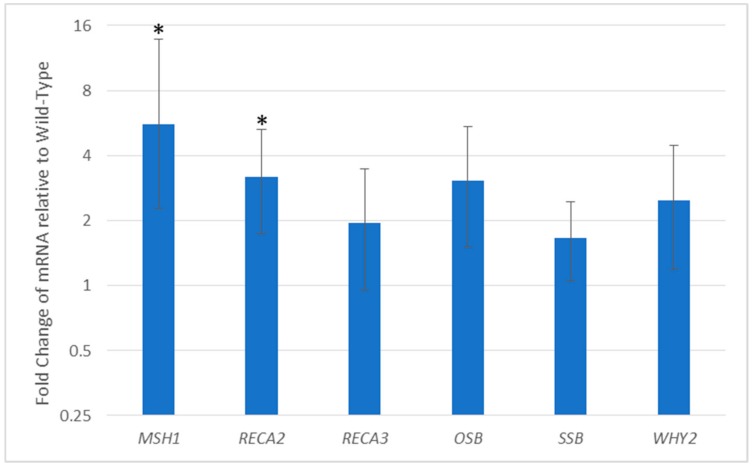
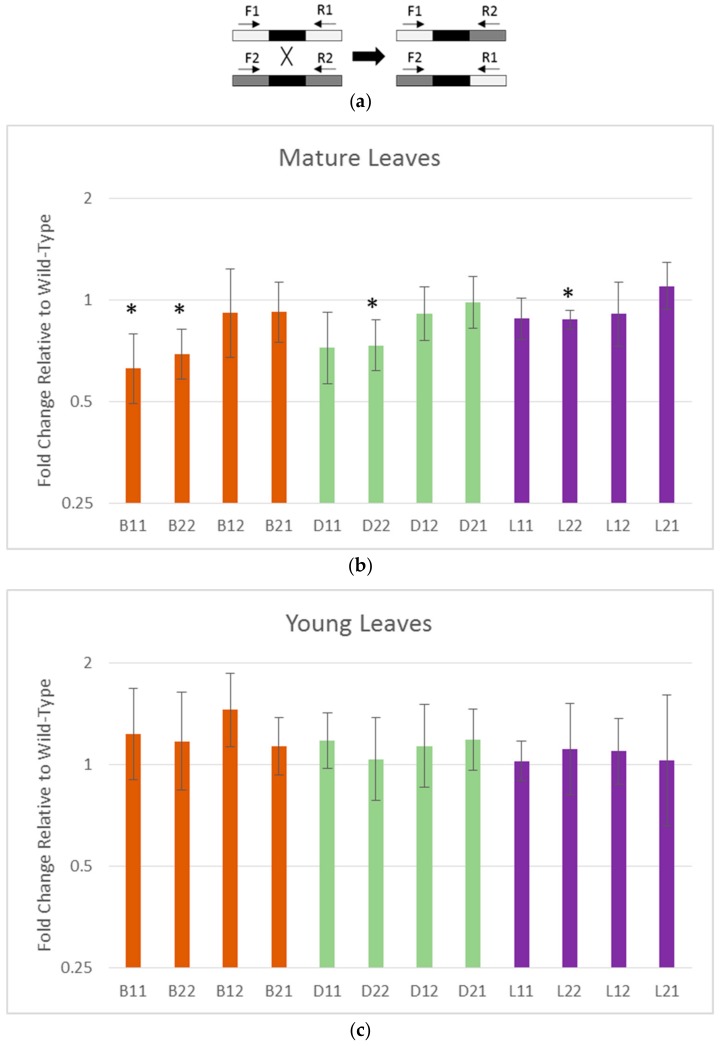
Substitution rates in plant mitochondrial genes are extremely low, indicating strong selective pressure as well as efficient repair. Plant mitochondria possess base excision repair pathways; however, many repair pathways such as nucleotide excision repair and mismatch repair appear to be absent. In the absence of these pathways, many DNA lesions must be repaired by a different mechanism. To test the hypothesis that double-strand break repair (DSBR) is that mechanism, we maintained independent self-crossing lineages of plants deficient in uracil-N-glycosylase (UNG) for 11 generations to determine the repair outcomes when that pathway is missing. Surprisingly, no single nucleotide polymorphisms (SNPs) were fixed in any line in generation 11. The pattern of heteroplasmic SNPs was also unaltered through 11 generations. When the rate of cytosine deamination was increased by mitochondrial expression of the cytosine deaminase APOBEC3G, there was an increase in heteroplasmic SNPs but only in mature leaves. Clearly, DNA maintenance in reproductive meristem mitochondria is very effective in the absence of UNG while mitochondrial genomes in differentiated tissue are maintained through a different mechanism or not at all. Several genes involved in DSBR are upregulated in the absence of UNG, indicating that double-strand break repair is a general system of repair in plant mitochondria. It is important to note that the developmental stage of tissues is critically important for these types of experiments.
Keywords: DNA repair; double-strand break repair; mitochondria; uracil-N-glycosylase.
Conflict of interest statement
The authors declare no conflict of interest.
Figures
References
-
- Richardson A.O., Rice D.W., Young G.J., Alverson A.J., Palmer J.D. The “fossilized” mitochondrial genome of Liriodendron tulipifera: Ancestral gene content and order, ancestral editing sites, and extraordinarily low mutation rate. BMC Biol. 2013;11:29. doi: 10.1186/1741-7007-11-29. - DOI - PMC - PubMed
-
- Siekevitz P. Powerhouse of the cell. Sci. Am. 1957;197:131–144. doi: 10.1038/scientificamerican0757-131. - DOI
Grants and funding
LinkOut - more resources
Full Text Sources
Molecular Biology Databases
