


Development of rosuvastatin flexible lipid-based nanoparticles: promising nanocarriers for improving intestinal cells cytotoxicity
- PMID: 32085802
- PMCID: PMC7035742
- DOI: 10.1186/s40360-020-0393-8
Development of rosuvastatin flexible lipid-based nanoparticles: promising nanocarriers for improving intestinal cells cytotoxicity
Abstract
Background: Rosuvastatin (RSV) is a poorly water-soluble drug that has an absolute oral bioavailability of only 20%. The aim of this work was to prepare a positively charged chitosan coated flexible lipid-based vesicles (chitosomes) and compare their characteristics to the corresponding negatively charged flexible liposomal nanoparticles (NPs) in order to develop new RSV nanocarrier systems.
Methods: Three formulation factors affecting the development of chitosomes nano-formulation were optimized for their effects on the particles size, entrapment efficiency (EE) and zeta potential. The optimized flexible chitosomes and their corresponding liposomal NPs were characterized for morphology, in vitro release, flexibility and intestinal cell viability. The half maximum inhibitory concentrations (IC50) for both formulations were calculated.
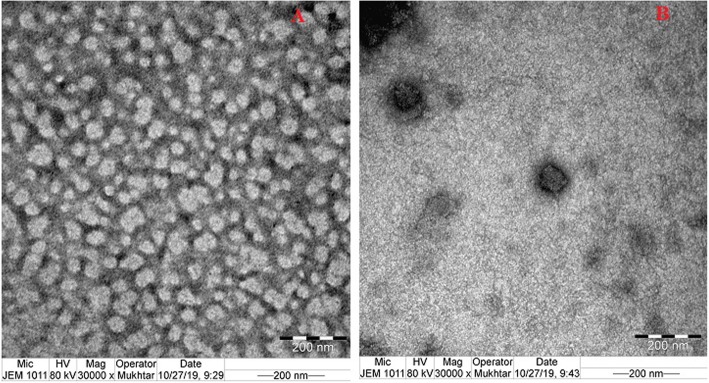
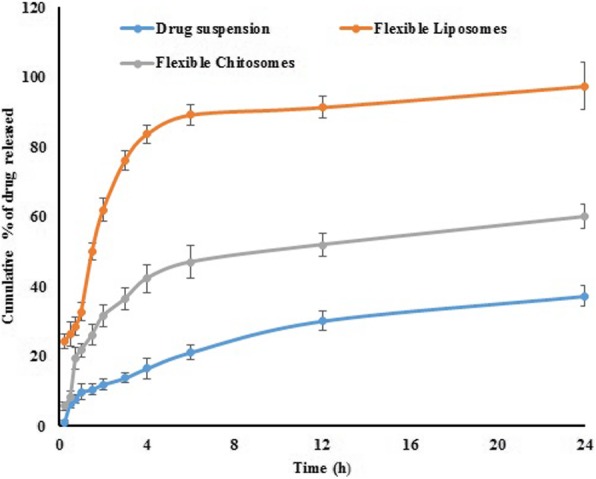
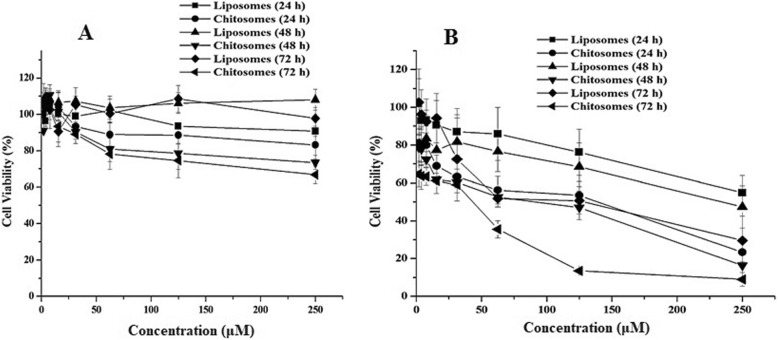
Results: The drug to lipid molar ratio, edge activator percent and the chitosan concentration were significantly affecting the characteristics of NPs. The optimized chitosomes nano-formulation exhibited larger size, higher EE and greater zeta potential value when compared to the corresponding liposomal NPs. Both formulations showed a spherical shape nanostructure with a marked outer shell for the chitosomes nano-formulation. Chitosomes illustrated an extended drug release profile when compared with the corresponding liposomal NPs and the prepared drug suspension. Flexibility of both vesicles was confirmed with superiority of liposomal NPs over chitosomes. RSV loaded chitosomes nano-formulation exhibited lower IC50 values and higher therapeutic window while liposomal NPs were compatible with the intestinal cells.
Conclusions: RSV loaded chitosomes nano-formulation could be considered as a promising nanocarrier system with a marked cytotoxic activity while, RSV loaded liposomal NPs are suitable nanocarrier to improve RSV activity in treatment of cardiovascular disorders.
Keywords: Chitosomes; Cytotoxicity; Liposomes; Optimization; Rosuvastatin; cell viability.
Conflict of interest statement
Rosuvastatin (RSV) was obtained as a gift from the Saudi Arabian Japanese Pharmaceuticals Co. Ltd. (SAJA) (Jeddah, KSA).
Figures

References
-
- Ahmed TA, El-Say KM, Aljaeid BM, Fahmy UA, Abd-Allah FI. Transdermal glimepiride delivery system based on optimized ethosomal nano-vesicles: Preparation, characterization, in vitro, ex vivo and clinical evaluation. Int J Pharm [Internet] Elsevier B V. 2016;500(1–2):245–254. - PubMed
-
- Alomrani A, Badran M, Harisa GI, ALshehry M, Alhariri M, Alshamsan A, et al. The use of chitosan-coated flexible liposomes as a remarkable carrier to enhance the antitumor efficacy of 5-fluorouracil against colorectal cancer. Saudi Pharm J. 2019;27(5):603–611. doi: 10.1016/j.jsps.2019.02.008. - DOI - PMC - PubMed
Publication types
MeSH terms
Substances
LinkOut - more resources
Full Text Sources
Other Literature Sources
Medical
