. 2020 Jun;51(2):467-487.
doi: 10.1007/s42770-020-00235-y. Epub 2020 Feb 21.

Inhibition of quorum sensing-associated virulence factors and biofilm formation in Pseudomonas aeruginosa PAO1 by Mycoleptodiscus indicus PUTY1

Affiliations

Inhibition of quorum sensing-associated virulence factors and biofilm formation in Pseudomonas aeruginosa PAO1 by Mycoleptodiscus indicus PUTY1

Tanveer Ahmed et al. Braz J Microbiol. 2020 Jun.

Abstract

Pseudomonas aeruginosa is the second most emerging multidrug-resistant, opportunistic pathogen after Acinetobacter baumannii that poses a threat in nursing homes, hospitals, and patients who need devices such as ventilators and blood catheters. Its ability to form quorum sensing-regulated virulence factors and biofilm makes it more resistant to top most therapeutic agents such as carbapenems and next-generation antibiotics. In the current study, we studied the quorum quenching potential of secondary metabolites of Mycoleptodiscus indicus PUTY1 strain. In vitro observation showed a mitigation in virulence factors such as rhamnolipids, protease, elastase pyocyanin, exopolysaccharides, and hydrogen cyanide gas. Furthermore, a significant reduction in the motility such as swimming, swarming, twitching, and inhibition in biofilm formation by Pseudomonas aeruginosa PAO1 was observed. Results of in vitro studies were further confirmed by in silico studies through docking and molecular dynamic simulation of GC-MS-detected compounds of Mycoleptodiscus indicus employing LasR and RhlR proteins. Both in vitro and in silico observations indicate a new alternative approach for combating virulence of Pseudomonas aeruginosa by targeting its protein receptors LasR and RhlR. Graphical abstract.

Keywords: Antibiotic resistance; Attenuation; Fungal secondary metabolites; Quorum quenching; Saprophytes.


Conflict of interest statement

The authors declare that they have no conflict of interest.

Figures
None
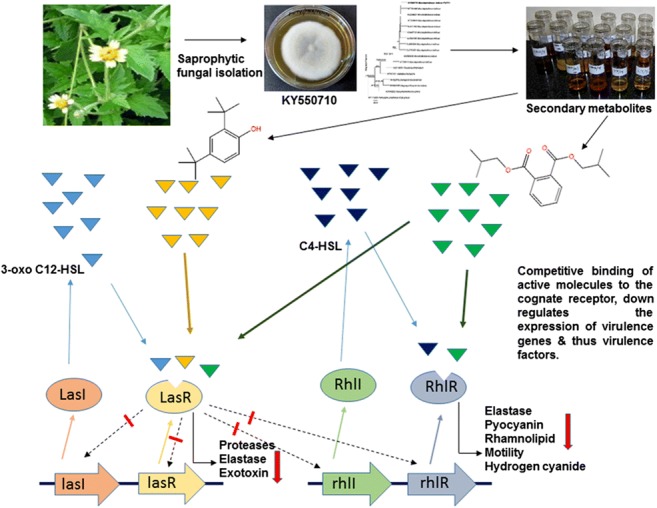
Graphical abstract
Fig. 1
Fig. 1
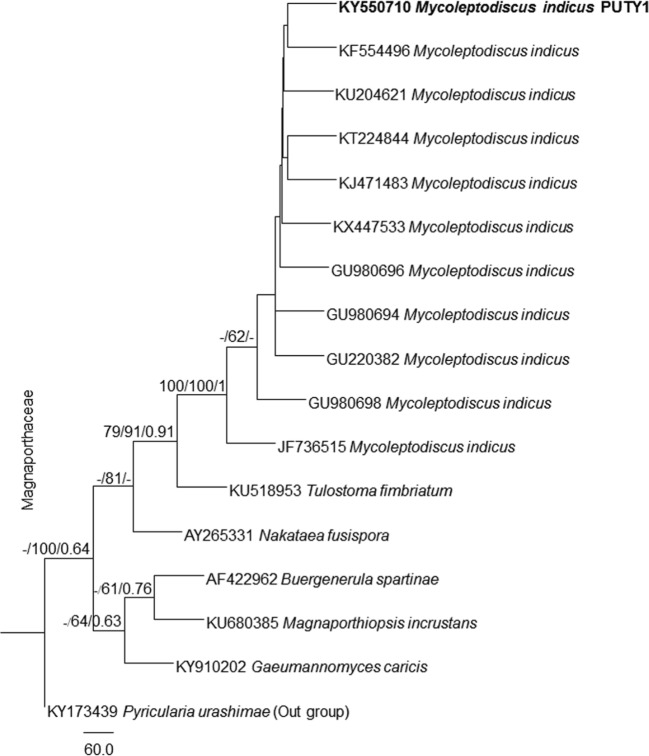
Paup tree based on analysis of ITS partial sequence data. Bootstrap support values for ML and MP higher than 60% and BYPP greater than 0.60 are given above each branch respectively. The fungal isolate of present study is in bold (Mycoleptodiscus indicus PUTY1). The tree is rooted to Pyricularia urashimae
Fig. 2
Fig. 2
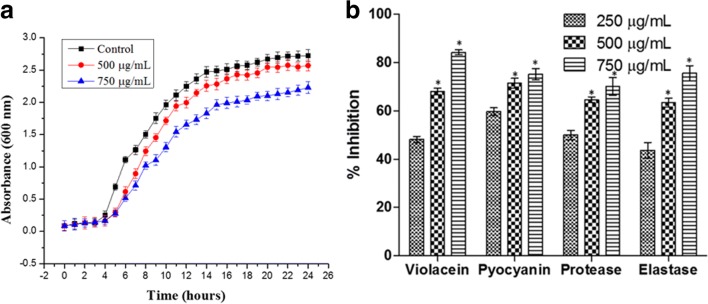
(A) The effect of M. indicus extract at a dose of 500 μg/mL and 750 μg/mL on the growth of P. aeruginosa in comparison control. (B) Effect of M. indicus extract at concentrations of 250, 500, and 750 μg/mL on violacein production in C. violaceum and pyocyanin, protease, and elastase production in P. aeruginosa
Fig. 3
Fig. 3
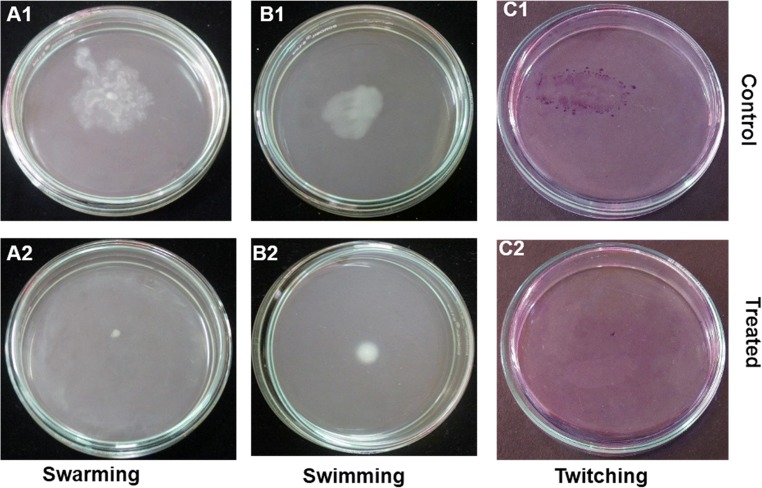
Effect of M. indicus extract at a concentration of 750 μg/mL on motilities of P. aeruginosa. Swarming motility, control vs. treated with M. indicus extract (A1, A2); swimming motility, control vs. treated with M. indicus extract (B1, B2); twitching motility, control vs. treated with M. indicus extract (C1, C2)
Fig. 4
Fig. 4
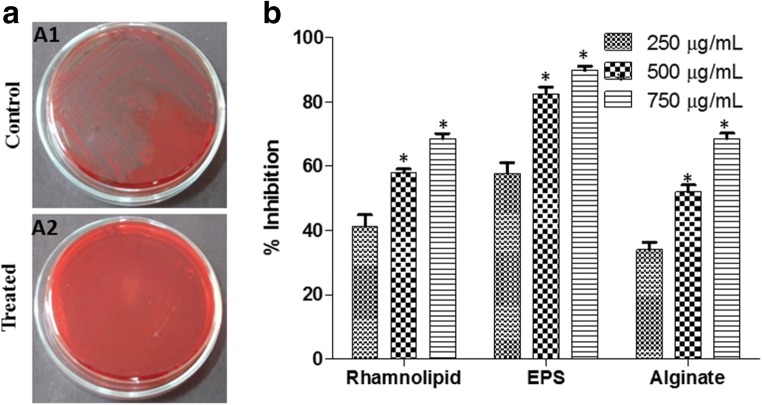
(A) Effect of M. indicus extract at a concentration of 750 μg/mL on biofilm formation in P. aeruginosa by Congo red agar (CRA) method, control (A1) vs. treated with M. indicus extract (A2). (B) Effect of M. indicus extract at concentrations of 250, 500, and 750 μg/mL on rhamnolipid, EPS and alginate production in P. aeruginosa
Fig. 5
Fig. 5
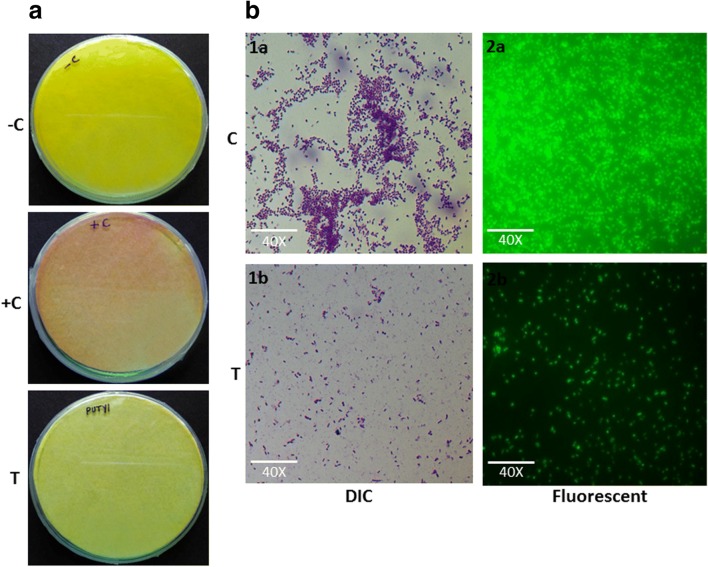
(A) Effect of M. indicus extract at a concentration of 750 μg/mL on HCN production by P. aeruginosa (−C, +C, and T represent negative control, positive control, and treated with M. indicus extract respectively). (B) Microscopic observation of effect of M. indicus extract at 750-μg/mL dose on biofilm formation by P. aeruginosa. Differential interference contrast (DIC) microscope observation of biofilm formation by P. aeruginosa when treated by M. indicus extract (1b) in comparison with control (1a). Fluorescence microscopic observation of biofilm formation when treated by M. indicus extract (2b) in comparison with control (2a)
Fig. 6
Fig. 6
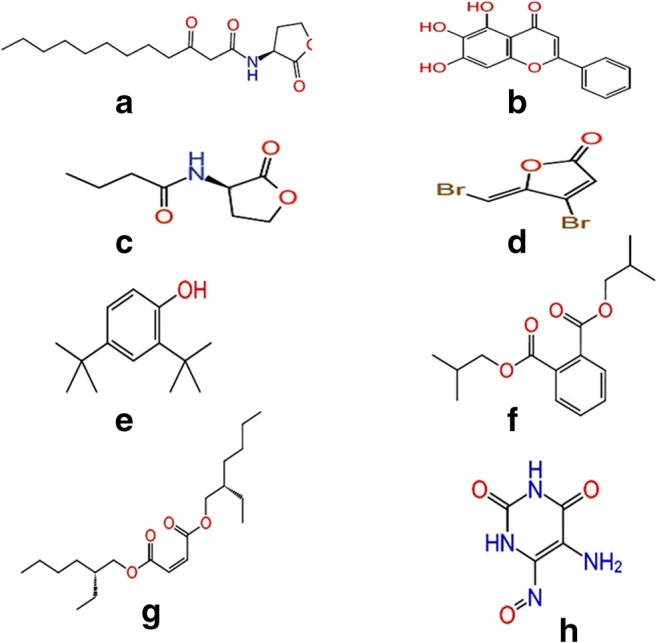
Schematic representation of 2D images of (A) natural ligand for LasR (3-Oxo-C12-HSL), (B) positive control for LasR (baicalein), (C) natural ligand for RhlR (C4-HSL), (D) positive control for RhlR (furanone C30), and ligands (which were showed higher docking score), (E) phenol, 2,4-bis(1,1-dimethylethyl)-, (F) 1,2-benzenedicarboxylic acid, bis(2-Methylpropyl) ester, (G) bis 2-ethylhexyl maleate and, and H. pyrimidine-2,4(1h,3h)-dione, 5-amino-6-nitroso
Fig. 7
Fig. 7
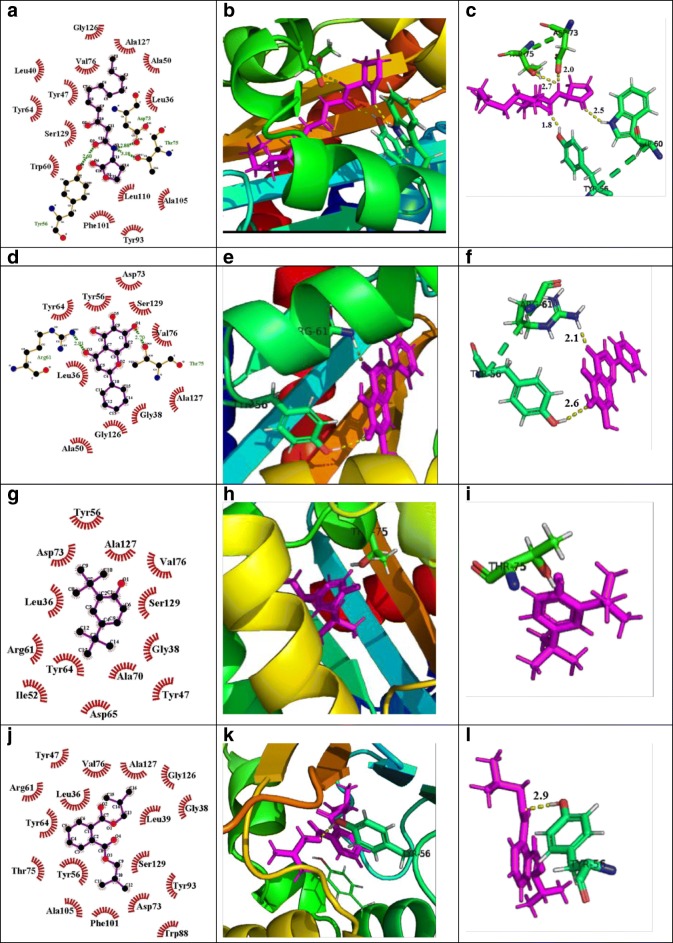
Molecular docking studies of phenol, 2,4-bis(1,1-dimethylethyl)- and 1,2-benzenedicarboxylic acid, bis(2-methylpropyl) ester, bioactive components of M. indicus extract to investigate the interaction with the residues of active site of LasR protein, compared with natural ligand and positive control. Here, each ligand protein complex showing three images first one by LigPlot, second one by pymole, and third one by pymole (Zoomed view). (A) LigPlot view of natural ligand (C12-HSL) interacting with active site residues of LasR protein, (B) 3D view of natural ligand-LasR protein complex, (C) zoomed view, (D) LigPlot view of positive control (baicalein) interacting with active site residues of LasR, (E) 3D view of positive control LasR protein complex, (F) zoomed view, (G) LigPlot view of phenol, 2,4-bis(1,1-dimethylethyl)- interacting with active site residues of LasR, (H) 3D view of phenol, 2,4-bis(1,1-dimethylethyl)-LasR protein complex, (I) zoomed view, (J) LigPlot view of 1,2-benzenedicarboxylic acid, bis(2-methylpropyl) ester interacting with active site residues of LasR, (K) 3D view of 1,2-benzenedicarboxylic acid bis(2-methylpropyl) ester-LasR protein complex, (L) zoomed view
Fig. 8
Fig. 8
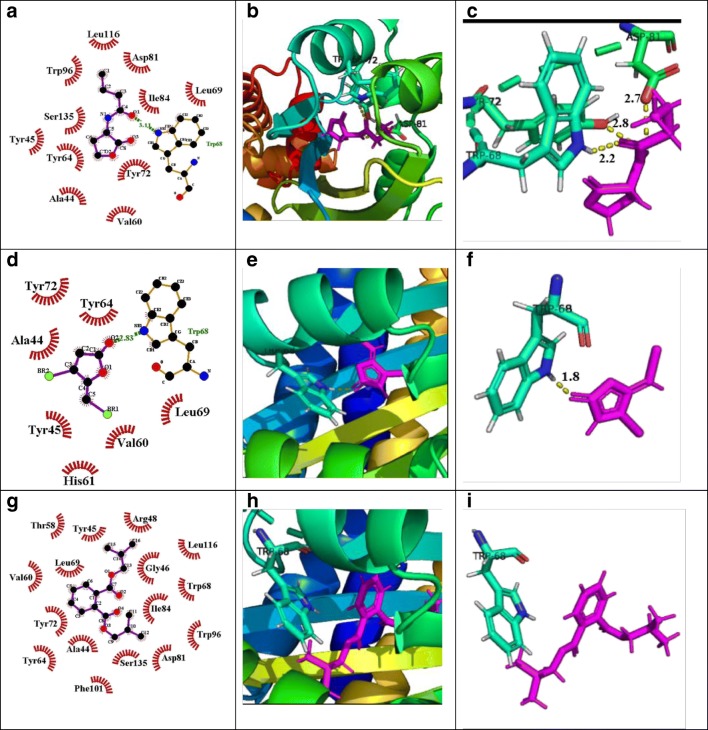
Molecular docking studies of 1,2-benzenedicarboxylic Acid, bis(2-methylpropyl) ester bioactive component of M. indicus extract to investigate the interaction with the residues of active site of RhlR protein, as compared with natural ligand and positive control. (A) LigPlot view of natural ligand (C4-HSL) interacting with active site residues of RhlR, (B) 3D view of natural ligand-RhlR protein complex, (C) zoomed view, (D) LigPlot view of positive control (furanone C30) interacting with active site residues of RhlR, (E) 3D view of positive control-RhlR protein complex, (F) zoomed view, (G) LigPlot view of 1,2-benzenedicarboxylic acid, bis(2-methylpropyl) ester interacting with active site residues of RhlR, (H) 3D view of 1,2-benzenedicarboxylic acid, bis(2-methylpropyl) ester-RhlR protein complex, (I) zoomed view
Fig. 9
Fig. 9
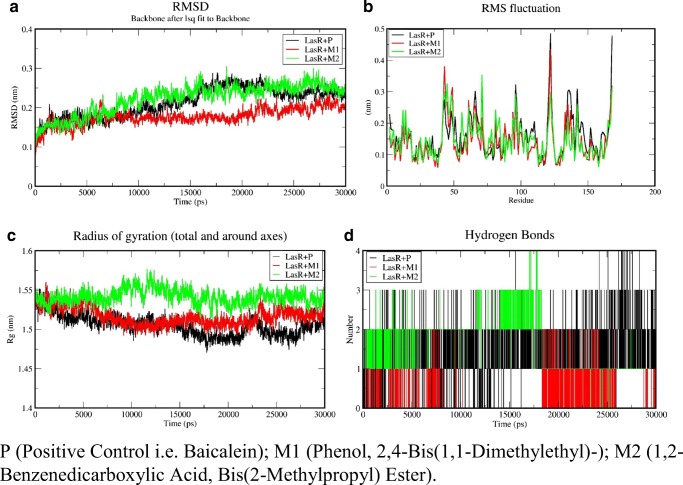
Analysis backbone trajectory of the LasR-complexes onwards. (A) RMSD, (B) RMSF, (C) radius of gyration, and (D) H-bond
Fig. 10
Fig. 10
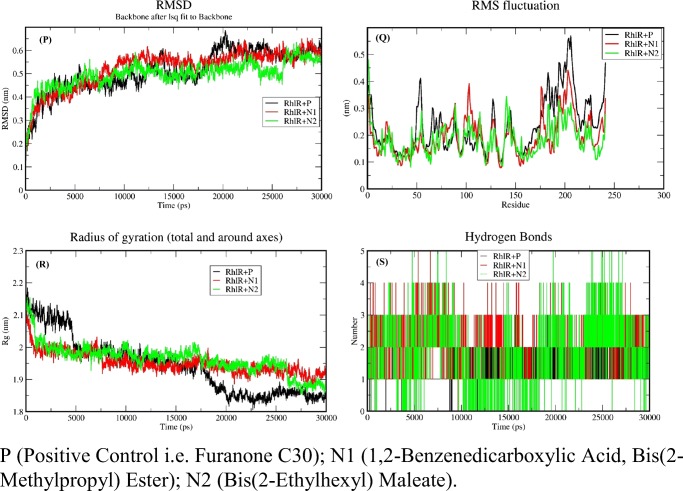
Analysis backbone trajectory of the RhlR complexes onwards. (P) RMSD (Q) RMSF (R) Radius of gyration, and (S) H-bond

References

    1. Maisuria VB, Lopez-de Los Santos Y, Tufenkji N, Déziel E (2016) Cranberry-derived proanthocyanidins impair virulence and inhibit quorum sensing of Pseudomonas aeruginosa. Sci Rep 6: 30169, 10.1038/srep30169 (2016) - PMC - PubMed
    1. Geddes A. Infection in the twenty-first century: predictions and postulates. J Antimicrob Chemother. 2000;46:873–877. doi: 10.1093/jac/46.6.873. - DOI - PubMed
    1. Borges A, Sousa P, Gaspar A, Vilar S, Borges F, Simões M. Furvina inhibits the 3-oxo-C12-HSL-based quorum sensing system of Pseudomonas aeruginosa and QS-dependent phenotypes. Biofouling. 2017;33:156–168. doi: 10.1080/08927014.2017.1280732. - DOI - PubMed
    1. Chastre J, Fagon JY. Ventilator-associated pneumonia. Amer J Res and Crit care med. 2002;165:867–903. doi: 10.1164/ajrccm.165.7.2105078. - DOI - PubMed
    1. Hutchison ML, Govan JR. Pathogenicity of microbes associated with cystic fibrosis. Microb Infect. 1999;1:1005–1014. doi: 10.1016/S1286-4579(99)80518-8. - DOI - PubMed

MeSH terms

Substances

Supplementary concepts

LinkOut - more resources