


Impact of sleep disturbances on neurodegeneration: Insight from studies in animal models
- PMID: 32087293
- PMCID: PMC7593848
- DOI: 10.1016/j.nbd.2020.104820
Impact of sleep disturbances on neurodegeneration: Insight from studies in animal models
Abstract
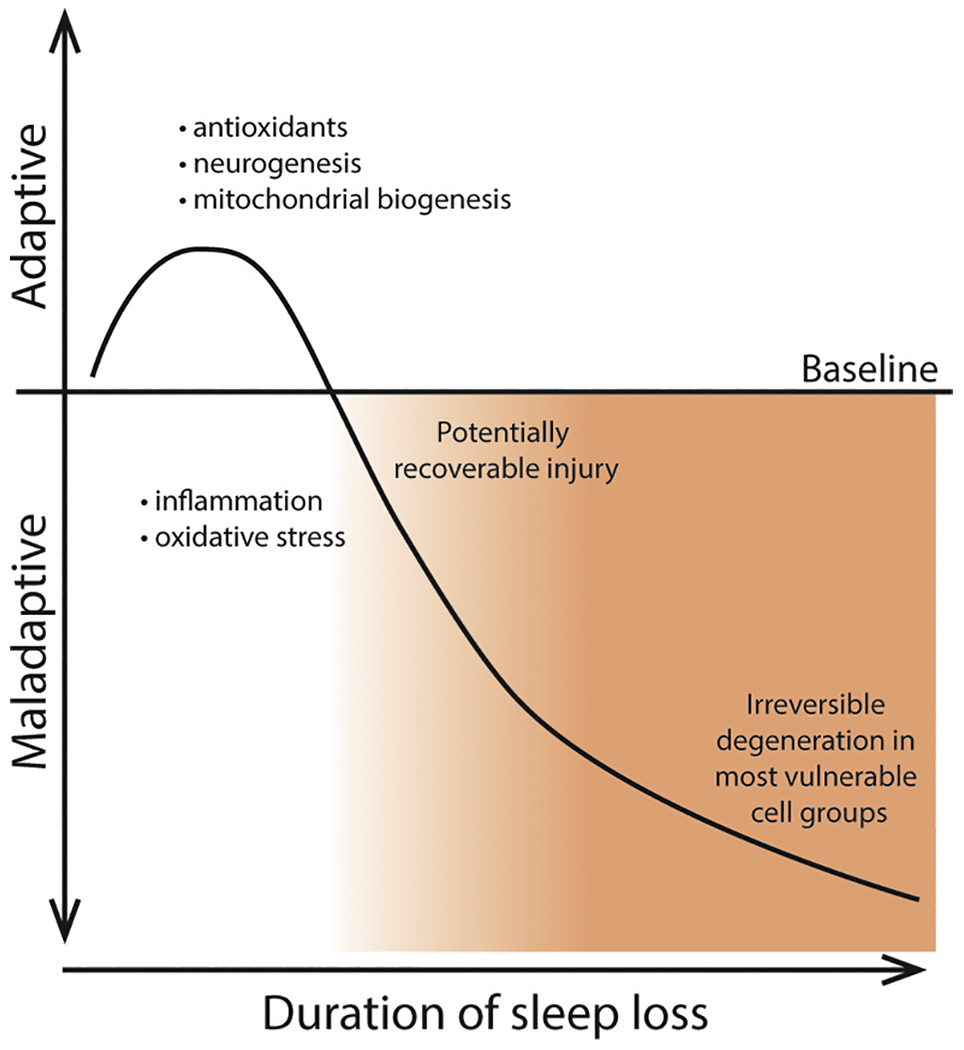
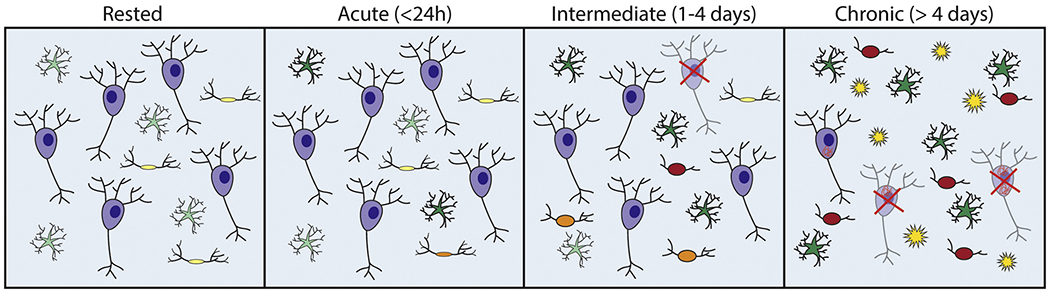
Chronic short sleep or extended wake periods are commonly observed in most industrialized countries. Previously neurobehavioral impairment following sleep loss was considered to be a readily reversible occurrence, normalized upon recovery sleep. Recent clinical studies suggest that chronic short sleep and sleep disruption may be risk factors for neurodegeneration. Animal models have been instrumental in determining whether disturbed sleep can injure the brain. We now understand that repeated periods of extended wakefulness across the typical sleep period and/or sleep fragmentation can have lasting effects on neurogenesis and select populations of neurons and glia. Here we provide a comprehensive overview of the advancements made using animal models of sleep loss to understand the extent and mechanisms of chronic short sleep induced neural injury.
Keywords: Amyloid-beta; Neural injury; Neurodegeneration; Neurogenesis; Sleep loss; Tau.
Copyright © 2020. Published by Elsevier Inc.
Figures
References
-
- Belenky G, Wesensten NJ, Thorne DR, Thomas ML, Sing HC, Redmond DP, … Balkin TJ (2003). Patterns of performance degradation and restoration during sleep restriction and subsequent recovery: a sleep dose-response study. Journal of Sleep Research, 12(1), 1–12. 10.1046/j.1365-2869.2003.00337.x - DOI - PubMed
-
- Bellesi M, de Vivo L, Chini M, Gilli F, Tononi G, & Cirelli C (2017). Sleep Loss Promotes Astrocytic Phagocytosis and Microglial Activation in Mouse Cerebral Cortex. The Journal of Neuroscience : The Official Journal of the Society for Neuroscience, 37(21), 5263–5273. 10.1523/JNEUROSCI.3981-16.2017 - DOI - PMC - PubMed
Publication types
MeSH terms
Substances
Grants and funding
LinkOut - more resources
Full Text Sources
Medical
