


Lower Gastrointestinal Bleeding in Patients With Cirrhosis-Etiology and Outcomes
- PMID: 32087941
- PMCID: PMC7416553
- DOI: 10.1016/j.amjms.2020.01.007
Lower Gastrointestinal Bleeding in Patients With Cirrhosis-Etiology and Outcomes
Abstract
Background: Lower gastrointestinal bleeding (LGIB) is a common clinical problem, and may be more prevalent among patients with cirrhosis, especially in the setting of portal hypertension and coagulopathy. However, there is extremely little data available on the subject of LGIB in patients with cirrhosis. Therefore, the primary objective of this study was to better understand the etiology and outcomes of cirrhotic patients hospitalized with LGIB.
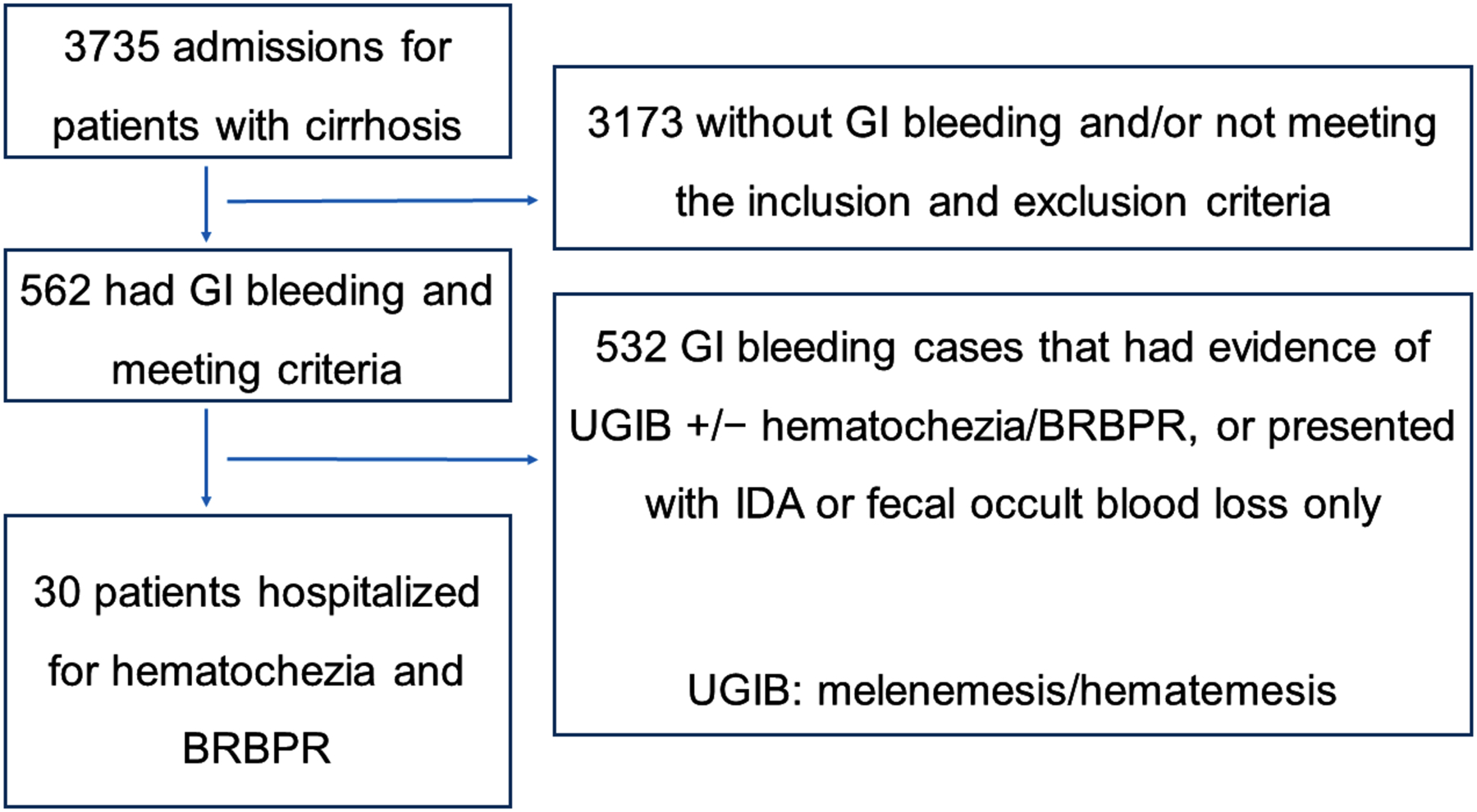
Materials and methods: We analyzed 3,735 cirrhotic patients admitted to the Medical University of South Carolina between January 2011 and September 2018, and identified patients admitted with a primary diagnosis of hematochezia or bright red blood per rectum.
Results: Thirty patients with cirrhosis and LGIB were included in the cohort. The mean age was 56 ± 13 years, with 30% women. The mean model of end stage liver disease score was 22, and Child-Pugh (CP) scores were C: 41%, B: 33% and A: 26%. The mean Charlson Comorbidity Index was 5.6. Twenty-four (80%) patients had a clinical decompensating event (hepatic encephalopathy, ascites, esophageal varices); the mean hepatic venous pressure gradient was 14.1 mm Hg (n = 8). In 33% of patients, LGIB was considered significant bleeding that necessitated blood transfusion. The most common cause of LGIB was hemorrhoids (11 patients, 37%), followed by portal hypertensive enteropathy or colopathy (7 patients, 23%). Hemoglobin levels on admission were lower in patients with CP B/C cirrhosis than in those with CP A (P < 0.001). The length of stay was 9 ± 10 days, and 5 patients died (mortality, 17%).
Conclusions: Despite being uncommon, LGIB in cirrhotic patients is associated with a high mortality rate.
Keywords: Bright red bleeding per rectum; Hematochezia; Outcome.
Copyright © 2020 Southern Society for Clinical Investigation. Published by Elsevier Inc. All rights reserved.
Conflict of interest statement
Figures
Comment in
-
Causes of Lower Gastrointestinal Bleeding in Cirrhotics: Are the Most Commonly Reported Causes the Most Common?Am J Med Sci. 2020 Apr;359(4):191-192. doi: 10.1016/j.amjms.2020.01.017. Epub 2020 Jan 25. Am J Med Sci. 2020. PMID: 32087943 No abstract available.
References
-
- Rockey DC. Lower Gastrointestinal Bleeding. Gastroenterology. 2006;130(1):165–71. - PubMed
-
- Strate LL. Lower GI Bleeding: Epidemiology and Diagnosis. Gastroenterology Clinics. 2005;34(4):643–64. - PubMed
-
- Longstreth GF. Epidemiology and outcome of patients hospitalized with acute lower gastrointestinal hemorrhage: a population-based study. The American journal of gastroenterology. 1997;92(3):419–24. - PubMed
-
- Misra S, Dwivedi M, Misra V. Prevalence and factors influencing hemorrhoids, anorectal varices, and colopathy in patients with portal hypertension. Endoscopy. 1996;28(04):340–5. - PubMed
MeSH terms
Grants and funding
LinkOut - more resources
Full Text Sources
Medical
Miscellaneous
