


Diet and functional dyspepsia: Clinical correlates and therapeutic perspectives
- PMID: 32089623
- PMCID: PMC7015717
- DOI: 10.3748/wjg.v26.i5.456
Diet and functional dyspepsia: Clinical correlates and therapeutic perspectives
Abstract
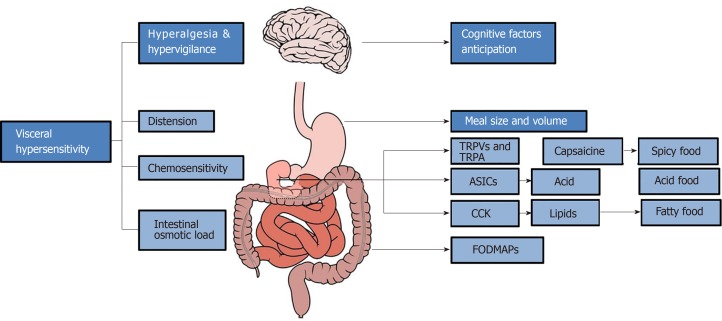
Hypervigilance and symptoms anticipation, visceral hypersensitivity and gastroduodenal sensorimotor abnormalities account for the varied clinical presentation of functional dyspepsia (FD) patients. Many patients recognize meals as the main triggering factor; thus, dietary manipulations often represent the first-line management strategy in this cohort of patients. Nonetheless, scarce quality evidence has been produced regarding the relationship between specific foods and/or macronutrients and the onset of FD symptoms, resulting in non-standardized nutritional approaches. Most dietary advises are indeed empirical and often lead to exclusion diets, reinforcing in patients the perception of "being intolerant" to food and self-perpetuating some of the very mechanisms underlying dyspepsia physiopathology (i.e., hypervigilance and symptom anticipation). Clinicians are often uncertain regarding the contribution of specific foods to dyspepsia physiopathology and dedicated professionals (i.e., dietitians) are only available in tertiary referral settings. This in turn, can result in nutritionally unbalanced diets and could even encourage restrictive eating behaviors in severe dyspepsia. In this review, we aim at evaluating the relationship between dietary habits, macronutrients and specific foods in determining FD symptoms. We will provide an overview of the evidence-based nutritional approach that should be pursued in these patients, providing clinicians with a valuable tool in standardizing nutritional advises and discouraging patients from engaging into indiscriminate food exclusions.
Keywords: Diet; Dietary habits; Fermentable oligosaccharides, disaccharides, monosaccharides and polyols; Food intolerances; Functional dyspepsia; Gluten-sensitivity.
©The Author(s) 2020. Published by Baishideng Publishing Group Inc. All rights reserved.
Conflict of interest statement
Conflict-of-interest statement: No potential conflicts of interest.
Figures
References
-
- Tack J, Talley NJ. Functional dyspepsia--symptoms, definitions and validity of the Rome III criteria. Nat Rev Gastroenterol Hepatol. 2013;10:134–141. - PubMed
-
- Mahadeva S, Ford AC. Clinical and epidemiological differences in functional dyspepsia between the East and the West. Neurogastroenterol Motil. 2016;28:167–174. - PubMed
-
- Vanheel H, Carbone F, Valvekens L, Simren M, Tornblom H, Vanuytsel T, Van Oudenhove L, Tack J. Pathophysiological Abnormalities in Functional Dyspepsia Subgroups According to the Rome III Criteria. Am J Gastroenterol. 2017;112:132–140. - PubMed
-
- Stanghellini V, Chan FK, Hasler WL, Malagelada JR, Suzuki H, Tack J, Talley NJ. Gastroduodenal Disorders. Gastroenterology. 2016;150:1380–1392. - PubMed
Publication types
MeSH terms
Substances
LinkOut - more resources
Full Text Sources
Medical
