


Disparities in Sleep Health among Adolescents: The Role of Sex, Age, and Migration
- PMID: 32089893
- PMCID: PMC7024093
- DOI: 10.1155/2020/5316364
Disparities in Sleep Health among Adolescents: The Role of Sex, Age, and Migration
Abstract
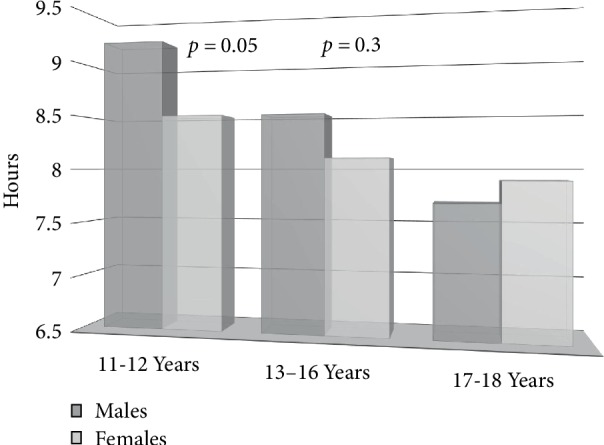
Background. Disparities in sleep disturbances have been described in adults; nevertheless, among adolescents, data have yielded conflicting results. Therefore, analyses of our cohort study of 500 urban, normally developed Hispanic adolescents (10-18 years), aim to determine if rates of sleep debt differ between: (a) male and female adolescents, (b) US-born Hispanics and first-generation immigrant ethnic counterparts, and (c) specific activities that these teens trade for sleep. Participants' weekday and weekend sleep patterns, along with the reasons for sleeping less than the recommended hours were recorded. Standardized surveys were used to gather information regarding sociodemographics, migration, acculturation, and medical history. Using the criteria set forth by the National Sleep Foundation, analyses indicated that sleep deprivation is a pervasive problem, with 75% in the preadolescents and 45% of the late adolescents exhibiting sleep problems. Females slept on average at least one hour less per day than their male counterparts (7 vs. 8 hours). The sleep problems were rooted in several overlapping causes, including use of technology, video games, studying, and employment. Nevertheless, reasons for sleep loss differed by gender and by immigrant status. Multivariable adjusted logistic regression analyses showed that females, US-born teens, and preadolescents had higher odds of being sleep deprived. Pediatricians and sleep experts should be aware of gender-specific causes and responses of sleep problems. Cultural ecological frameworks need to be considered, and clearly indicate that findings may not generalize to youth from other cultural backgrounds.
Copyright © 2020 Maria Jose Miguez et al.
Conflict of interest statement
The authors declare that they have no conflicts of interest.
References
-
- Walsh J. K., Engelhardt C. L. The direct economic costs of insomnia in the United States for 1995. Sleep. 1999;22(2):S386–S393. - PubMed
-
- Stoller M. K. Economic effects of insomnia. Clinical Therapeutics. 1994;16(5):873–897. - PubMed
-
- Voderholzer U., Valerius G., Schaerer L., et al. Is the antidepressive effect of sleep deprivation stabilized by a three day phase advance of the sleep period? A pilot study. European Archives of Psychiatry and Clinical Neuroscience. 2003;253(2):68–72. doi: 10.1007/s00406-019-01063-4. - DOI - PubMed
LinkOut - more resources
Full Text Sources
