Review
. 2020 Mar 16;39(6):e103777.
doi: 10.15252/embj.2019103777. Epub 2020 Feb 24.

A guide to naming human non-coding RNA genes

Affiliations
Review

A guide to naming human non-coding RNA genes

Ruth L Seal et al. EMBO J. .

Abstract

Research on non-coding RNA (ncRNA) is a rapidly expanding field. Providing an official gene symbol and name to ncRNA genes brings order to otherwise potential chaos as it allows unambiguous communication about each gene. The HUGO Gene Nomenclature Committee (HGNC, www.genenames.org) is the only group with the authority to approve symbols for human genes. The HGNC works with specialist advisors for different classes of ncRNA to ensure that ncRNA nomenclature is accurate and informative, where possible. Here, we review each major class of ncRNA that is currently annotated in the human genome and describe how each class is assigned a standardised nomenclature.

Keywords: gene nomenclature; gene symbols; non-coding RNA.


Conflict of interest statement

The authors declare that they have no conflict of interest.

Figures
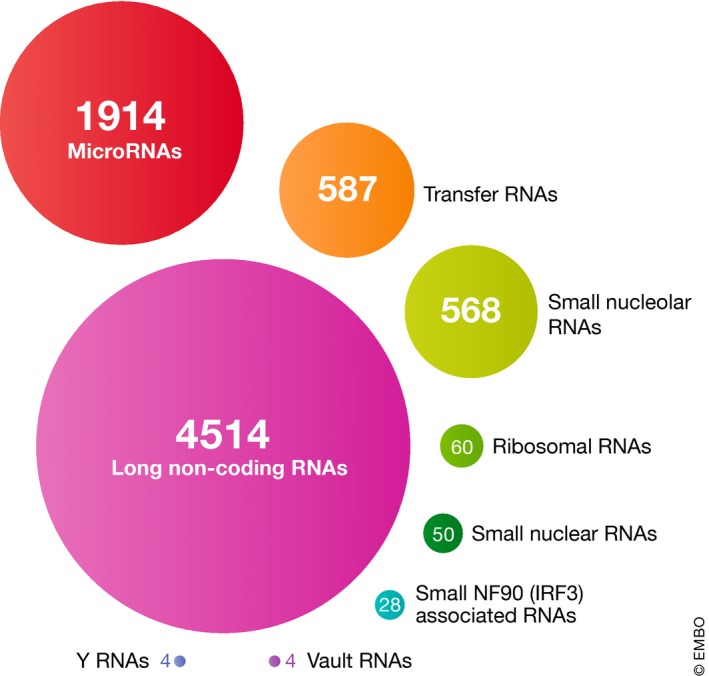
Figure 1
Figure 1. The number of HGNC gene symbols by type of ncRNA
A full list of locus types, along with numbers of genes per category, can be found at our Statistics & Downloads webpage (https://www.genenames.org/download/statistics-and-files/).
Figure 2
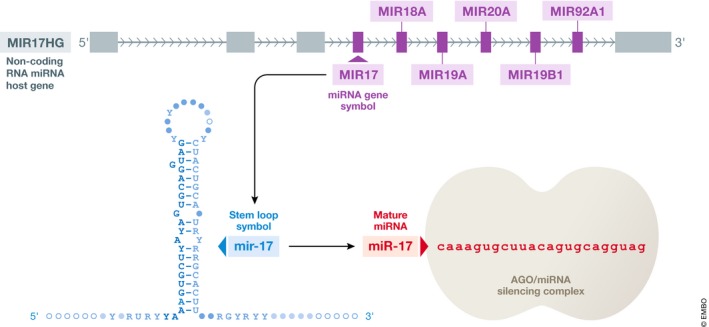
Figure 2. The microRNA gene MIR17 is part of a cluster of microRNA genes that are hosted within an intron of the long non‐coding RNA gene MIR17HG (miR‐17‐92a‐1 cluster host gene)
The symbol MIR17 represents the gene; the symbol mir‐17 represents the miRNA precursor stem‐loop structure; and the symbol miR‐17 represents the active mature microRNA, which interacts with an AGO protein to form the AGO/miRNA silencing complex.
Figure 3
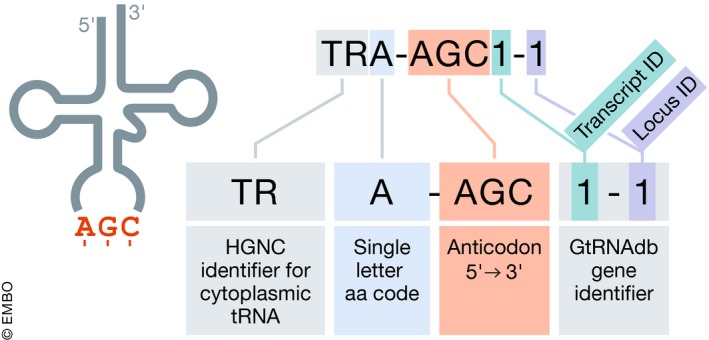
Figure 3. An annotated tRNA gene symbol explaining what each part of the approved gene symbol represents
Figure 4
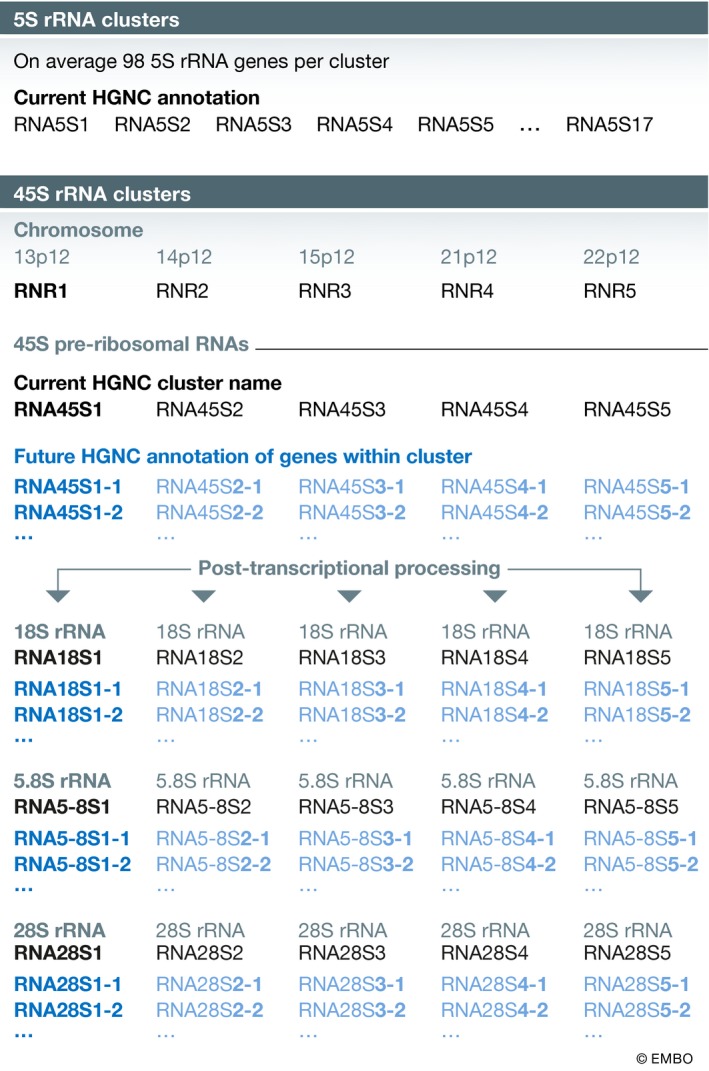
Figure 4. Schematic showing the two types of ribosomal RNA (rRNA) gene cluster found within the human genome
The 5S cluster has a variable copy number between individuals, with 98 being the average copy number, while the current human reference genome, GRCh38, has just 17 copies. The HGNC has approved symbols for the 17 annotated copies as shown above. There are five separate 45S rRNA clusters, which are named RNR1RNR5. These clusters are not currently represented on GRCh38. The HGNC has approved root symbols for each 45S rRNA genes and their post‐transcriptionally processed transcripts (root symbols shown in dark blue text). The light blue symbols show the format that will be approved in the future for individual 45S rRNA genes and transcripts once the clusters are included and annotated on the human reference genome.
Figure 5
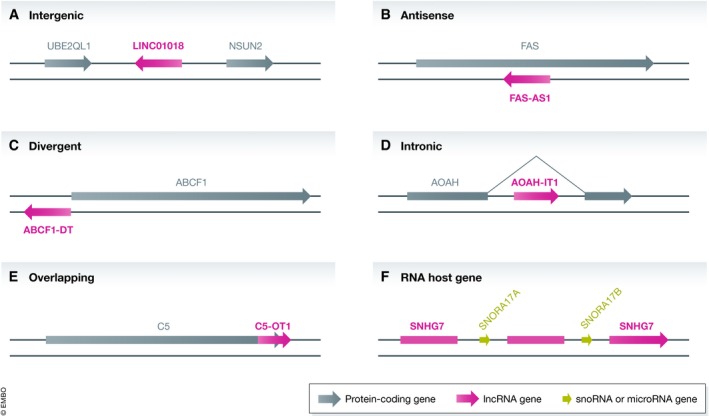
Figure 5. LncRNA naming schema for lncRNA genes with no published information at the time of naming
  1. LncRNAs that are intergenic with respect to protein coding genes are assigned the root symbol LINC# followed by a 5‐digit number.

  2. LncRNAs that are antisense to the genomic span of a protein coding gene are assigned the symbol format [protein coding gene symbol]‐AS#.

  3. LncRNAs that are divergent to (share a bidirectional promoter with) a protein coding gene are assigned the symbol format [protein coding gene symbol]‐DT.

  4. LncRNAs that are contained within an intron of a protein coding gene on the same strand are assigned the symbol format [protein coding gene symbol]‐IT#.

  5. LncRNAs that overlap a protein coding gene on the same strand are assigned the symbol format [protein gene coding symbol]‐OT#.

  6. LncRNAs that contain microRNA or snoRNA genes within introns or exons are named as host genes. See the main text for details on how these microRNA host genes and snoRNA host genes are named.

References

    1. Abbott JA, Francklyn CS, Robey‐Bond SM (2014) Transfer RNA and human disease. Front Genet 5: 158 - PMC - PubMed
    1. Abou Elela S, Nazar RN (1997) Role of the 5.8S rRNA in ribosome translocation. Nucleic Acids Res 25: 1788–1794 - PMC - PubMed
    1. Agris PF, Eruysal ER, Narendran A, Väre VYP, Vangaveti S, Ranganathan SV (2018) Celebrating wobble decoding: half a century and still much is new. RNA Biol 15: 537–553 - PMC - PubMed
    1. Ahmad A, Strohbuecker S, Tufarelli C, Sottile V (2017) Expression of a SOX1 overlapping transcript in neural differentiation and cancer models. Cell Mol Life Sci 74: 4245–4258 - PMC - PubMed
    1. Akerman I, Tu Z, Beucher A, Rolando DMY, Sauty‐Colace C, Benazra M, Nakic N, Yang J, Wang H, Pasquali L et al (2017) Human pancreatic β cell lncRNAs control cell‐specific regulatory networks. Cell Metab 25: 400–411 - PMC - PubMed

Publication types

Substances