


Ocean acidification promotes broad transcriptomic responses in marine metazoans: a literature survey
- PMID: 32095155
- PMCID: PMC7027112
- DOI: 10.1186/s12983-020-0350-9
Ocean acidification promotes broad transcriptomic responses in marine metazoans: a literature survey
Abstract
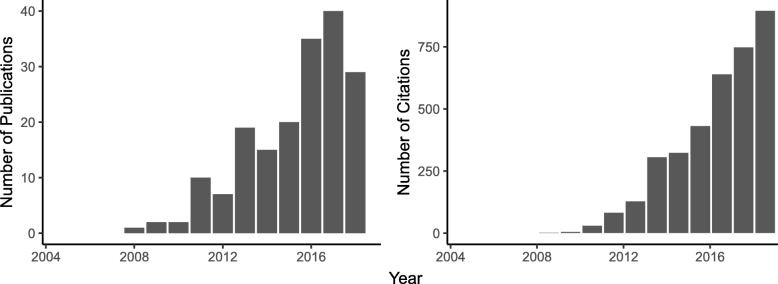
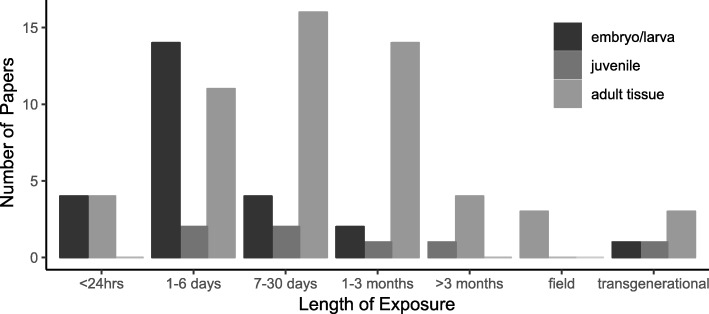
For nearly a decade, the metazoan-focused research community has explored the impacts of ocean acidification (OA) on marine animals, noting that changes in ocean chemistry can impact calcification, metabolism, acid-base regulation, stress response and behavior in organisms that hold high ecological and economic value. Because OA interacts with several key physiological processes in marine organisms, transcriptomics has become a widely-used method to characterize whole organism responses on a molecular level as well as inform mechanisms that explain changes in phenotypes observed in response to OA. In the past decade, there has been a notable rise in studies that examine transcriptomic responses to OA in marine metazoans, and here we attempt to summarize key findings across these studies. We find that organisms vary dramatically in their transcriptomic responses to pH although common patterns are often observed, including shifts in acid-base ion regulation, metabolic processes, calcification and stress response mechanisms. We also see a rise in transcriptomic studies examining organismal response to OA in a multi-stressor context, often reporting synergistic effects of OA and temperature. In addition, there is an increase in studies that use transcriptomics to examine the evolutionary potential of organisms to adapt to OA conditions in the future through population and transgenerational experiments. Overall, the literature reveals complex organismal responses to OA, in which some organisms will face more dramatic consequences than others. This will have wide-reaching impacts on ocean communities and ecosystems as a whole.
Keywords: Calcification; Gene expression; Marine metazoans; Metabolism; Ocean acidification; Transcriptomics.
© The Author(s). 2020.
Conflict of interest statement
Competing interestsThe authors declare that they have no competing interests.
Figures
References
-
- Kurihara H, Shimode S, Shirayama Y. Sub-lethal effects of elevated concentration of CO2 on planktonic copepods and sea urchins. J Oceanogr. 2004;60:743–750. doi: 10.1007/s10872-004-5766-x. - DOI
-
- Caldeira K, Wickett M. Ocean model predictions of chemistry changes from carbon dioxide emissions to the atmosphere and ocean. J Geophys Res C Ocean. 2005;110:1–12. doi: 10.1029/2004JC002671. - DOI
Publication types
LinkOut - more resources
Full Text Sources
Miscellaneous
