


Association between mortality rates and medication and residential treatment after in-patient medically managed opioid withdrawal: a cohort analysis
- PMID: 32096908
- PMCID: PMC7854020
- DOI: 10.1111/add.14964
Association between mortality rates and medication and residential treatment after in-patient medically managed opioid withdrawal: a cohort analysis
Abstract
Background and aim: Medically managed opioid withdrawal (detox) can increase the risk of subsequent opioid overdose. We assessed the association between mortality following detox and receipt of medications for opioid use disorder (MOUD) and residential treatment after detox.
Design: Cohort study generated from individually linked public health data sets.
Setting: Massachusetts, USA.
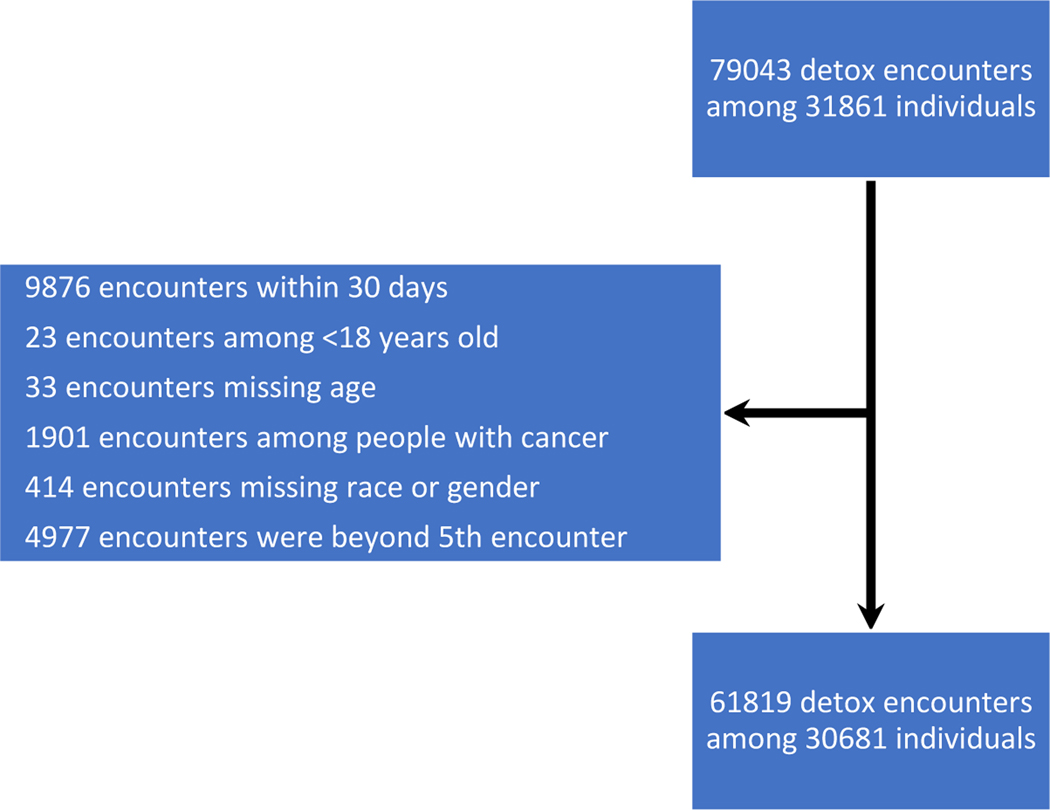
Participants: A total of 30 681 opioid detox patients with 61 819 detox episodes between 2012 and 2014.
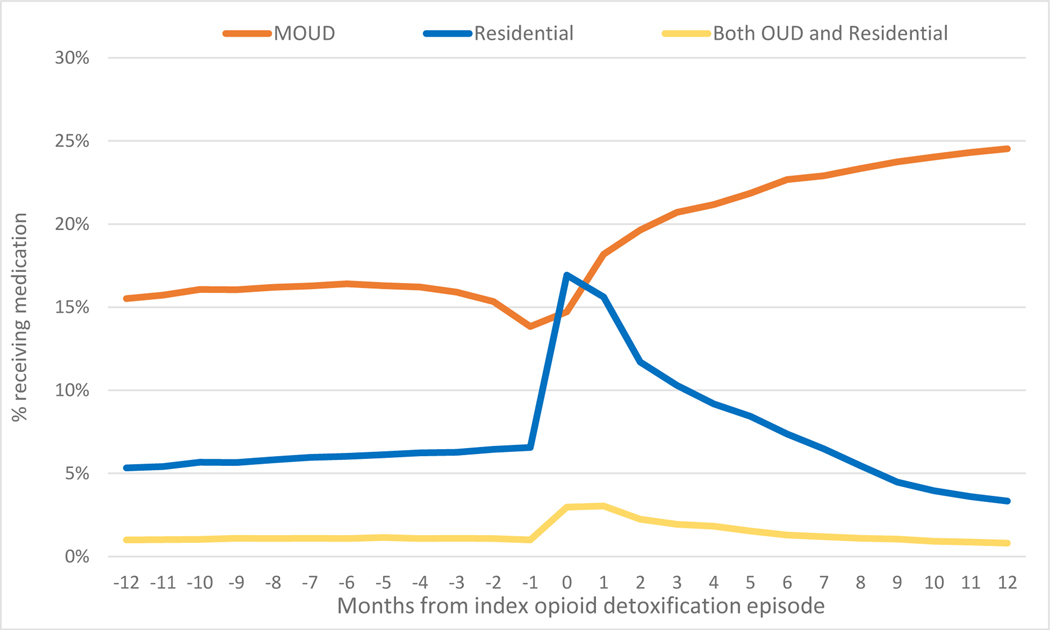
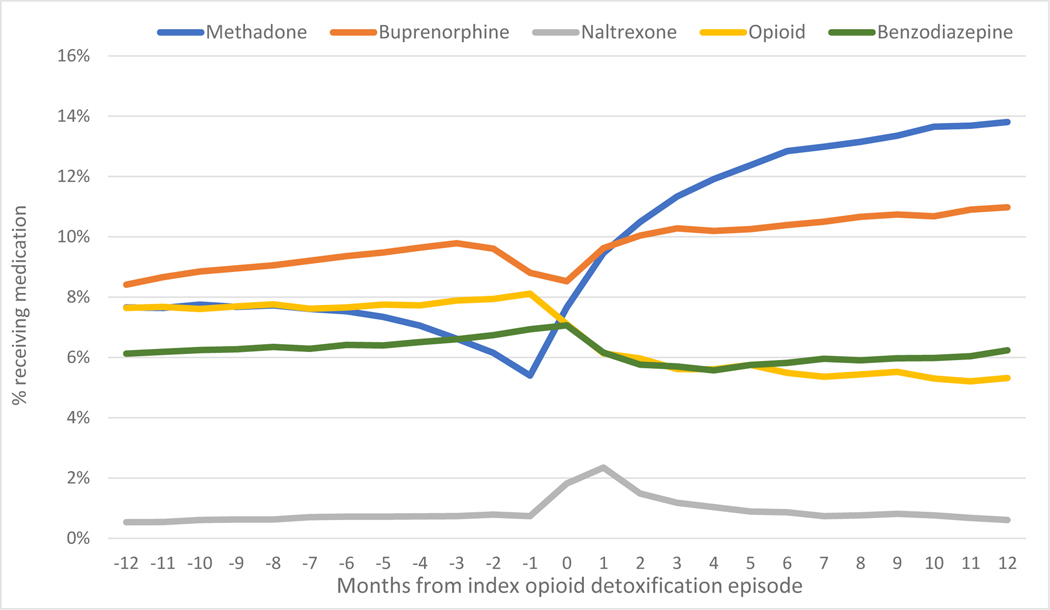
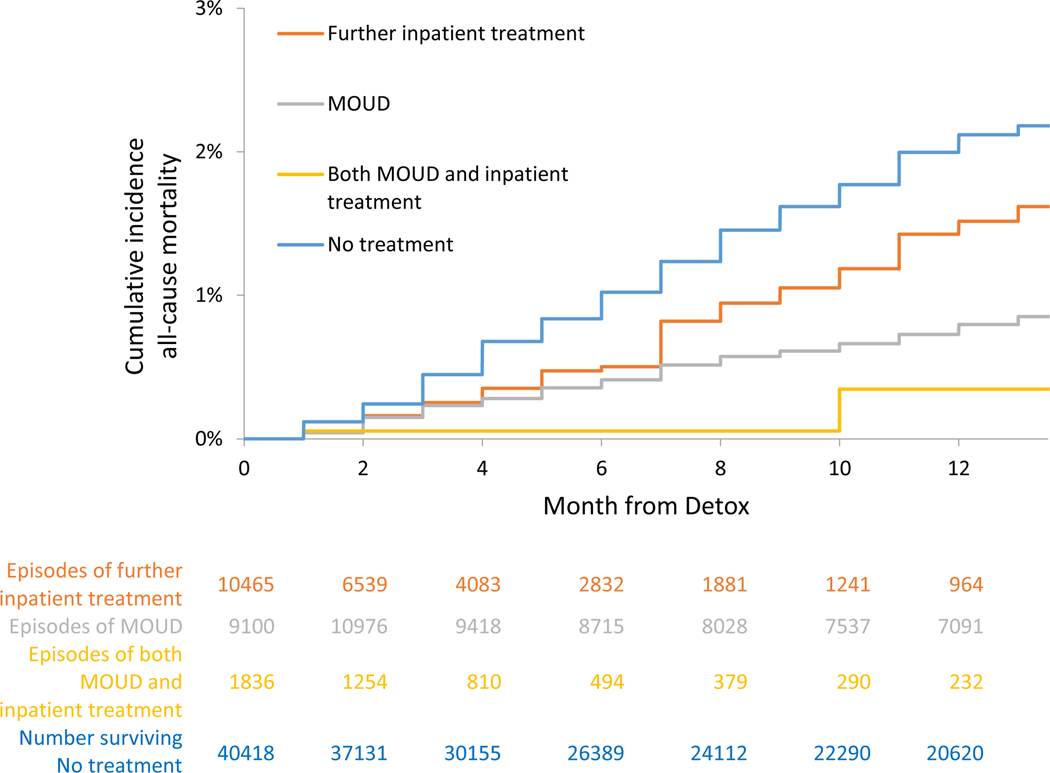
Measurements: Treatment categories included no post-detox treatment, MOUD, residential treatment or both MOUD and residential treatment identified at monthly intervals. We classified treatment exposures in two ways: (a) 'on-treatment' included any month where a treatment was received and (b) 'with-discontinuation' individuals were considered exposed through the month following treatment discontinuation. We conducted multivariable Cox proportional hazards analyses and extended Kaplan-Meier estimator cumulative incidence for all-cause and opioid-related mortality for the treatment categories as monthly time-varying exposure variables.
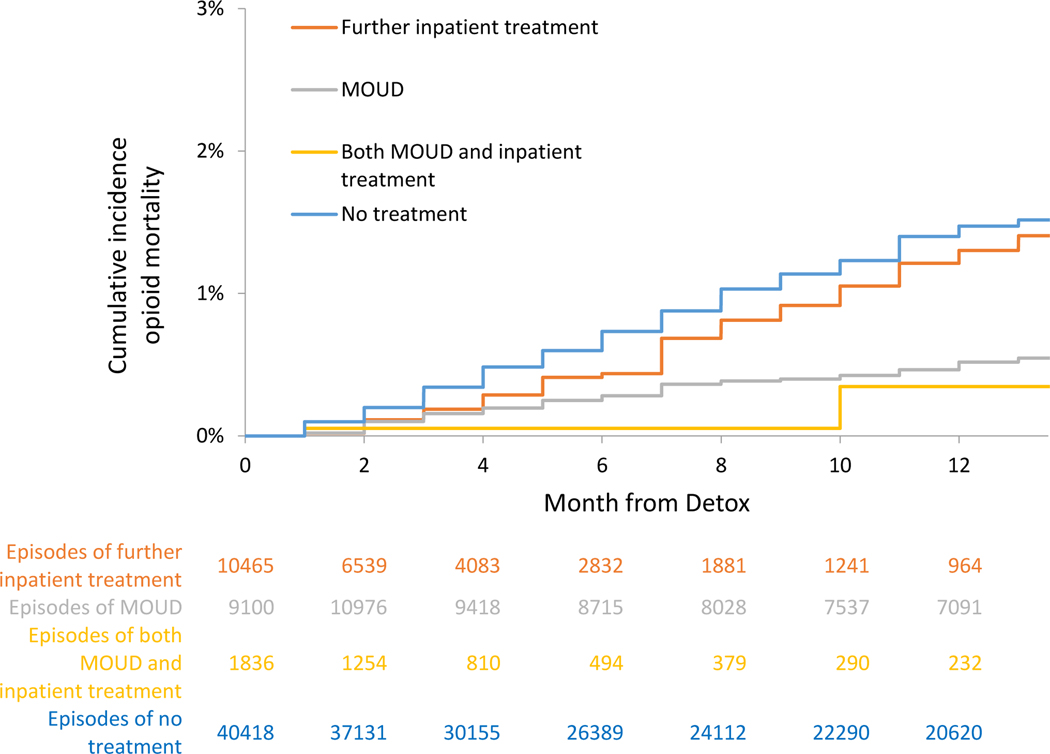
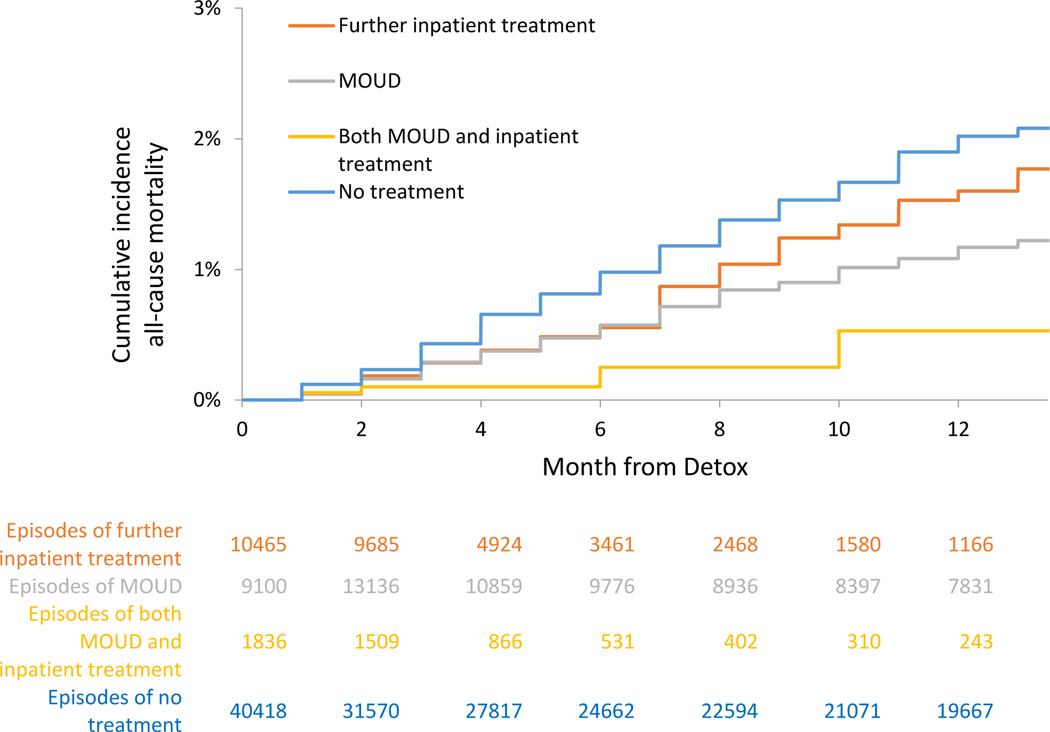
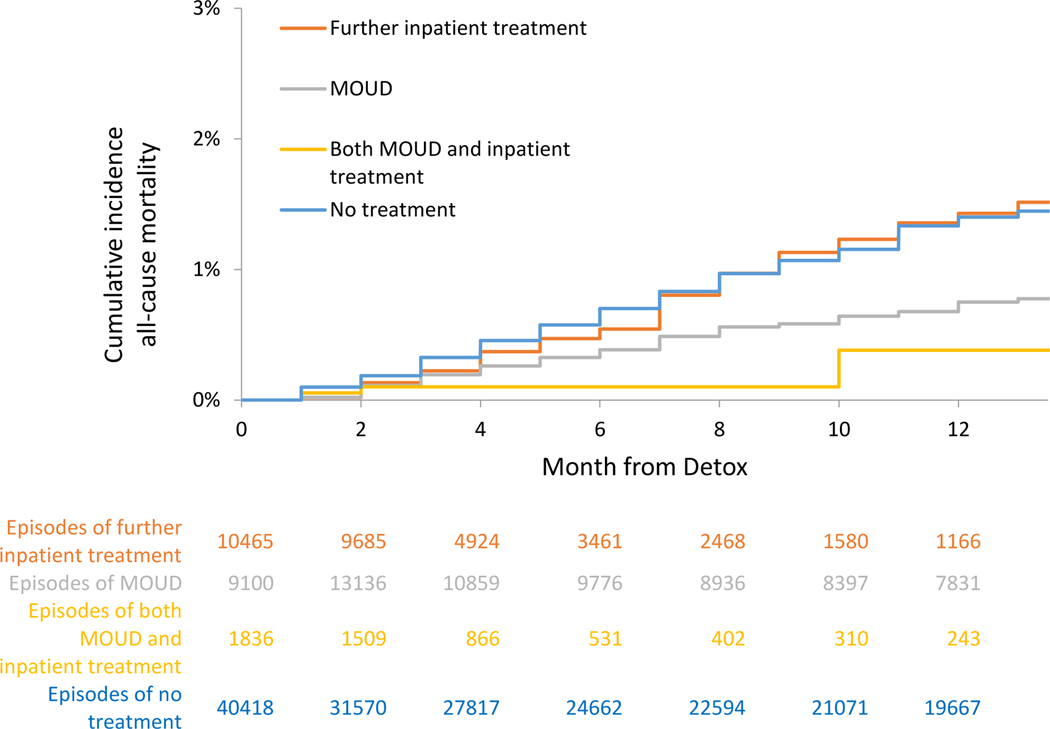
Findings: Twelve months after detox, 41% received MOUD for a median of 3 months, 35% received residential treatment for a median of 2 months and 13% received both for a median of 5 months. In on-treatment analyses for all-cause mortality compared with no treatment, adjusted hazard ratios (AHR) were 0.34 [95% confidence interval (CI) = 0.27-0.43] for MOUD, 0.63 (95% CI = 0.47-0.84) for residential treatment and 0.11 (95% CI = 0.03-0.43) for both. In with-discontinuation analyses for all-cause mortality, compared with no treatment, AHRs were 0.52 (95% CI = 0.42-0.63) for MOUD, 0.76 (95% CI = 0.59-0.96) for residential treatment and 0.21 (95% CI = 0.08-0.55) for both. Results were similar for opioid-related overdose mortality.
Conclusions: Among people who have undergone medically managed opioid withdrawal, receipt of medications for opioid use disorder, residential treatment or the combination of medications for opioid use disorder and residential treatment were associated with substantially reduced mortality compared with no treatment.
Keywords: Detox; medically managed withdrawal; medication for opioid use disorders; mortality; overdose; residential treatment.
© 2020 Society for the Study of Addiction.
Conflict of interest statement
Figures
References
-
- Degenhardt L, Bucello C, Mathers B, Briegleb C, Ali H, Hickman M, et al. Mortality among regular or dependent users of heroin and other opioids: a systematic review and meta-analysis of cohort studies. Addiction. 2011. January;106(1):32–51. - PubMed
-
- Mee-Lee D, Shulman GD, Fishman MJ, Gastfriend D, Miller MM, Provence SM. The ASAM Criteria: Treatment Criteria for Addictive, Substance-Related, and Co-Occuring Conditions [Internet]. The Change Companies; 2013. [cited 2019 Apr 1]. Available from: https://www.americanhealthholding.com/Content/Pdfs/asam%20criteria.pdf
Publication types
MeSH terms
Substances
Grants and funding
LinkOut - more resources
Full Text Sources
Medical
