


Severe anaemia complicating HIV in Malawi; Multiple co-existing aetiologies are associated with high mortality
- PMID: 32097440
- PMCID: PMC7041863
- DOI: 10.1371/journal.pone.0218695
Severe anaemia complicating HIV in Malawi; Multiple co-existing aetiologies are associated with high mortality
Abstract
Background: Severe anaemia is a major cause of morbidity and mortality in HIV-infected adults living in resource-limited countries. Comprehensive data on the aetiology are lacking but are needed to improve outcomes.
Methods: HIV-infected adults with severe (haemoglobin ≤70g/l) or very severe anaemia (haemoglobin ≤ 50 g/l) were recruited at Queen Elizabeth Central Hospital, Blantyre, Malawi. Fifteen potential causes and associations with anaemia severity and mortality were explored.
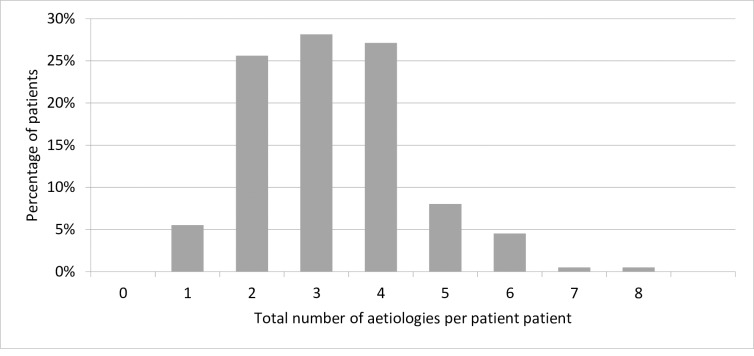
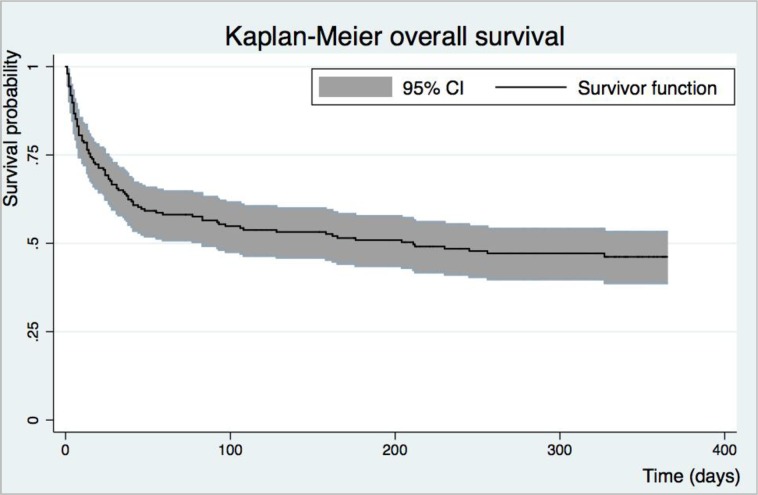
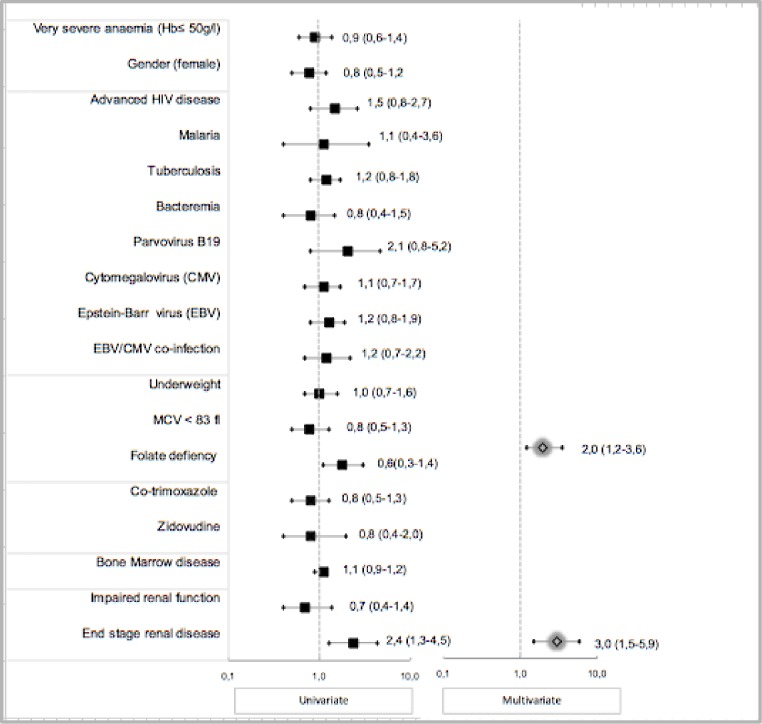
Results: 199 patients were enrolled: 42.2% had very severe anaemia and 45.7% were on ART. More than two potential causes for anaemia were present in 94% of the patients including iron deficiency (55.3%), underweight (BMI<20: 49.7%), TB infection (41.2%) and unsuppressed HIV infection (viral load >1000 copies/ml) (73.9%). EBV/CMV co-infection (16.5%) was associated with very severe anaemia (OR 2.8 95% CI 1.1-6.9). Overall mortality was high (53%; 100/199) with a median time to death of 17.5 days (IQR 6-55) days. Death was associated with folate deficiency (HR 2.2; 95% CI 1.2-3.8) and end stage renal disease (HR 3.2; 95% CI 1.6-6.2).
Conclusion: Mortality among severely anaemic HIV-infected adults is strikingly high. Clinicians should be aware of the urgent need for a multifactorial approach including starting or optimising HIV treatment, considering TB treatment, nutritional support and optimising renal management.
Conflict of interest statement
The authors have declared that no competing interests exist.
Figures
References
-
- Mocroft A, Kirk O, Barton SE, Dietrich M, Proenca R, Colebunders R, et al. Anaemia is an independent predictive marker for clinical prognosis in HIV-infected patients from across Europe. EuroSIDA study group. AIDS (London, England). 1999;13(8):943–50. - PubMed
-
- Makubi A, Okuma J, Spiegelman D, Hawkins C, Darling AM, Jackson E, et al. Burden and Determinants of Severe Anemia among HIV-Infected Adults: Results from a Large Urban HIV Program in Tanzania, East Africa. J Int Assoc Provid AIDS Care. 2015;14(2):148–55. 10.1177/2325957413488195 - DOI - PMC - PubMed
-
- Petraro P, Duggan C, Spiegelman D, Hertzmark E, Makubi A, Chalamilla G, et al. Determinants of Anemia Among Human Immunodeficiency Virus-Positive Adults at Care and Treatment Clinics in Dar es Salaam, Tanzania. The American journal of tropical medicine and hygiene. 2016;94(2):384–92. 10.4269/ajtmh.15-0587 - DOI - PMC - PubMed
Publication types
MeSH terms
Grants and funding
LinkOut - more resources
Full Text Sources
Medical
