


Predictors of presenteeism, absenteeism and job loss in patients commencing methotrexate or biologic therapy for rheumatoid arthritis
- PMID: 32097471
- PMCID: PMC7516097
- DOI: 10.1093/rheumatology/keaa027
Predictors of presenteeism, absenteeism and job loss in patients commencing methotrexate or biologic therapy for rheumatoid arthritis
Abstract
Objectives: Work is an important health outcome. This study aimed to identify predictors of work loss, absenteeism and presenteeism over 1 year in RA patients commencing treatment with MTX or biologics.
Methods: Patients aged 18-65 years in full/part-time employment from two UK prospective cohorts were included: MTX-starters = Rheumatoid Arthritis Medication Study; and biologic-starters = Biologics in Rheumatoid Arthritis Genetics and Genomics Study Syndicate. Presenteeism and absenteeism were assessed using the RA-specific Work Productivity Survey at baseline, and 6 and 12 months. Potential predictors including baseline age, gender, clinical measures (e.g. disability, pain, fatigue), psychological distress, occupation and EULAR response from baseline to 6 months were investigated.
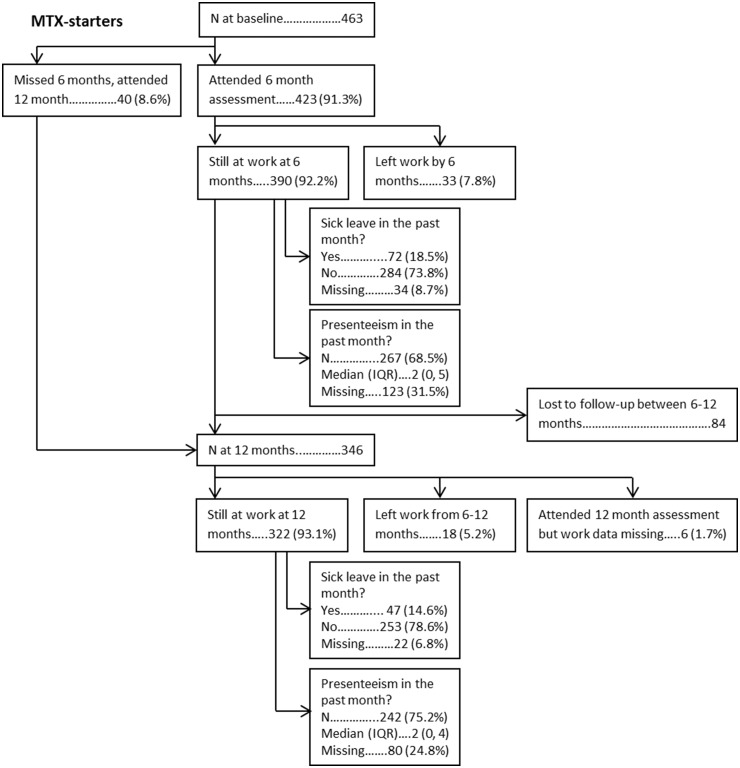
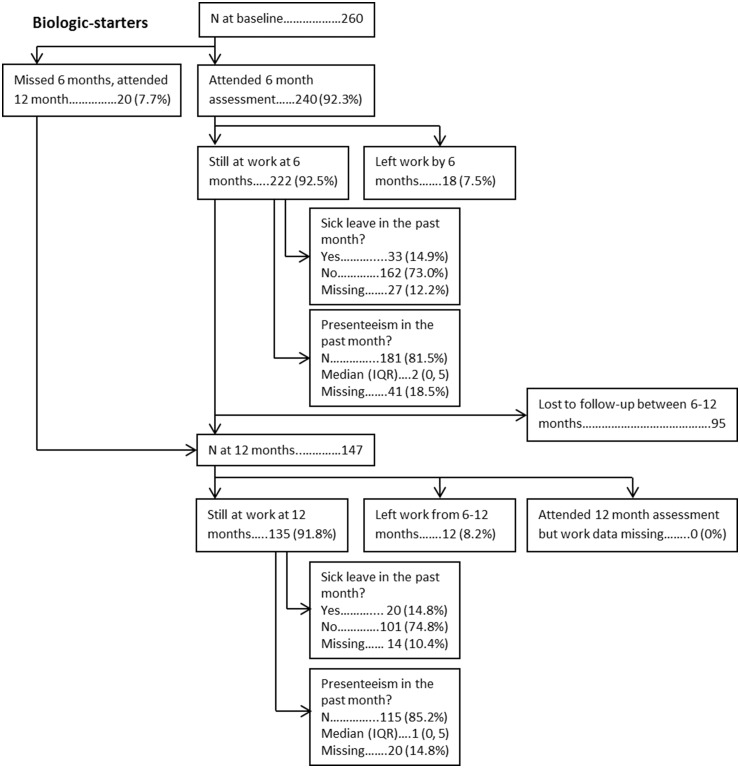
Results: A total of 51/463 MTX-starters and 30/260 biologic-starters left work over 12 months. Higher baseline psychological distress in MTX-starters [odds ratio (OR) 1.1 (95% CI: 1.0, 1.1)] and higher disability in biologic-starters [OR 3.5 (95% CI: 1.4, 8.6)] predicted work loss. Some 16.1% of patients reported sick-leave, which was predicted by disability [OR (95% CI): MTX-starters: 1.5 (0.9, 2.3); biologic-starters: 2.4 (1.1, 5.2)]. Median presenteeism scores were very low (minimal interference) in both cohorts. Higher fatigue for MTX starters [incidence rate ratio 1.2 (95% CI: 1.0, 1.4)] and higher disability in biologic-starters (incidence rate ratio 1.4 (95% CI: 1.1, 1.7)] predicted presenteeism. Good EULAR response was associated with lower absenteeism and presenteeism in both cohorts.
Conclusion: Patients with RA still face significant limitations regarding their ability to work. Disability and EULAR response were the main predictors of work outcomes, emphasizing the need to control the disease and the importance of function in enabling work participation.
Keywords: absenteeism; disability; presenteeism; rheumatoid arthritis; work; work disability.
© The Author(s) 2020. Published by Oxford University Press on behalf of the British Society for Rheumatology.
Figures
References
-
- Black C. Working for a healthier tomorrow. Norwich: The Stationery Office, 2008.
-
- Burton W, Morrison A, Maclean R, Ruderman E.. Systematic review of studies of productivity loss due to rheumatoid arthritis. Occup Med (Lond) 2006;56:18–27. - PubMed
-
- Verstappen SM. Rheumatoid arthritis and work: the impact of rheumatoid arthritis on absenteeism and presenteeism. Best Pract Res Clin Rheumatol 2015;29:495–511. - PubMed
Publication types
MeSH terms
Substances
Grants and funding
LinkOut - more resources
Full Text Sources
Medical
