


Thermal distribution, physiological effects and toxicities of extracorporeally induced whole-body hyperthermia in a pig model
- PMID: 32097540
- PMCID: PMC7058172
- DOI: 10.14814/phy2.14366
Thermal distribution, physiological effects and toxicities of extracorporeally induced whole-body hyperthermia in a pig model
Abstract
Background: Extracorporeally induced whole-body hyperthermia (eWBH) might be a beneficial treatment in cancer patients. Objectives of this pig study were to assess thermal distribution, (patho-)physiological effects, and safety of eWBH with a new WBH device.
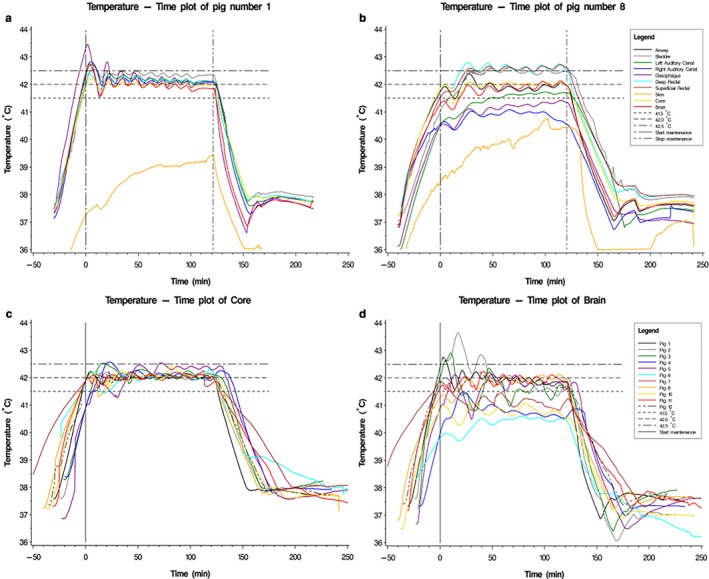
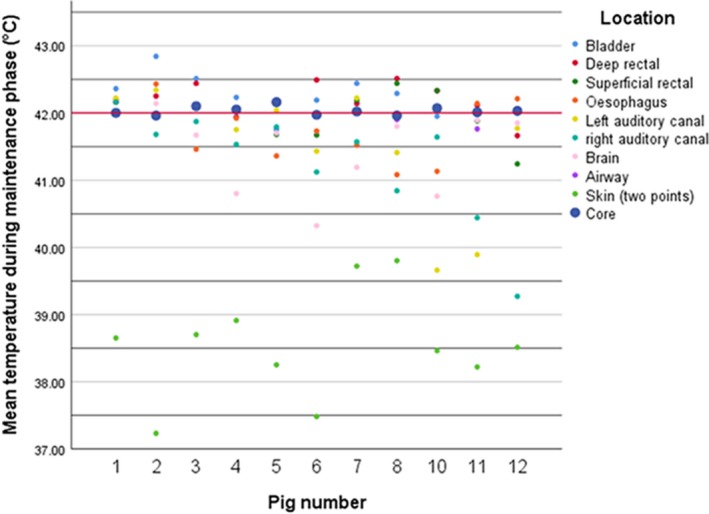
Methods: Fourteen healthy adult pigs were anesthetized, mechanically ventilated, and cannulated; 12 were included in the analysis. Blood was heated in 11 pigs (one pig served as control) using a WBH device (Vithèr Hyperthermia B.V.) containing two separate fluidic circuits and a heat exchanger. Temperature was monitored on nine different sites, including the brain. Core temperature (average of 4 deep probes) was elevated to 42°C for 2 hr.
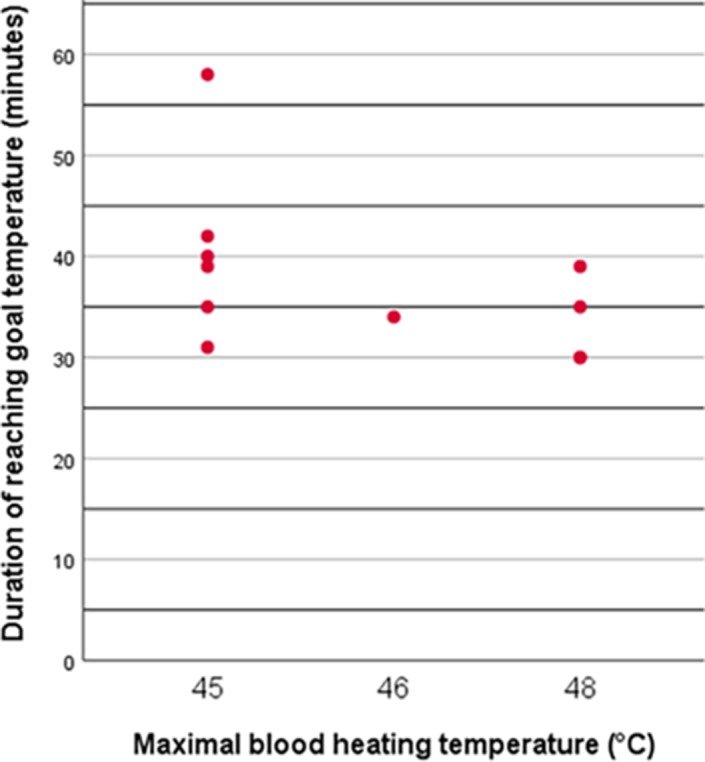
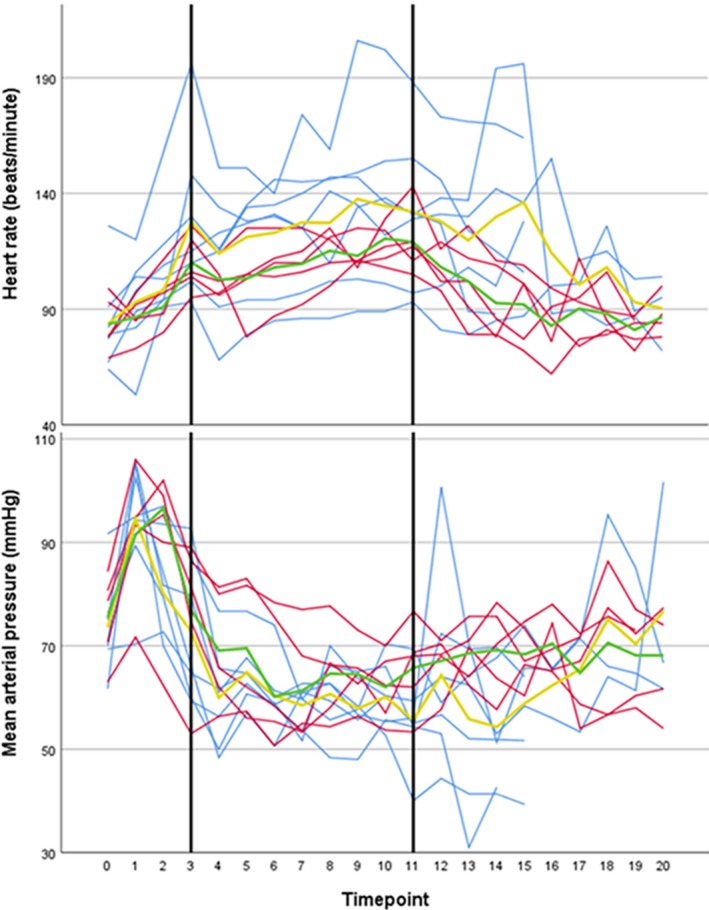
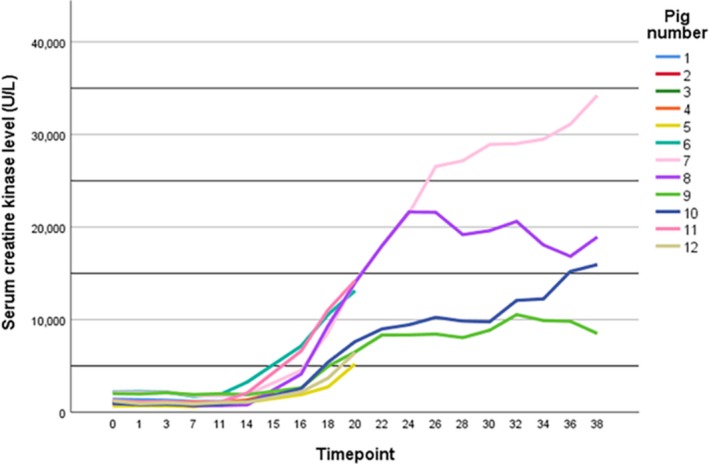
Results: Elevation of core body temperature to 42°C took on average (± standard deviation) 38 ± 8 min. Initially observed temperature spikes diminished after lowering maximal blood temperature to 45°C. Hereafter, brain temperature spikes never exceeded 42.5°C, mean brain temperature was at highest 41.9°C during maintenance. WBH resulted in increased heart rates and decreased mean arterial pressures. The vast amounts of fluids required to counter hypotension tended to be smaller after corticosteroid administration. Hemodialysis was started in three animals (potassium increase prevention in two and hyperkalemia treatment in one). Severe rhabdomyolysis was observed in all pigs (including the control). All animals survived the procedure until planned euthanasia 1, 6, or 24 hr post procedure.
Conclusion: Fast induction of eWBH with homogenous thermal distribution is feasible in pigs using the Vithèr WBH device. Severe hemodynamic disturbances, rhabdomyolysis, and hyperkalemia were observed.
Keywords: extracorporeal circulation; hemodynamics; induced hyperthermia; safety; whole-body hyperthermia.
© 2020 The Authors. Physiological Reports published by Wiley Periodicals, Inc. on behalf of The Physiological Society and the American Physiological Society.
Conflict of interest statement
GL, TF, MAJ, JGvdH, CvH, and GJS: Nothing to declare; MM is initiator of the eWBH project and co‐owner of the Vithèr WBH device.
Figures
References
-
- Ash, S. R. , Steinhart, C. R. , Curfman, M. F. , Gingrich, C. H. , Sapir, D. A. , Ash, E. L. , … Yatvin, M. B. (1997). Extracorporeal whole body hyperthermia treatments for HIV infection and AIDS. ASAIO Journal (American Society for Artificial Internal Organs, 43(5), M830–M838. 10.1097/00002480-199709000-00101 - DOI - PubMed
-
- Ballard‐Croft, C. , Wang, D. , Rosenstein, K. , Wang, J. , Pollock, R. , Morris, J. A. , & Zwischenberger, J. B. (2014). Venovenous perfusion‐induced systemic hyperthermia: Five‐day sheep survival studies. The Journal of Thoracic and Cardiovascular Surgery, 148(5), 2360–2366. 10.1016/j.jtcvs.2014.04.045 - DOI - PMC - PubMed
-
- Cremer, O. L. , Diephuis, J. C. , van Soest, H. , Vaessen, P. H. B. , Bruens, M. G. J. , Hennis, P. J. , & Kalkman, C. J. (2004). Cerebral oxygen extraction and autoregulation during extracorporeal whole body hyperthermia in humans. Anesthesiology, 100(5), 1101–1107. 10.1097/00000542-200405000-00011 - DOI - PubMed
Publication types
MeSH terms
Substances
LinkOut - more resources
Full Text Sources
