. 2020 Feb 21;8(1):21.
doi: 10.3390/dj8010021.

Primary Stability of Three Different Osteotomy Techniques in Medullary Bone: An in Vitro Study

Affiliations

Primary Stability of Three Different Osteotomy Techniques in Medullary Bone: An in Vitro Study

Ferdinando Attanasio et al. Dent J (Basel). .

Abstract

Background: The aim of this in vitro study was to analyse the primary stability of 20 implants placed with Twist drills (TD) versus 20 implants placed with Summers osteotomes (SO) and 20 implants placed with B&B bone compactors (BC) in medullary bone (quality type III and type IV).

Methods: The implants were placed in 10 fresh pig ribs fixed on a bench vice in order to avoid micro-movements during surgical procedures and measure recording. Peak insertion torque (PIT) and Peak removal torque (PRT) were recorded with MGT-12 digital torque gauge and ISQ was recorded through OSSTELL ISQ™ device by an independent operator.

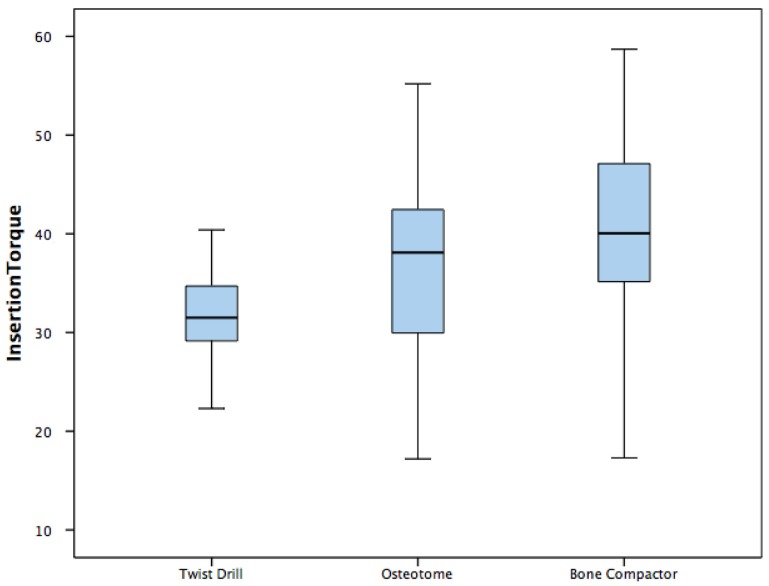
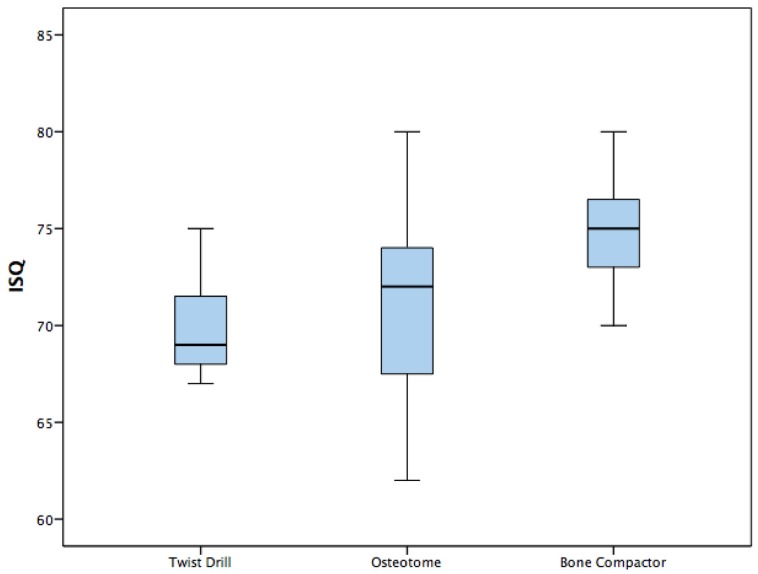
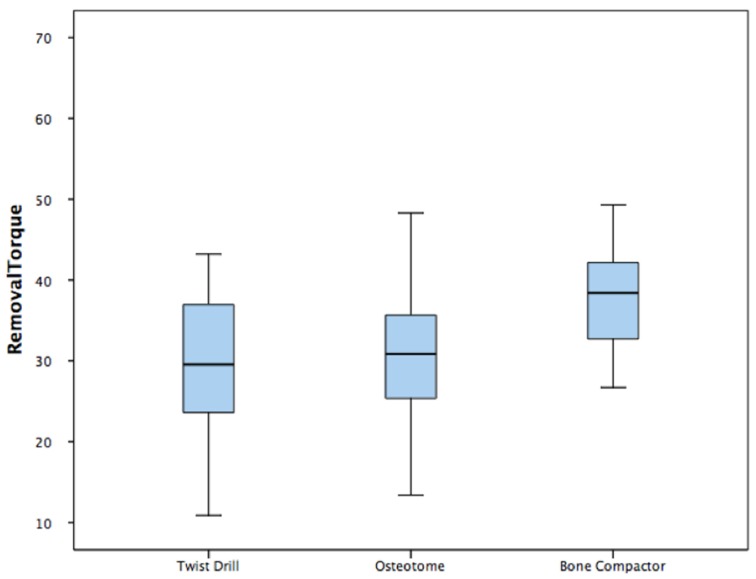
Results: Comparing our data (Tukey test p = 0.05), it was evidenced a statistically significant difference in the PIT between TD and BC groups (p = 0.01). Analysing ISQ data, there was a statistically significant difference between the TD and BC groups (p = 0.0001) and between the SO and BC groups (p = 0.014). The analysis of PRT evidenced a statistically significant difference between the TD and BC groups (p = 0.038).

Conclusions: This study evidenced that bone compactor preparation can positively influence primary implant stability (PS), however further in vivo studies and a larger sample are necessary to assess the usefulness in several clinical settings.

Keywords: in vitro study; insertion torque; osteotomy; primary implant stability; resonance frequency analysis.


Conflict of interest statement

The authors declare no conflict of interest.

Figures
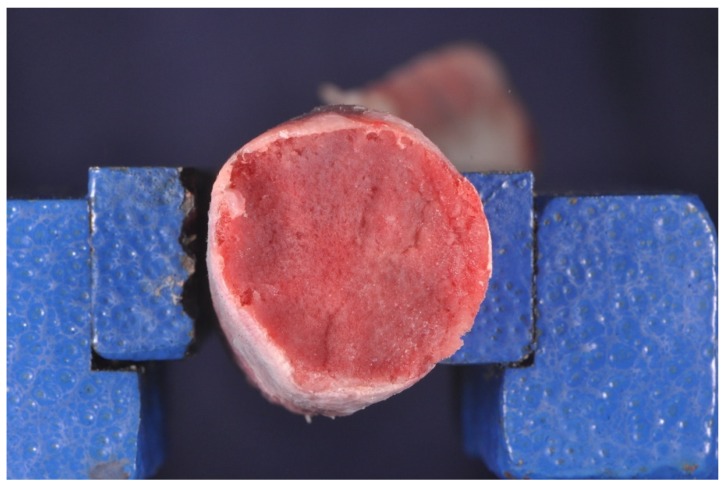
Figure 1
Figure 1
Fresh pig rib sample. The most distal region of the rib is smaller in diameter and has a great percentage of bone marrow.
Figure 2
Figure 2
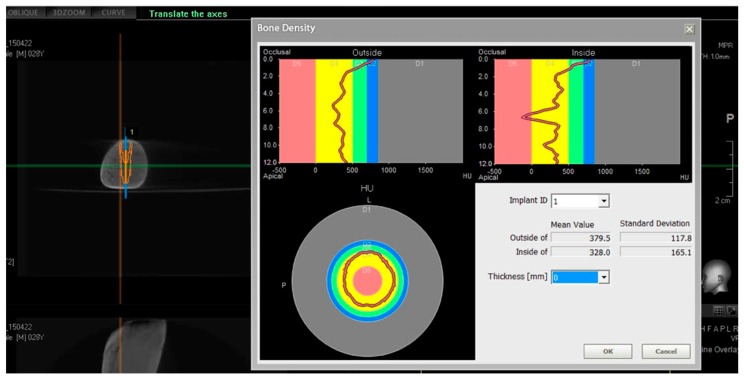
Scanning of the ribs with CBCT scan (Pax i-3d Green, Vatech, Yongin, Korea) to evaluate bone density and select implant site, using Hounsfield measurement unit (Density of 750 < HU).
Figure 3
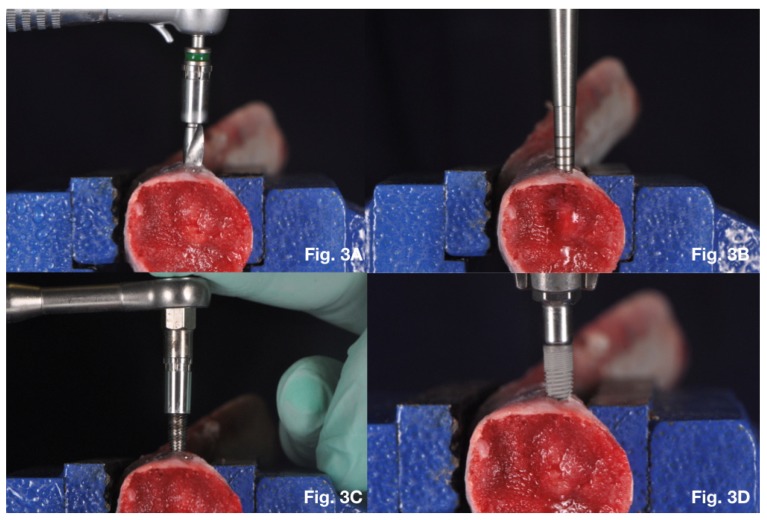
Figure 3
(A) Twist drills implant site preparation; (B) Summers osteotomes implant site preparation; (C) Bone compactors implant site preparation; (D) Implant placement using MGT-12 digital torque gauge.
Figure 4
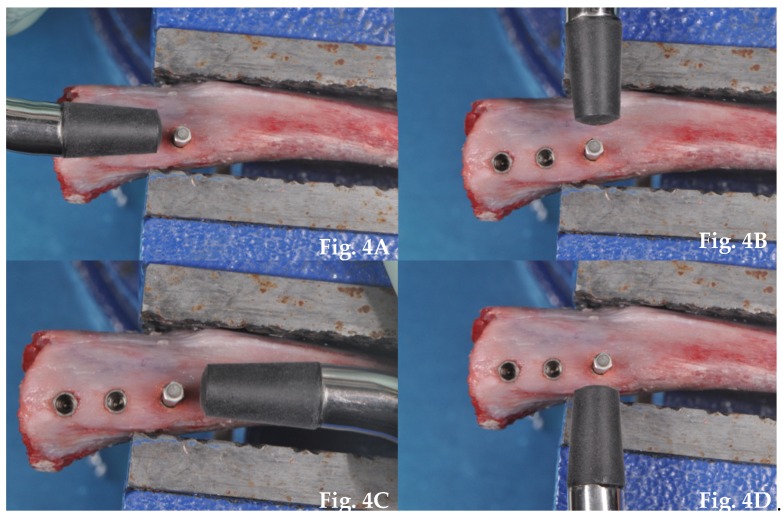
Figure 4
Resonance frequency analysis (RFA) performed with an OSSTELL ISQ™ device; (A) Measurement of ISQ D-V; (B) Measurement of ISQ M-V; (C) Measurement of ISQ M-L; (D) Measurement of ISQ D-L.
Figure 5
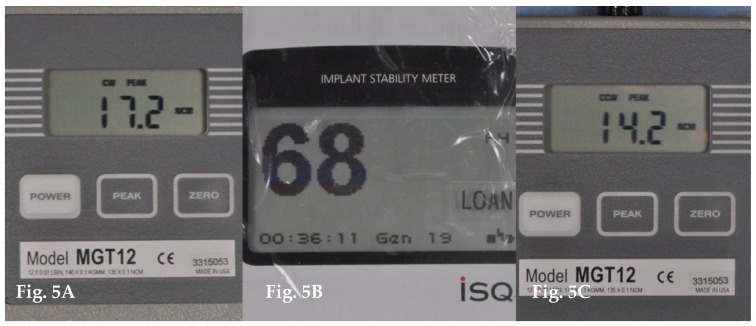
Figure 5
(A) Data recording of Peak insertion torque (PIT); (B) Data recording of Resonance frequency analysis (ISQ); (C) Data recording of Peak removal torque (PRT).
Figure 6
Figure 6
Box plot—Insertion torque.
Figure 7
Figure 7
Box plot—Implant stability quotient (ISQ).
Figure 8
Figure 8
Box plot—Removal torque.

References

    1. Figliuzzi M.M., Giudice A., Fortunato L. Advanced implant-prosthetic rehabilitation: How to obtain a correct restoration of both functions and aesthetics in patients with complex combined dental and maxillofacial trauma: A case report and topical review of the literature. Case Rep. Dent. 2017;2017:7146126. doi: 10.1155/2017/7146126. - DOI - PMC - PubMed
    1. Albrektsson T., Branemark P.I., Hansson H.A., Lindstrom J. Osseointegrated titanium implants. Requirements for ensuring a long-lasting, direct bone-to-implant anchorage in man. Acta Orthop. Scand. 1981;52:155–170. doi: 10.3109/17453678108991776. - DOI - PubMed
    1. Miyamoto I., Tsuboi Y., Wada E., Suwa H., Iizuka T. Influence of cortical bone thickness and implant length on implant stability at the time of surgery—Clinical, prospective, biomechanical, and imaging study. Bone. 2005;37:776–780. doi: 10.1016/j.bone.2005.06.019. - DOI - PubMed
    1. Pagliani L., Sennerby L., Peterson A., Verrocchi D., Volpe S., Andersson P. The relationship between resonance frequency analysis (RFA) and lateral displacement of dental implants: An in vitro study. J. Oral Rehab. 2013;40:221–227. doi: 10.1111/joor.12024. - DOI - PubMed
    1. Trisi P., Perfetto G., Baldwin E., Berardi D., Colagiovanni M., Scogna G. Implant micromotion is related to peak insertion torque and bone density. Clin. Oral Implants Res. 2009;20:467–471. doi: 10.1111/j.1600-0501.2008.01679.x. - DOI - PubMed

LinkOut - more resources