


Effect of Carotenoids, Oligosaccharides and Anthocyanins on Growth Performance, Immunological Parameters and Intestinal Morphology in Broiler Chickens Challenged with Escherichia coli Lipopolysaccharide
- PMID: 32098265
- PMCID: PMC7070938
- DOI: 10.3390/ani10020347
Effect of Carotenoids, Oligosaccharides and Anthocyanins on Growth Performance, Immunological Parameters and Intestinal Morphology in Broiler Chickens Challenged with Escherichia coli Lipopolysaccharide
Abstract
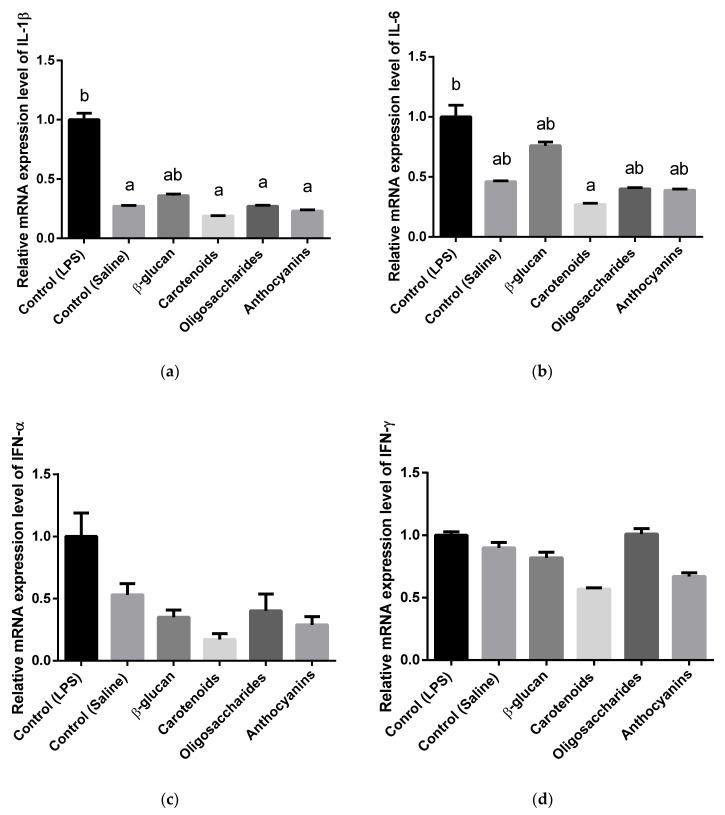
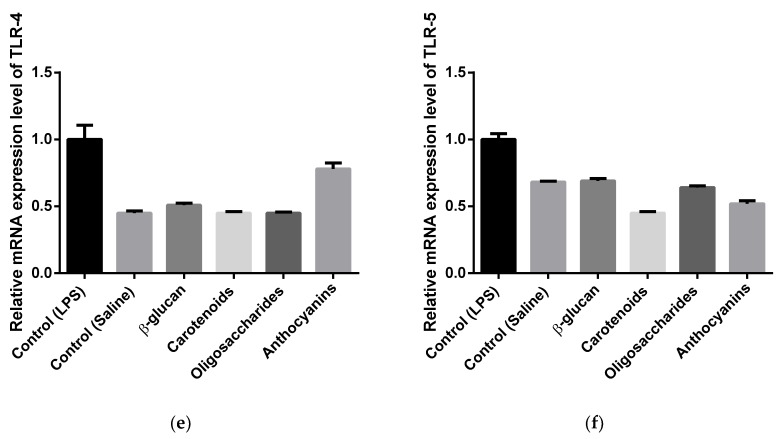
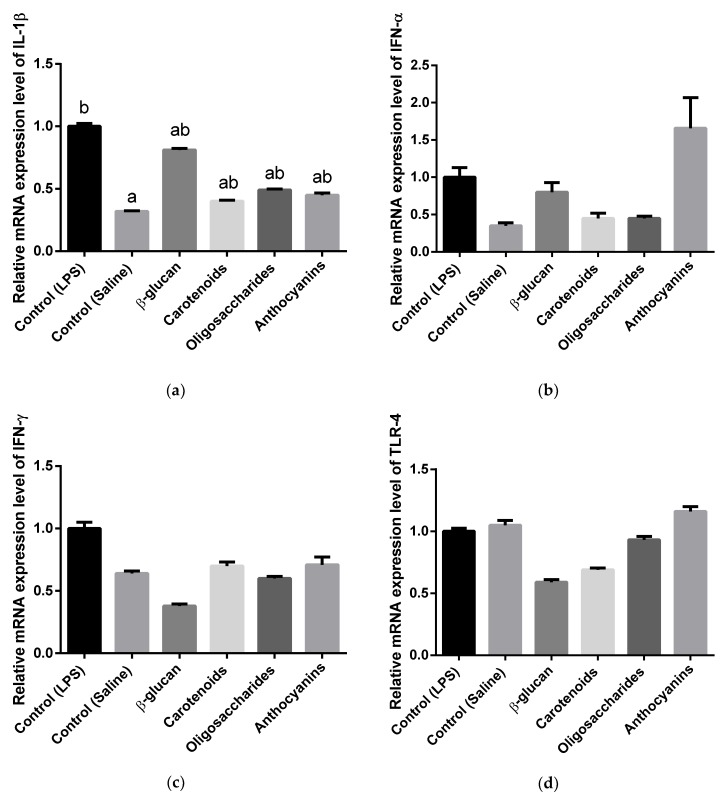
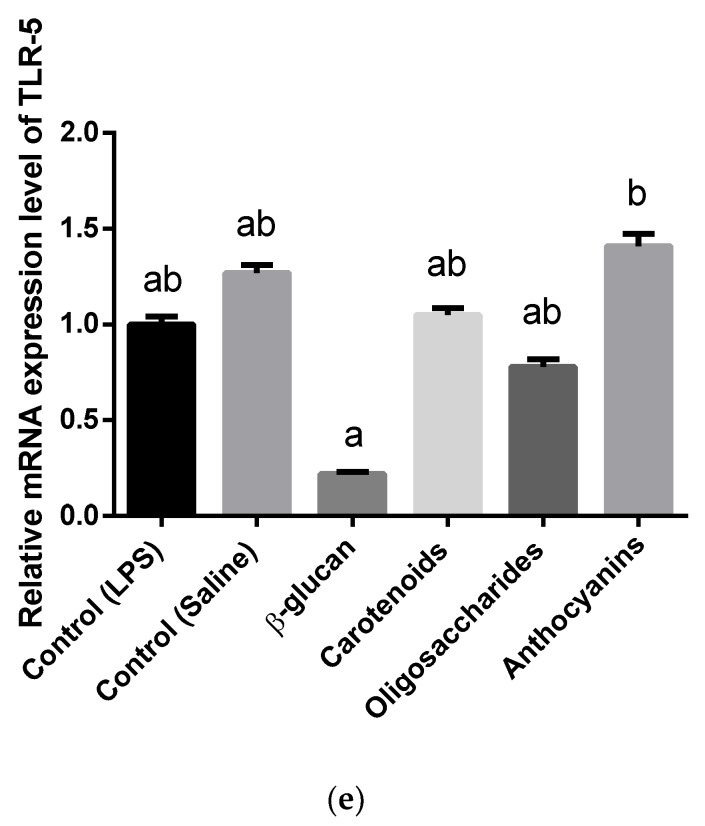
This study was conducted to investigate the effect of carotenoid, oligosaccharide and anthocyanin supplementation in broiler diets under Escherichia coli lipopolysaccharide (LPS) challenge. Ross 308 chickens were fed 5 diets: basal diet (control diet), diet supplemented with β-glucan in 0.05% (positive control) and diets with 0.5% carotenoid-, oligosaccharide- or anthocyanin contents. On the 26th days of age, chickens were challenged intraperitoneally 2 mg LPS per kg of body weight. 12 h after injection, birds were euthanized, then spleen and ileum samples were collected. LPS induced increased relative mRNA expression of splenic (p = 0.0445) and ileal (p = 0.0435) interleukin-1β (IL-1β), which was lower in the spleen in carotenoid (p = 0.0114), oligosaccharide (p = 0.0497) and anthocyanin (p = 0.0303)-treated chickens compared to LPS-injected control birds. Dietary supplementation of carotenoids also decreased relative gene expression of splenic interleukin-6 (IL-6) (p = 0.0325). In the ileum, β-glucan supplementation showed lower relative mRNA expression of toll-like receptor 5 (TLR-5) (p = 0.0387) compared to anthocyanin treatment. Gene expression of both splenic and ileal interferon-α (IFN-α), interferon-γ (IFN-γ), toll-like receptor 4 (TLR-4) and toll-like receptor 5 (TLR-5) were not influenced by dietary supplements. In conclusion, carotenoids, oligosaccharides and anthocyanins could partially mitigate the immune stress caused by LPS challenge. All of the compounds impacted longer villus height (p < 0.0001), villus height:crypt depth ratios were higher after β-glucan (p < 0.0001) and anthocyanin (p = 0.0063) supplementations and thickened mucosa was observed in β-glucan (p < 0.0001), oligosaccharide (p < 0.0001) and anthocyanin (p = 0.048) treatments. All of these findings could represent a more effective absorption of nutrients.
Keywords: anthocyanins; broiler chicken; carotenoids; cytokines; gene expression; intestinal morphology; natural compounds; oligosaccharides; receptors; β-glucan.
Conflict of interest statement
The authors declare no conflict of interest. The funders had no role in the design of the study; in the collection, analyses, or interpretation of data; in the writing of the manuscript, or in the decision to publish the results.
Figures
References
-
- Zhang B., Guo Y., Wang Z. The modulating effect of β-1,3/1,6-glucan supplementation in the diet on performance and immunological responses of broiler chickens. Asian-Australas. J. Anim. Sci. 2008;21:237–244. doi: 10.5713/ajas.2008.70207. - DOI
-
- Bartholomew M.J., Hollinger K., Vose D. Characterizing the risk of antimicrobial use in food animals: Fluoroquinolone-resistant Campylobacter from consumption of chicken. In: Torrence M.E., Isaacson R.E., editors. Microbial Food Safety in Animal Agriculture: Current Topics. Iowa State Press; Ames, IA, USA: 2003. pp. 293–301.
Grants and funding
LinkOut - more resources
Full Text Sources
