. 2020 Feb 4:14:509-518.
doi: 10.2147/DDDT.S237830. eCollection 2020.

Curcumin Has Anti-Proliferative and Pro-Apoptotic Effects on Tongue Cancer in vitro: A Study with Bioinformatics Analysis and in vitro Experiments

Affiliations

Curcumin Has Anti-Proliferative and Pro-Apoptotic Effects on Tongue Cancer in vitro: A Study with Bioinformatics Analysis and in vitro Experiments

Chao Ma et al. Drug Des Devel Ther. .

Abstract

Purpose: This study focused on the mechanism underlying the therapeutic effect of curcumin against tongue cancer (TC).

Methods: Target genes of TC and curcumin were identified, respectively. Three datasets of TC from Gene Expression Omnibus were included, and then the differentially expressed genes were collected. After combing the data from The Cancer Genome Atlas, bioinformatics analyses were performed to investigate hub genes in terms of the functions and correlations. The proliferation and migration of TC cells were evaluated with CCK-8 assay and scratch wound healing assay, respectively. Cell apoptosis was evaluated by TUNEL assay, flow cytometry and Western blot. Cell cycle was determined by flow cytometry.

Results: In this study, 15 hub genes were identified (TK1, TDRD3, TAGLN2, RNASEH2A, PDE2A, NCF2, MAP3K3, GPX3, GPD1L, GBP1, ENO1, CAT, ALDH6A1, AGPS and ACACB). They were mainly enriched in oxygen-related processes, such as oxidation-reduction process, reactive oxygen species metabolic process, hydrogen peroxide catabolic process, oxidoreductase activity and Peroxisome-related pathway. The expression levels of hub gene mRNAs were positively correlated with each other's expression levels. None of the hub genes was correlated with prognosis (P > 0.05). Curcumin significantly inhibited CAL 27 cell proliferation and migration (P < 0.05), but significantly promoted cell apoptosis (P < 0.05).

Conclusion: Curcumin has potential therapeutic effect on treating TC by suppressing cell proliferation and migration, as well as promoting apoptosis through modulating oxygen-related signaling pathways.

Keywords: apoptosis; computational biology; curcumin; migration; proliferation; tongue neoplasms.


Conflict of interest statement

The authors report no conflicts of interest in this work.

Figures
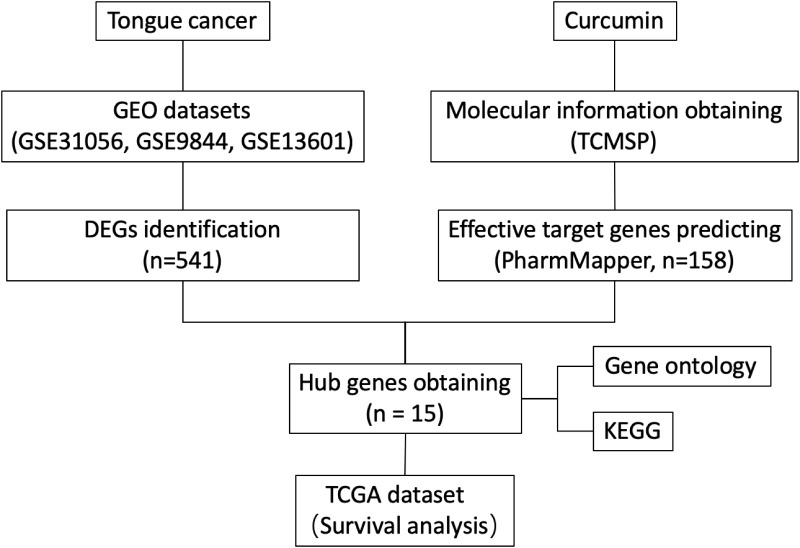
Figure 1
Figure 1
Working diagram showing computational and bioinformatics analysis.
Figure 2
Figure 2
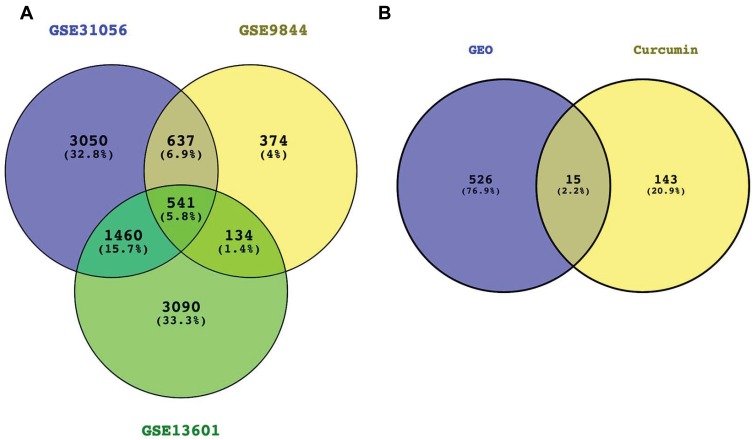
Venn diagrams showing the overlaps of the DEGs in common (A) and hub genes (B).
Figure 3
Figure 3
The effect of curcumin on TC cell proliferation. The CAL 27 cells were treated with curcumin at indicated concentrations, cell proliferation was studied using CCK-8 assay. ****P < 0.0001, one-way ANOVA.
Figure 4
Figure 4
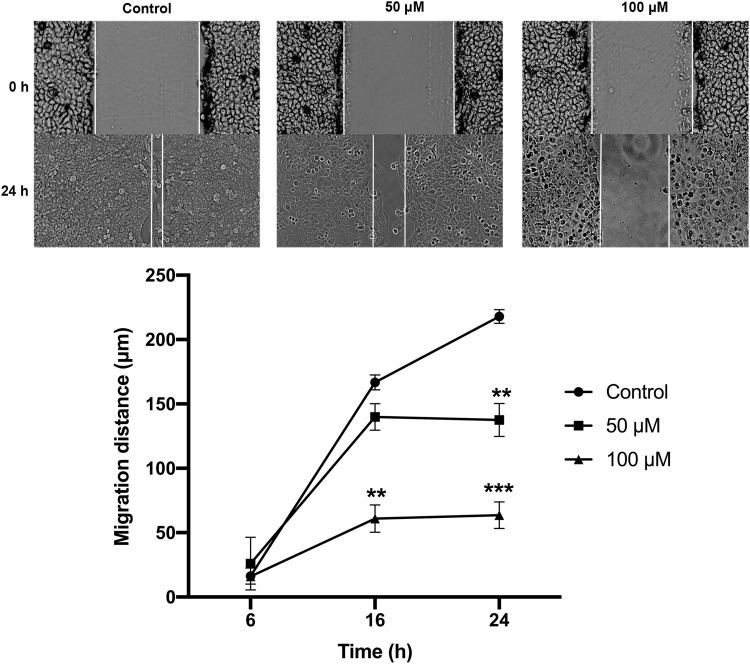
The effect of curcumin on TC cell migration. The CAL 27 cells were treated with curcumin at indicated concentrations, cell migration was studied using scratch wound assay. **P < 0.01 and ***P < 0.001, two-way ANOVA.
Figure 5
Figure 5
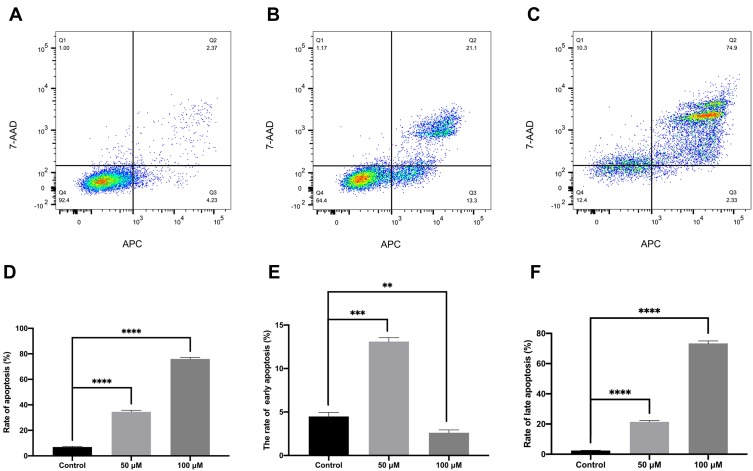
The effect of curcumin on TC cell apoptosis (AF). The CAL 27 cells were treated with curcumin at indicated concentrations, cell apoptosis was studied using scratch wound assay. **P < 0.01 and ***P < 0.001, ****P < 0.0001, one-way ANOVA.
Figure 6
Figure 6
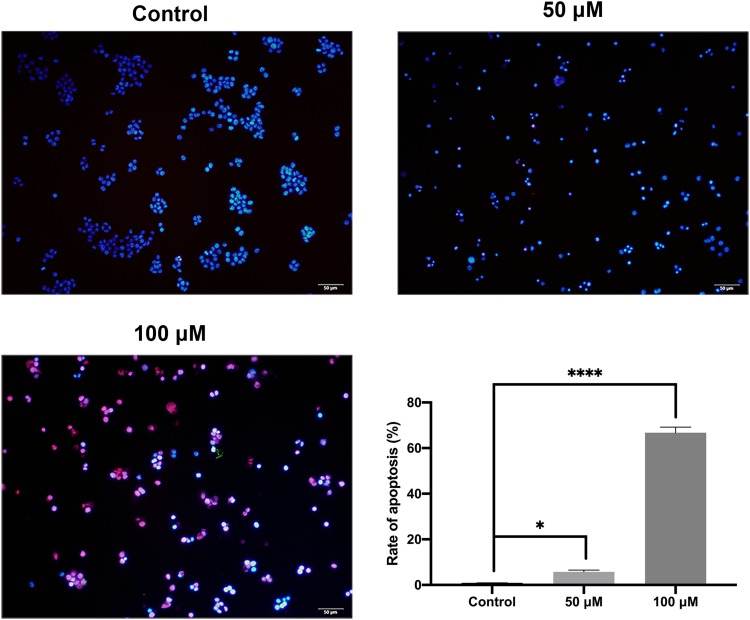
Cell apoptosis evaluated by TUNEL assay. The CAL 27 cells were treated with curcumin at indicated concentrations, followed by TUNEL assay. Red color is for TUNEL-positive cells, and blue color is for nucleus stained by DAPI. *P < 0.05 and ****P < 0.0001, one-way ANOVA.
Figure 7
Figure 7
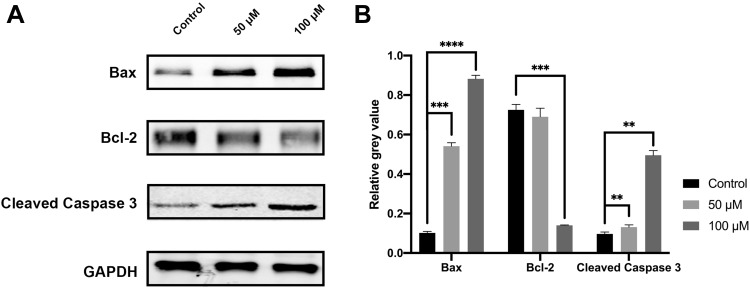
Cell apoptosis evaluated by Western blot. The CAL 27 cells were treated with curcumin at indicated concentrations, followed by Western blot assay. Representative blots (A) and quantification results (B) were shown. Bcl-2, B-cell lymphoma 2; Bax, Bcl-2-associated X protein; GAPDH, glyceraldehyde-3-phosphate dehydrogenase. **P < 0.01, ***P < 0.001 and ****P < 0.0001, one-way ANOVA.
Figure 8
Figure 8
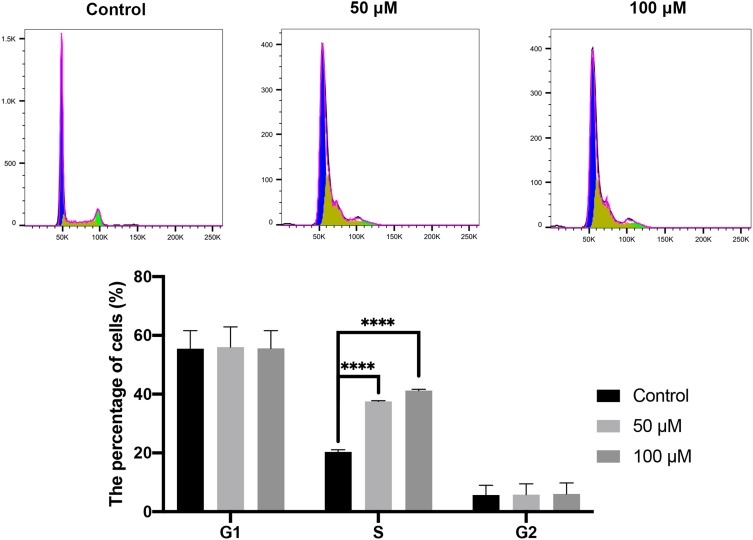
Cell cycle evaluated by flow cytometry. The CAL 27 cells were treated with curcumin at indicated concentrations, followed by flow cytometry assay. ****P < 0.0001, one-way ANOVA.

References

    1. Ng JH, Iyer NG, Tan MH, Edgren G. Changing epidemiology of oral squamous cell carcinoma of the tongue: a global study. Head Neck. 2017;39(2):297–304. doi: 10.1002/hed.24589 - DOI - PubMed
    1. Simard EP, Torre LA, Jemal A. International trends in head and neck cancer incidence rates: differences by country, sex and anatomic site. Oral Oncol. 2014;50(5):387–403. doi: 10.1016/j.oraloncology.2014.01.016 - DOI - PubMed
    1. Bello IO, Soini Y, Salo T. Prognostic evaluation of oral tongue cancer: means, markers and perspectives (I). Oral Oncol. 2010;46(9):630–635. doi: 10.1016/j.oraloncology.2010.06.006 - DOI - PubMed
    1. Michikawa C, Uzawa N, Kayamori K, et al. Clinical significance of lymphatic and blood vessel invasion in oral tongue squamous cell carcinomas. Oral Oncol. 2012;48(4):320–324. doi: 10.1016/j.oraloncology.2011.11.014 - DOI - PubMed
    1. Annertz K, Anderson H, Palmer K, Wennerberg J. The increase in incidence of cancer of the tongue in the Nordic countries continues into the twenty-first century. Acta Otolaryngol. 2012;132(5):552–557. doi: 10.3109/00016489.2011.649146 - DOI - PubMed

MeSH terms