


Clinical efficacy of peek patient-specific implants in orbital reconstruction
- PMID: 32099771
- PMCID: PMC7029176
- DOI: 10.1016/j.jobcr.2020.01.006
Clinical efficacy of peek patient-specific implants in orbital reconstruction
Abstract
Purpose: To assess the clinical efficacy of custom made PEEK patient-specific implants in treatment of orbital wall defects.
Methods: Forty-five patients with unilateral post-traumatic orbital wall defects were enrolled in the study. They underwent subsequent reconstructive procedures using PEEK patient-specific implants (PSI) or pre-bent titanium plates. All the patients were examined with the standardized algorithm, including local status examination, vision assessment and computer tomography (CT) with measurements of the orbital volume. A comparative analysis of the treatment outcomes in two groups of patients (pre-bent plates/PSI) was performed.
Results: The study findings show an absence of any postoperative infection, inflamation or decreased visual acuity in either group. In PSI group, diplopia after surgery was absent in 82.1% of patients versus 70.6% of controls. The mean duration of surgery was 54.25 ± 16.8 min with PSI application and 82.9 ± 10.8 min with pre-bent plates. The mean difference between the intact and damaged orbital volume was 1.9 ± 1.4 cm3 in the control group versus 0.74 ± 0.6 cm3 in PSI group (р<0.05).
Conclusion: PEEK PSI demonstrated higher clinical efficacy in comparison to pre-bent plates in orbital wall reconstruction especially in restoring the volume and shape of the damaged orbit.
Keywords: Orbital reconstruction; PEEK; Patient-specific implants.
© 2020 Craniofacial Research Foundation. Published by Elsevier B.V. All rights reserved.
Conflict of interest statement
The authors report no conflicts of interest. The authors alone are responsible for the content and writing of the article. Ethical approval: All procedures performed in studies involving human participants were in accordance with the ethical standards of the institutional and national research committee and with the 1964 Helsinki declaration and its later amendments or comparable ethical standards. It was approved by the National Medical University Bioethics Committee (Protocol No 126). This article does not contain any studies with animals performed by any of the authors. Informed consent: informed consent was obtained from all individual participants included in the study.
Figures
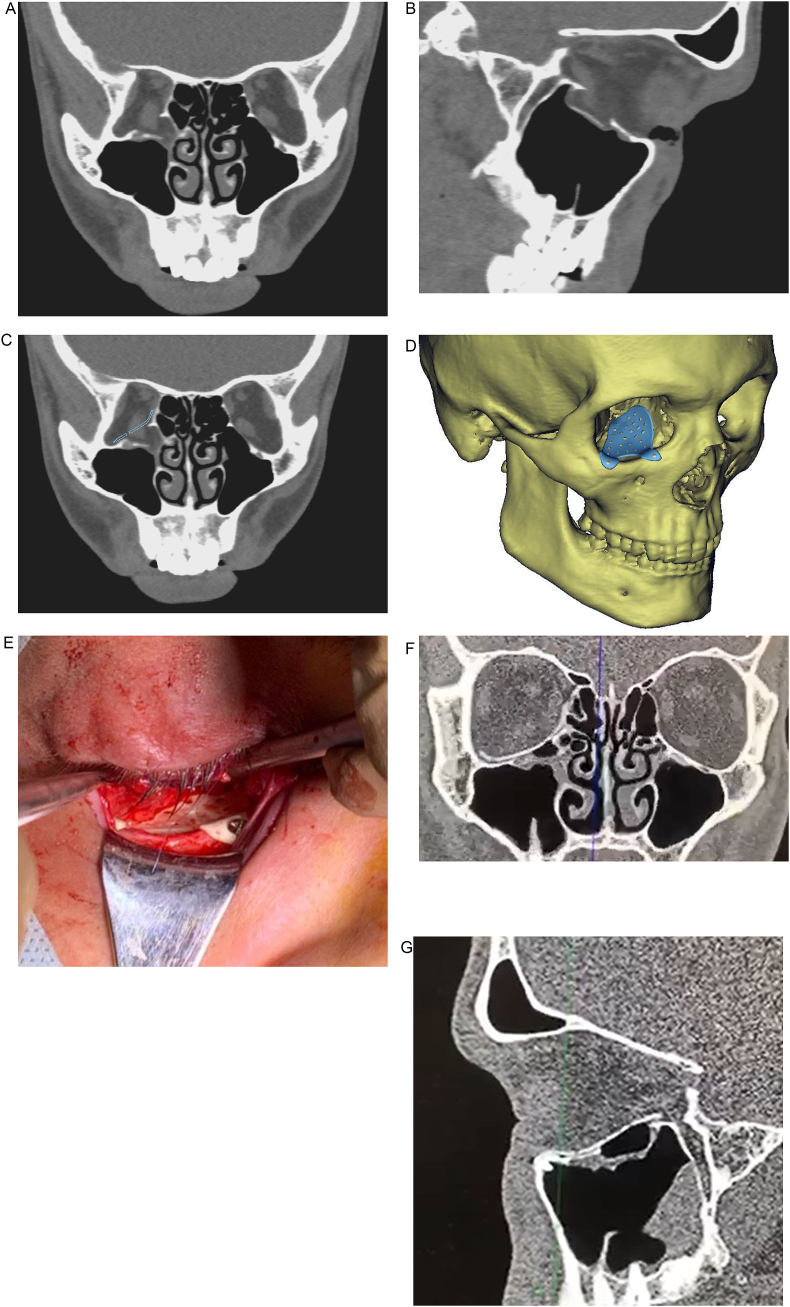
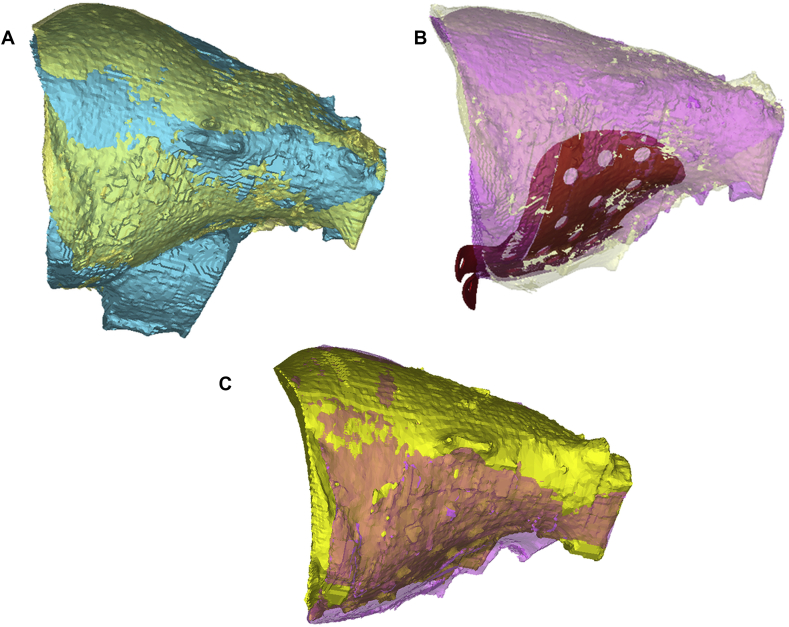
References
-
- Baumann A., Sinko K., Dorner G. Late reconstruction of the orbit with patient-specific implants using computer-aided planning and navigation. J Oral Maxillofac Surg. 2015;73:101–106. - PubMed
-
- Patel N., Kim B., Zaid W. Use of virtual surgical planning for simultaneous maxillofacial osteotomies and custom polyetheretherketone implant in secondary orbito-frontal reconstruction: importance of restoring orbital volume. J Craniofac Surg. 2017;28:387–390. - PubMed
-
- Dubois L., Jansen J., Schreurs R., Saeed Predictability in orbital reconstruction: a human cadaver study. Part I: endoscopic-assisted orbital reconsruction. J Cranio-Maxillo-Fac Surg. 2015;43(10):2034–2041. - PubMed
LinkOut - more resources
Full Text Sources
