


Epidemiology of Injuries Sustained by Civilians and Local Combatants in Contemporary Armed Conflict: An Appeal for a Shared Trauma Registry Among Humanitarian Actors
- PMID: 32100067
- PMCID: PMC7223167
- DOI: 10.1007/s00268-020-05428-y
Epidemiology of Injuries Sustained by Civilians and Local Combatants in Contemporary Armed Conflict: An Appeal for a Shared Trauma Registry Among Humanitarian Actors
Abstract
Background: Conflict-related injuries sustained by civilians and local combatants are poorly described, unlike injuries sustained by US, North Atlantic Treaty Organization, and coalition military personnel. An understanding of injury epidemiology in twenty-first century armed conflict is required to plan humanitarian trauma systems capable of responding to population needs.
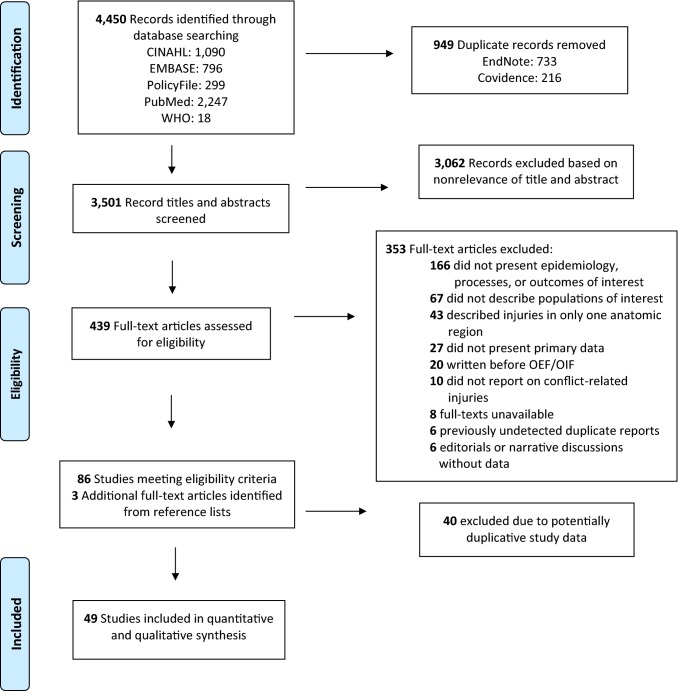
Methods: We conducted a systematic search of databases (e.g., PubMed, Embase, Web of Science, World Health Organization Catalog, Google Scholar) and grey literature repositories to identify records that described conflict-related injuries sustained by civilians and local combatants since 2001.
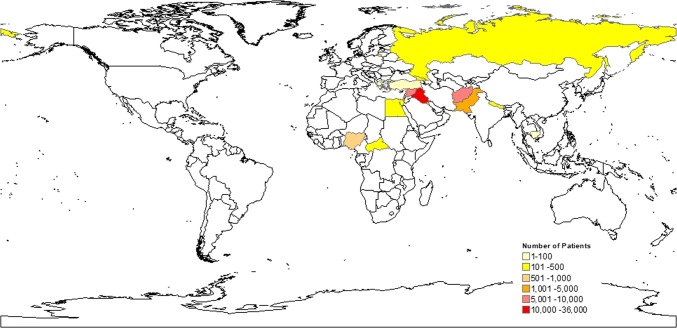
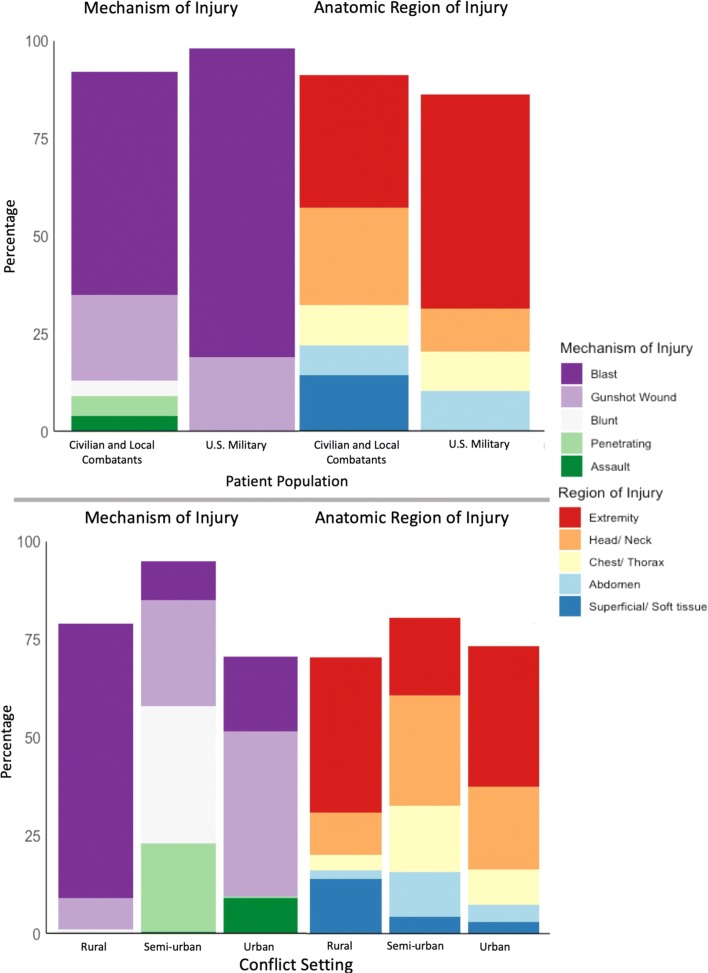
Results: The search returned 3501 records. 49 reports representing conflicts in 18 countries were included in the analysis and described injuries of 58,578 patients. 79.3% of patients were male, and 34.7% were under age 18 years. Blast injury was the predominant mechanism (50.2%), and extremities were the most common anatomic region of injury (33.5%). The heterogeneity and lack of reporting of data elements prevented pooled analysis and limited the generalizability of the results. For example, data elements including measures of injury severity, resource utilization (ventilator support, transfusion, surgery), and outcomes other than mortality (disability, quality of life measures) were presented by fewer than 25% of reports.
Conclusions: Data describing the needs of civilians and local combatants injured during conflict are currently inadequate to inform the development of humanitarian trauma systems. To guide system-wide capacity building and quality improvement, we advocate for a humanitarian trauma registry with a minimum set of data elements.
Conflict of interest statement
The authors declare that they have no conflict of interest.
Figures
References
-
- Guha-Sapir D, Schlüter B, Rodriguez-Llanes JM, et al. Patterns of civilian and child deaths due to war-related violence in Syria: a comparative analysis from the Violation Documentation Center dataset, 2011–2016. Lancet Glob Health. 2018;6:e103–e110. doi: 10.1016/S2214-109X(17)30469-2. - DOI - PubMed
-
- Eck K, Hultman L. One-sided violence against civilians in war: insights from new fatality data. J Peace Res. 2007;44:233–246. doi: 10.1177/0022343307075124. - DOI
-
- Gowan R, Stedman SJ. The international regime for treating civil war, 1988–2017. Daedalus. 2018;147:171–184. doi: 10.1162/DAED_a_00482. - DOI
Publication types
MeSH terms
LinkOut - more resources
Full Text Sources
Medical
Research Materials
