Improving Complementary Food Hygiene Behaviors Using the Risk, Attitude, Norms, Ability, and Self-Regulation Approach in Rural Malawi
- PMID: 32100679
- PMCID: PMC7204602
- DOI: 10.4269/ajtmh.19-0528
Improving Complementary Food Hygiene Behaviors Using the Risk, Attitude, Norms, Ability, and Self-Regulation Approach in Rural Malawi
Abstract
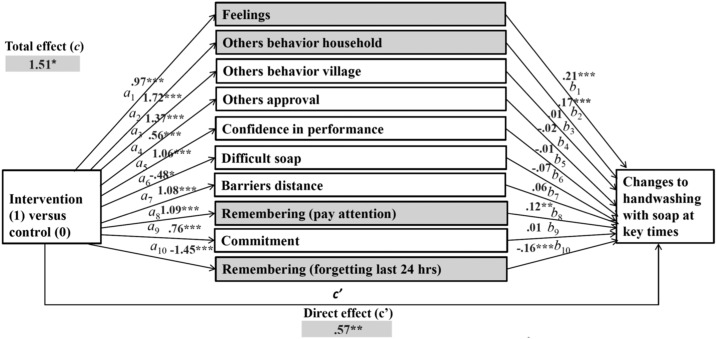
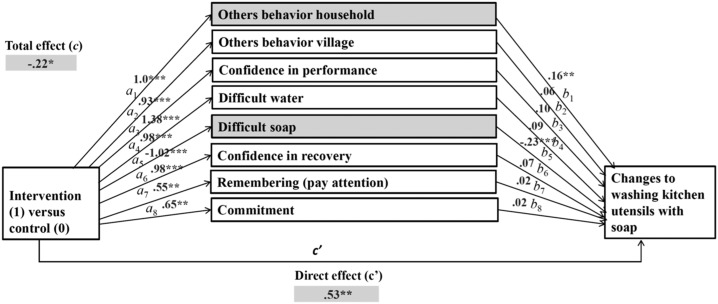
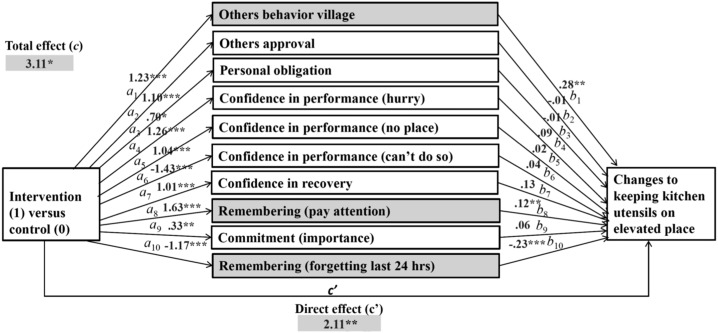
The study evaluated the effectiveness of an intervention to improve complementary food hygiene behaviors among child caregivers in rural Malawi. Formative research and intervention development was grounded in the risk, attitude, norms, ability, and self-regulation (RANAS) model and targeted washing hands and kitchen utensils with soap, safe utensil storage, reheating of leftover food, and feeding of children by caregivers. Longitudinal research was applied at baseline and follow-up surveys among 320 caregivers. Determinants of selected behaviors were found, and interventions were developed based on the behavior change techniques aligned with these determinants in the RANAS model. The intervention was delivered over 9 months through group (cluster) meetings and household visits and included demonstrations, games, rewards, and songs. We randomly assigned villages to the control or intervention group. Follow-up results indicated a significant increase in three targeted behaviors (washing kitchen utensils with soap, safe utensil storage, and handwashing with soap) among intervention recipients. Several psychosocial factors differed significantly between the intervention and control groups. Mediation results showed that the intervention had a significant effect on these three targeted behaviors. For handwashing, feelings, others' behavior in the household, and remembering; for washing kitchen utensils, others' behavior in the household and difficulty to get enough soap; for safe utensils storage, others' behavior in the village and remembering mediated the effect of the intervention on the targeted behaviors. The study demonstrated that targeting food hygiene behaviors with a theory-driven behavior change approach using psychosocial factors can improve the behavior of child caregivers in rural Malawi.
Figures
References
-
- World Health Organization , 2017. Causes of Child Mortality. Available at: http://www.who.int/gho/child_health/mortality/causes/en/. Accessed May 10, 2019.
-
- Motarjemi Y, Kaferstein F, Moy G, Quevedo F, 1994. Contaminated food, a hazard for the very young. World Health Forum 15: 69–71. - PubMed
-
- Curtis V, Cairncross S, Yonli R, 2000. Review: Domestic Hygiene and Diarrhoea–Pinpointing the Problem, Vol. 5 London, United Kingdom: European Journal of Tropical Medicine and International Health. - PubMed
-
- Wolf J, Johnston R, Hunter PR, Gordon B, Medlicott K, Prüss-Ustün A, 2019. A Faecal contamination index for interpreting heterogeneous diarrhoea impacts of water, sanitation and hygiene interventions and overall, regional and country estimates of community sanitation coverage with a focus on low- and middle-income countries. Int J Hyg Environ Health 222: 270–282. - PMC - PubMed
-
- World Health Organization , 2017. Fact Sheet about Food Safety. Available at: http://www.who.int/mediacentre/factsheets/fs399/en/. Accessed January 19, 2017.
MeSH terms
LinkOut - more resources
Full Text Sources
Medical