


p-Synephrine, ephedrine, p-octopamine and m-synephrine: Comparative mechanistic, physiological and pharmacological properties
- PMID: 32101364
- PMCID: PMC7496387
- DOI: 10.1002/ptr.6649
p-Synephrine, ephedrine, p-octopamine and m-synephrine: Comparative mechanistic, physiological and pharmacological properties
Abstract
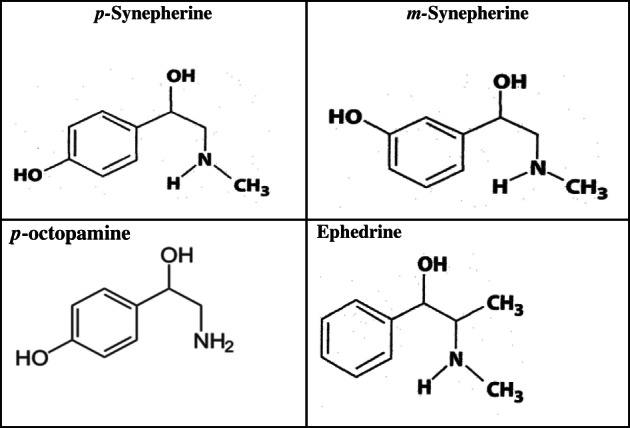
Confusion and misunderstanding exist regarding the lack of cardiovascular and other adverse health effects of p-synephrine and p-octopamine relative to ephedrine and m-synephrine (phenylephrine) which are known for their effects on the cardiovascular system. These four molecules have some structural similarities. However, the structural and stereochemical differences of p-synephrine and p-octopamine as related to ephedrine and m-synephrine result in markedly different adrenergic receptor binding characteristics as well as other mechanistic differences which are reviewed. p-Synephrine and p-octopamine exhibit little binding to α-1, α-2, β-1 and β-2 adrenergic receptors, nor are they known to exhibit indirect actions leading to an increase in available levels of endogenous norepinephrine and epinephrine at commonly used doses. The relative absence of these mechanistic actions provides an explanation for their lack of production of cardiovascular effects at commonly used oral doses as compared to ephedrine and m-synephrine. As a consequence, the effects of ephedrine and m-synephrine cannot be directly extrapolated to p-synephrine and p-octopamine which exhibit significantly different pharmacokinetic, and physiological/pharmacological properties. These conclusions are supported by human, animal and in vitro studies that are discussed.
Keywords: adrenergic receptors; ephedrine; m-synephrine; p-octopamine; p-synephrine; trace amine-associated receptors.
© 2020 The Authors. Phytotherapy Research published by John Wiley & Sons Ltd.
Conflict of interest statement
SJS has served as a consultant for Innophos LLC. SDR and MS have no potential conflicts of interest to report.
Figures
References
-
- Abourashed, E. A. , El‐Alfy, A. T. , Khan, I. A. , & Walker, L. (2003). Ephedra in perspective: A current review. Phytotherapy Research, 17, 703–712. - PubMed
-
- Andraws, R. , Chawla, P. , & Brown, D. L. (2005). Cardiovascular effects of ephedra alkaloids: A comprehensive review. Progress in Cardiovascular Diseases, 47, 217–225. - PubMed
-
- Anon . (2010). Dangerous supplements. What you don't know about these 12 ingredients could hurt you. Consumer Reports, September, 16–20. - PubMed
-
- Arbo, M. D. , Larentis, E. R. , Linck, V. M. , Aboy, A. L. , Pimentel, A. L. , Henriques, A. T. , … Limberger, R. P. (2008). Concentrations of p‐synephrine in fruits and leaves of citrus species (Rutaceae) and the acute toxicity testing of Citrus aurantium extract and p‐synephrine. Food and Chemical Toxicology, 46, 2770–2775. - PubMed
-
- Arbo, M. D. , Schmitt, G. C. , Limberger, M. F. , Charão, M. F. , Moro, A. M. , Ribeiro, G. L. , … Limberger, R. P. (2009). Subchronic toxicity of Citrus aurantium L (Rutaceae) extract and p‐synephrine in mice. Regulatory Toxicology and Pharmacology, 54, 114–117. - PubMed
Publication types
MeSH terms
Substances
Grants and funding
LinkOut - more resources
Full Text Sources
Research Materials
