


The application of key feature extraction algorithm based on Gabor wavelet transformation in the diagnosis of lumbar intervertebral disc degenerative changes
- PMID: 32101549
- PMCID: PMC7043753
- DOI: 10.1371/journal.pone.0227894
The application of key feature extraction algorithm based on Gabor wavelet transformation in the diagnosis of lumbar intervertebral disc degenerative changes
Retraction in
-
Retraction: The application of key feature extraction algorithm based on Gabor wavelet transformation in the diagnosis of lumbar intervertebral disc degenerative changes.PLoS One. 2023 Sep 25;18(9):e0292208. doi: 10.1371/journal.pone.0292208. eCollection 2023. PLoS One. 2023. PMID: 37747916 Free PMC article. No abstract available.
Abstract
Objective: Based on the theoretical basis of Gabor wavelet transformation, the application effects of feature extraction algorithm in Magnetic Resonance Imaging (MRI) and the role of feature extraction algorithm in the diagnosis of lumbar vertebra degenerative diseases were explored.
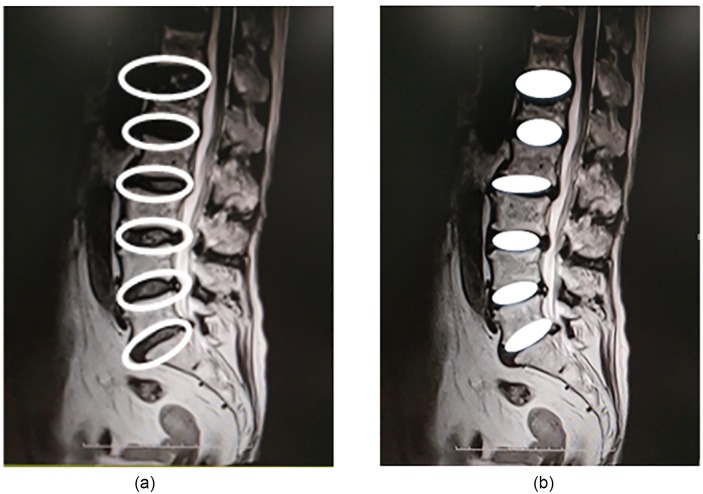
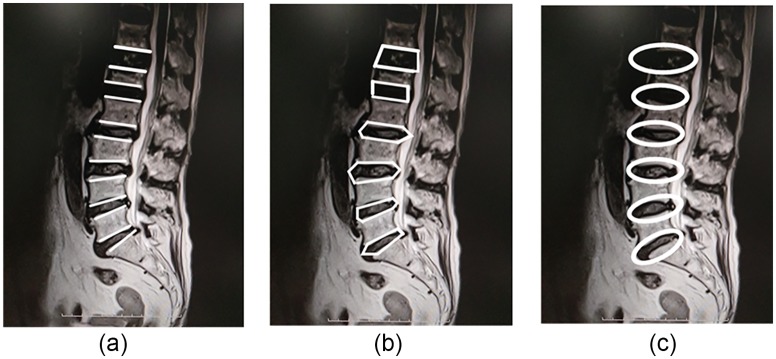
Method: The structure of lumbar vertebra and degenerative changes were respectively introduced to clarify the onset mechanism and pathological changes of lumbar vertebra degenerative changes. Most importantly, the theoretical basis of Gabor wavelet transformation and the extraction effect of feature information in lumbar vertebra MRI images were introduced. The differentiation effects of feature information extraction algorithm on annulus fibrosus and nucleus pulposus were analyzed. In this study, the data of lumbar spine MRI was randomly selected from the Wenzhou Lumbar Spine Research Database as research objects. A total of 130 discs were successfully fitted, and 109 images were graded by a doctor after observation, which was compared with the results of the artificial diagnosis. Through the comparison with the results of observation and diagnosis by professional doctors, the accuracy of feature extraction algorithm based on Gabor wavelet transformation in the diagnosis of lumbar vertebra degenerative changes was analyzed.
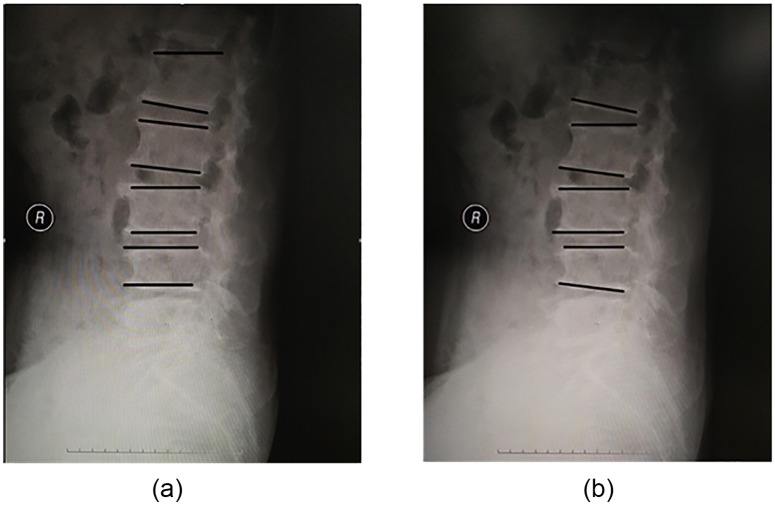
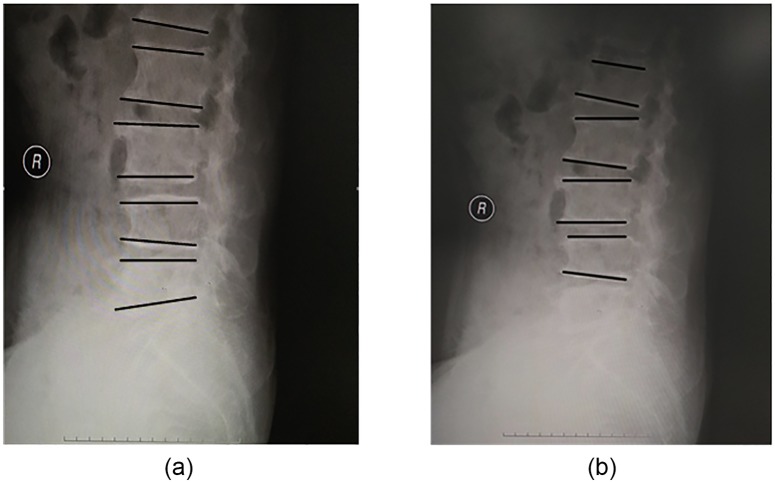
Results: 1. Compared with the results of the manual diagnosis, the accuracy of the classification method was 88.3%. In addition, the specificity (SPE), accuracy (ACC), and sensitivity (SEN) of the classification method were respectively 89.5%, 92.4%, and 87.6%. 2. The mutual information method and the KLT algorithm were utilized for vertebral body tracking. The maximum mutual information method was more effective in the case of fewer image sequences; however, with the increase of image frames, the accumulation of errors would make the tracking effects of images get worse. Based on the KLT algorithm, the enhanced vertebral boundary information was selected; the soft tissues showed in the obtained images were smooth, the boundary information of vertebral body was enhanced, and the results were more accurate.
Conclusion: The feature extraction algorithm based on Gabor wavelet transformation could easily and quickly realize the localization of the lumbar intervertebral disc, and the accuracy of the results was ensured. In addition, from the aspect of vertebral body tracking, the tracking effects based on the KLT algorithm were better and faster than those based on the maximum mutual information method.
Conflict of interest statement
The authors have declared that no competing interests exist.
Figures
References
-
- Soltani Bozchalooi I, Liang M. Rebuttal to “On the distribution of the modulus of Gabor wavelet coefficients and the upper bound of the dimensionless smoothness index in the case of additive Gaussian noises: Revisited” by Dong Wang, Qiang Zhou, and Kwok-Leung Tsui[J]. Journal of Sound Vibration, 2018, 420:393–400.
Publication types
MeSH terms
LinkOut - more resources
Full Text Sources
