


Seasonality of ventricular fibrillation at first myocardial infarction and association with viral exposure
- PMID: 32101559
- PMCID: PMC7043782
- DOI: 10.1371/journal.pone.0226936
Seasonality of ventricular fibrillation at first myocardial infarction and association with viral exposure
Erratum in
-
Correction: Seasonality of ventricular fibrillation at first myocardial infarction and association with viral exposure.PLoS One. 2020 Apr 27;15(4):e0232569. doi: 10.1371/journal.pone.0232569. eCollection 2020. PLoS One. 2020. PMID: 32339202 Free PMC article.
Abstract
Aims: To investigate seasonality and association of increased enterovirus and influenza activity in the community with ventricular fibrillation (VF) risk during first ST-elevation myocardial infarction (STEMI).
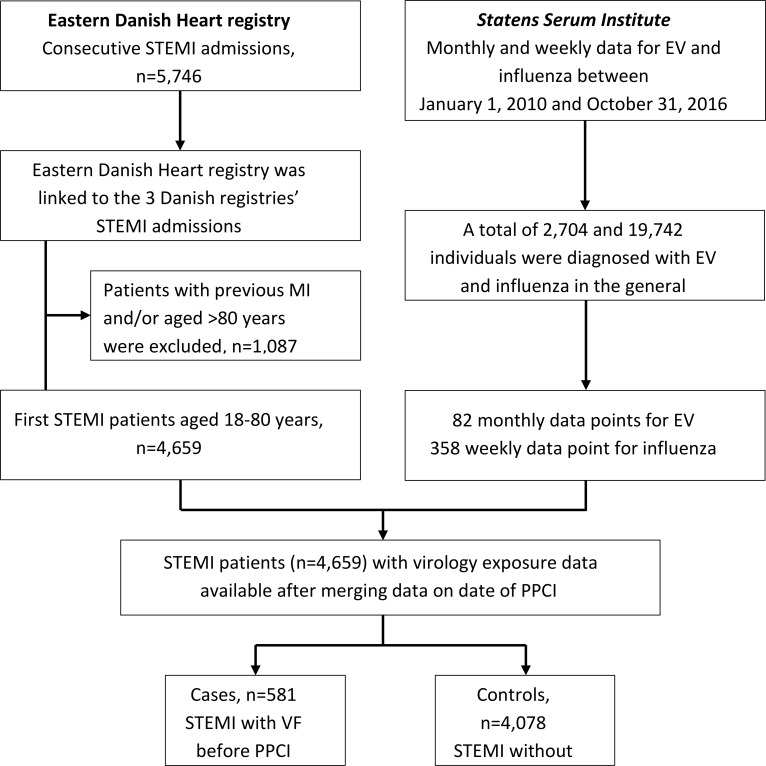
Methods: This study comprised all consecutive patients with first STEMI (n = 4,659; aged 18-80 years) admitted to the invasive catheterization laboratory between 2010-2016, at Copenhagen University Hospital, Rigshospitalet, covering eastern Denmark (2.6 million inhabitants, 45% of the Danish population). Hospital admission, prescription, and vital status data were assessed using Danish nationwide registries. We utilized monthly/weekly surveillance data for enterovirus and influenza from the Danish National Microbiology Database (2010-2016) that receives copies of laboratory tests from all Danish departments of clinical microbiology.
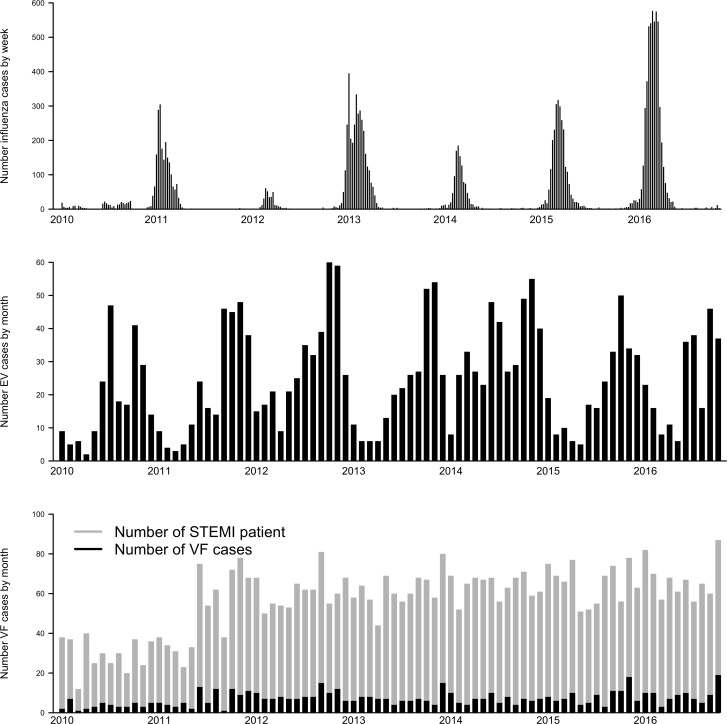
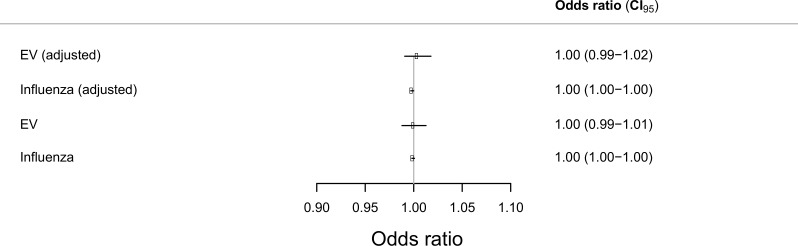
Results: Of the 4,659 consecutively enrolled STEMI patients, 581 (12%) had VF before primary percutaneous coronary intervention. In a subset (n = 807), we found that VF patients experienced more generalized fatigue and flu-like symptoms within 7 days before STEMI compared with the patients without VF (OR 3.39, 95% CI 1.76-6.54). During the study period, 2,704 individuals were diagnosed with enterovirus and 19,742 with influenza. No significant association between enterovirus and VF (OR 1.00, 95% CI 0.99-1.02), influenza and VF (OR 1.00, 95% CI 1.00-1.00), or week number and VF (p-value 0.94 for enterovirus and 0.89 for influenza) was found.
Conclusion: We found no clear seasonality of VF during first STEMI. Even though VF patients had experienced more generalized fatigue and flu-like symptoms within 7 days before STEMI compared with patients without VF, no relationship was found between enterovirus or influenza exposure and occurrence of VF.
Conflict of interest statement
The authors have declared that no competing interests exist.
Figures
References
Publication types
MeSH terms
LinkOut - more resources
Full Text Sources
Medical
