


The Cancer Microbiome: Distinguishing Direct and Indirect Effects Requires a Systemic View
- PMID: 32101723
- PMCID: PMC7098063
- DOI: 10.1016/j.trecan.2020.01.004
The Cancer Microbiome: Distinguishing Direct and Indirect Effects Requires a Systemic View
Abstract
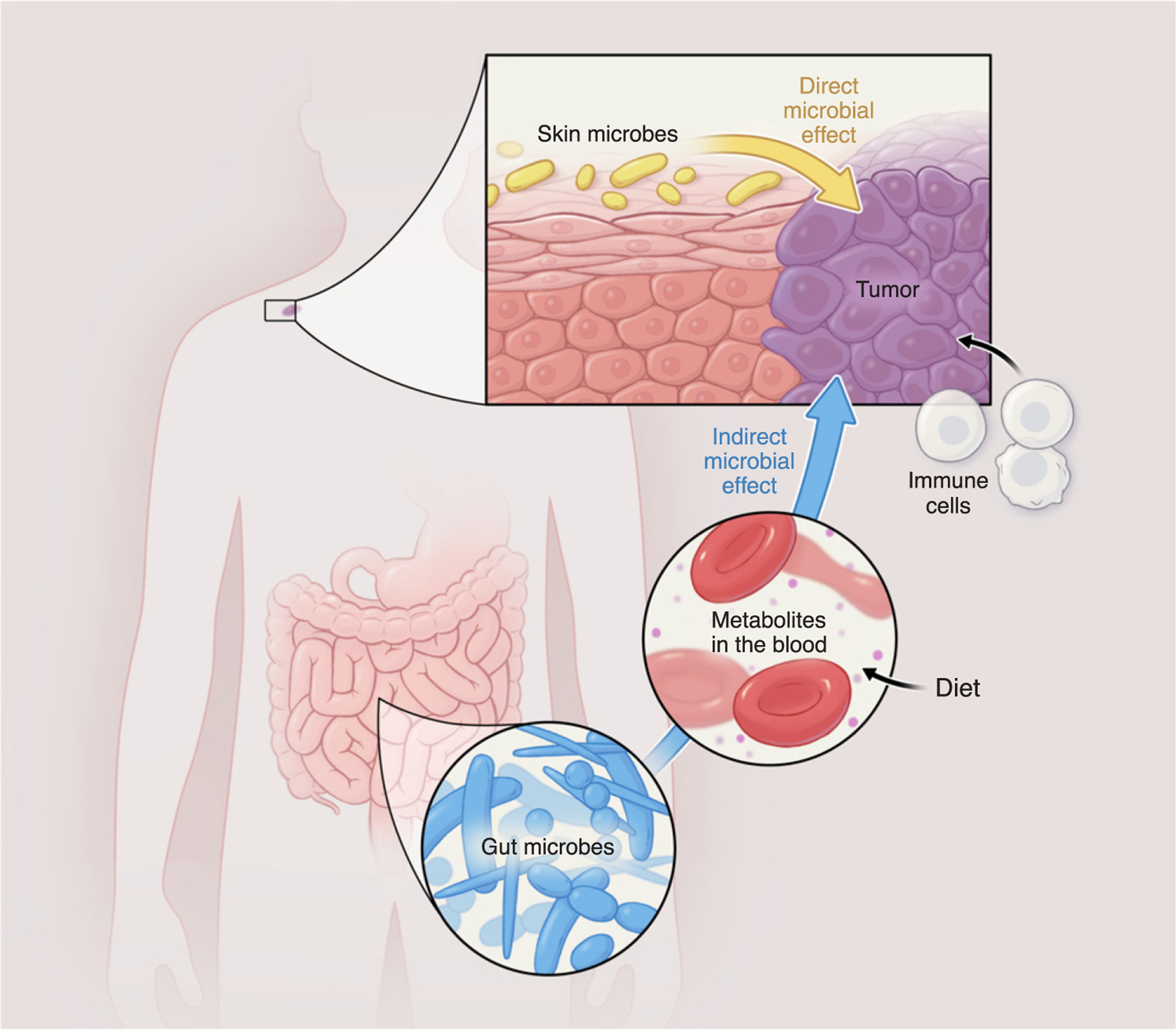
The collection of microbes that live in and on the human body - the human microbiome - can impact on cancer initiation, progression, and response to therapy, including cancer immunotherapy. The mechanisms by which microbiomes impact on cancers can yield new diagnostics and treatments, but much remains unknown. The interactions between microbes, diet, host factors, drugs, and cell-cell interactions within the cancer itself likely involve intricate feedbacks, and no single component can explain all the behavior of the system. Understanding the role of host-associated microbial communities in cancer systems will require a multidisciplinary approach combining microbial ecology, immunology, cancer cell biology, and computational biology - a systems biology approach.
Copyright © 2020 The Author(s). Published by Elsevier Inc. All rights reserved.
Figures
References
-
- de Martel C et al. (2012) Global burden of cancers attributable to infections in 2008: a review and synthetic analysis. Lancet Oncol. 13, 607–615 - PubMed
-
- Turnbaugh PJ et al. (2006) An obesity-associated gut microbiome with increased capacity for energy harvest. Nature 444, 1027–1031 - PubMed
-
- Ezenwa VO et al. (2012) Animal behavior and the microbiome. Science 338, 198–199 - PubMed
-
- Jobin C (2018) Precision medicine using microbiota. Science 359, 32–34 - PubMed
Publication types
MeSH terms
Substances
Grants and funding
LinkOut - more resources
Full Text Sources
Medical
