


Effect of Different Durations of Solid-Phase Fermentation for Fireweed (Chamerion angustifolium (L.) Holub) Leaves on the Content of Polyphenols and Antioxidant Activity In Vitro
- PMID: 32102409
- PMCID: PMC7070727
- DOI: 10.3390/molecules25041011
Effect of Different Durations of Solid-Phase Fermentation for Fireweed (Chamerion angustifolium (L.) Holub) Leaves on the Content of Polyphenols and Antioxidant Activity In Vitro
Abstract
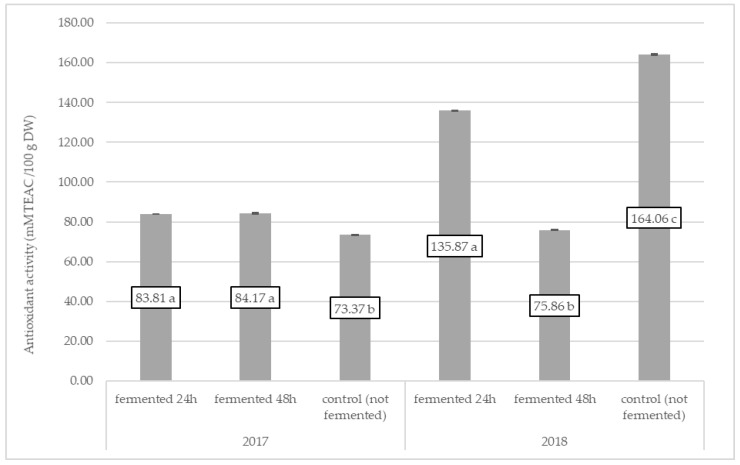
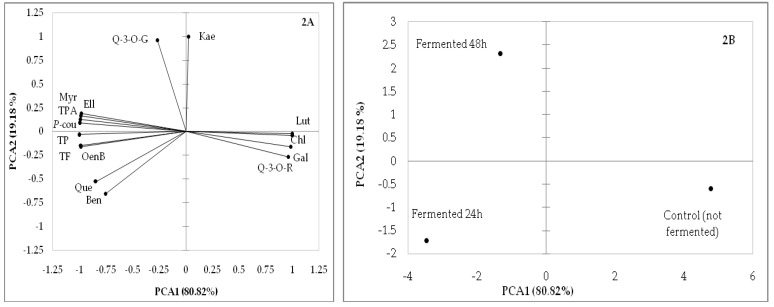
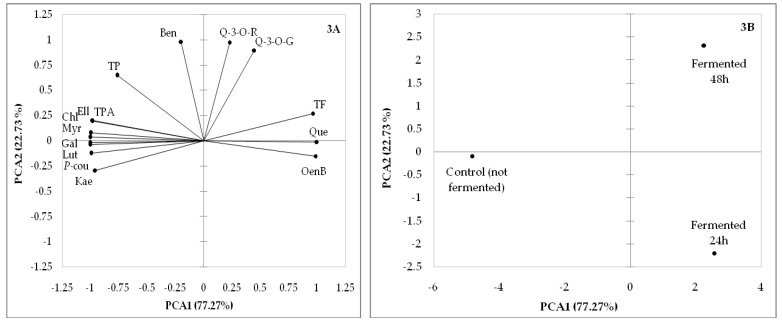
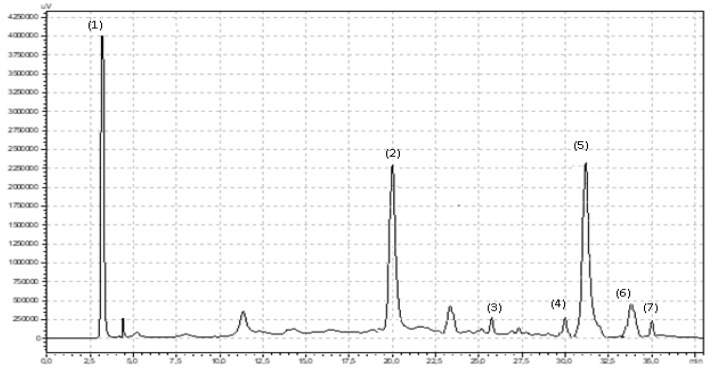
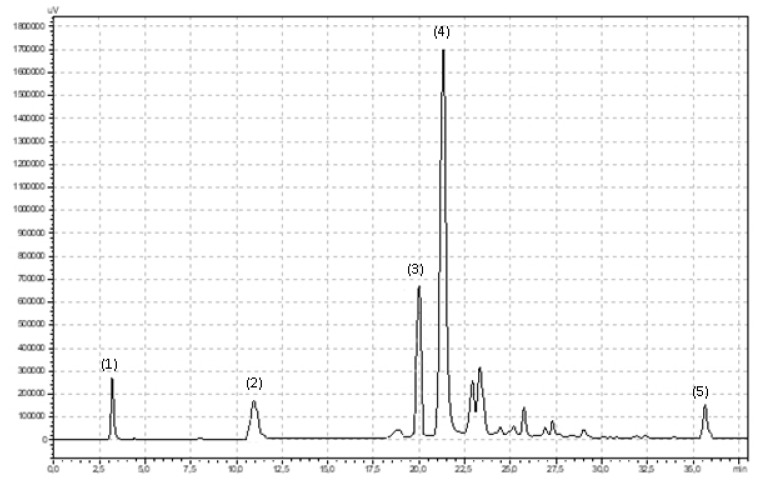
Fireweed has recently been recognized as a plant with high antioxidant potential and phenolic content. Its leaves can be fermented to prepare an infusion with ideal antioxidant activity. The aim of this study was to investigate and to determine the influence of solid-phase fermentation of different durations on the variation of polyphenols in the leaves of fireweed. Laboratory experiments were conducted in 2017-2018. The leaves of fireweed, naturally growing, were fermented for different periods of time: not fermented (control) and fermented for 24 and 48 h. The evaluation of polyphenols and antioxidant activity in leaves was performed using high- performance liquid chromatography (HPLC). Additionally, principal component analysis was used to characterize differences in bioactive compounds between fireweed samples fermented at different durations. Solid-phase fermented leaves were characterized by higher contents of oenothein B, quercetin and benzoic acid but had lower contents of quercetin-3-O-rutinoside, luteolin and chlorogenic and gallic acids. Antioxidant activity in short- (24 h) and long-term (48 h) fermentation (compared to control) gave the highest level of regression in 2017, but in 2018 the effect was observed only with short-term fermentation and control. In conclusion, solid-phase fermentation can be used to modulate biologically active compounds in fireweed leaves.
Keywords: fermentation; fireweed; flavonoids; phenolic acids; tannin oenothein B.
Conflict of interest statement
The authors declare no conflict of interest.
Figures
References
-
- Peck T.G., Adeline Su Y.T. Our tea-drinking habits: effects of brewing cycles and infusion time on total phenol content and antioxidants of common teas. J. Culin. Sci. Technol. 2019;17:170–183.
-
- Król K., Gantner M., Tatarak A., Hallmann E. The content of polyphenols in coffee beans as roasting, origin and storage effect. Eur. Food Res. Technol. 2019;246:33–39. doi: 10.1007/s00217-019-03388-9. - DOI
-
- Lasinskas M., Jariene E. Applications of the narrow-leaved fireweed (Chamerion angustifolium L.): A review of research. Agric. Sci. 2018;25:125–130.
MeSH terms
Substances
LinkOut - more resources
Full Text Sources
Medical
