


Predictors of response and disease course in patients with inflammatory bowel disease treated with biological therapy-the Danish IBD Biobank Project: protocol for a multicentre prospective cohort study
- PMID: 32102828
- PMCID: PMC7045223
- DOI: 10.1136/bmjopen-2019-035756
Predictors of response and disease course in patients with inflammatory bowel disease treated with biological therapy-the Danish IBD Biobank Project: protocol for a multicentre prospective cohort study
Abstract
Introduction: Inflammatory bowel diseases (IBDs) are chronic diseases of unknown cause characterised by a progressive and unpredictable disease course. In the last decade, biological treatment has become a cornerstone in the treatment of IBD. However, one-in-three-to-four patients do not respond to first-line biological agents and another third of patients see their response diminish over time. This highlights an unmet need for optimising the use of biologicals and the prediction of treatment response. Considering the multifaceted nature of IBD, we hypothesise that multiomics profiling of sequential samples from single patients could facilitate the discovery of predictive biomarkers of response to biological therapy and disease course.
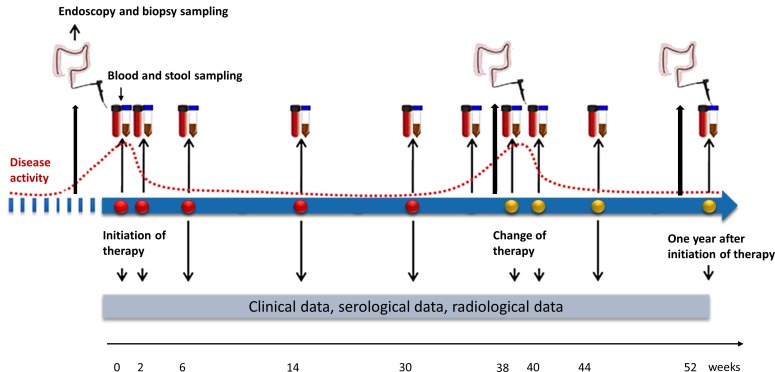
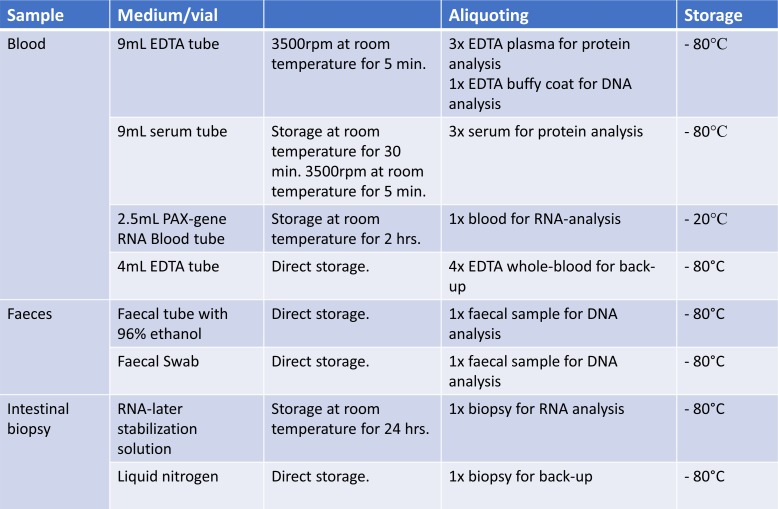
Methods: This is a multicentre prospective cohort study which will enrol 840 biological-naïve patients with IBD who initiate biological therapy in a 3-year period. Primary outcomes are the occurrence of primary non-response (evaluated at weeks 14-16) and loss of response (evaluated during entire follow-up in patients who obtain partial or full response after induction period). Each patient will be followed up for their clinical data for at least 1 year or till the end of study period (up to 4 years). Blood and stool samples will be collected sequentially during the first year of biological treatment. Intestinal tissue will be sampled after 1 year of treatment and whenever an endoscopy is performed. Samples will undergo transcriptomic, proteomic and microbial DNA analyses. Omics data will be integrated with clinical data to identify a panel of predictive biomarkers of response to biological therapy and disease behaviour in patients with IBD.
Ethics and dissemination: Ethical approval has been obtained from the Danish Ethics Committee (H-18064178). Inclusion is ongoing at three study centres and will be initiated in two additional centres. Both positive and negative study results will be disseminated through peer-reviewed journals according to Strengthening the Reporting of Observational Studies in Epidemiology guidelines, as well as presented at international conferences.
Keywords: epidemiology; gastroenterology; inflammatory bowel disease.
© Author(s) (or their employer(s)) 2020. Re-use permitted under CC BY-NC. No commercial re-use. See rights and permissions. Published by BMJ.
Conflict of interest statement
Competing interests: JB reports personal fees from AbbVie, Janssen-Cilag, Celgene, MSD, Pfizer and grants and personal fees from Takeda, all of which were unrelated to this study. FB reports personal fee and grants from Ferring A/S, all of which were unrelated to this study. AMP reports travel grants and fees from MSD and Pfizer, all of which were unrelated to this study. JBS reports research grant from Takeda unrelated to this study, as well as assigned unpaid national coordinator of clinical trials from AbbVie, Eli Lilly and Roche and unpaid investigator at studies from Arena and Zealand Pharma. MZ reports travel fees from Takeda Pharma A/S.
Figures
References
Publication types
MeSH terms
Substances
LinkOut - more resources
Full Text Sources
