


Instability in End-of-Life Care Preference Among Heart Failure Patients: Secondary Analysis of a Randomized Controlled Trial in Singapore
- PMID: 32103441
- PMCID: PMC7351942
- DOI: 10.1007/s11606-020-05740-2
Instability in End-of-Life Care Preference Among Heart Failure Patients: Secondary Analysis of a Randomized Controlled Trial in Singapore
Abstract
Background: Efforts to improve quality of end-of-life (EOL) care are increasingly focused on eliciting patients' EOL preference through advance care planning (ACP). However, if patients' EOL preference changes over time and their ACP documents are not updated, these documents may no longer be valid at the time EOL decisions are made.
Objectives: To assess extent and correlates of changes in stated preference for aggressive EOL care over time.
Design: Secondary analysis of data from a randomized controlled trial of a formal ACP program versus usual care in Singapore.
Patients: Two hundred eighty-two patients with heart failure (HF) and New York Heart Association Classification III and IV symptoms were recruited and interviewed every 4 months for up to 2 years to assess their preference for EOL care. Analytic sample included 200 patients interviewed at least twice.
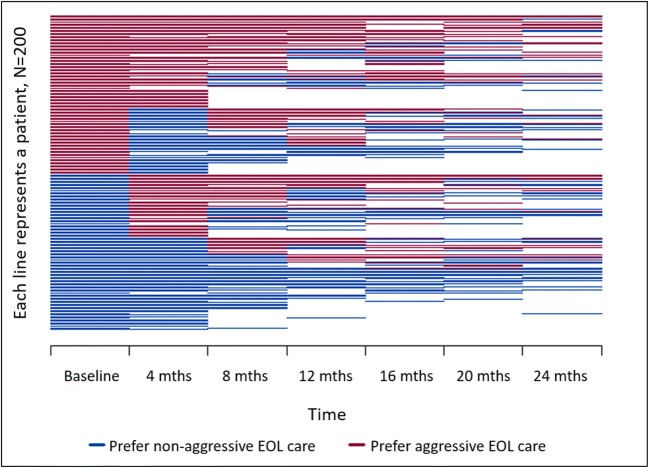
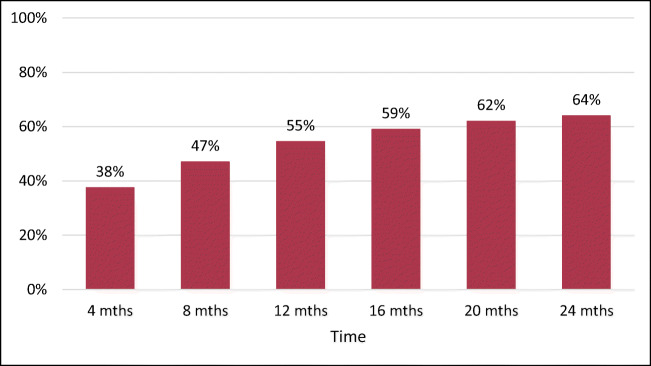
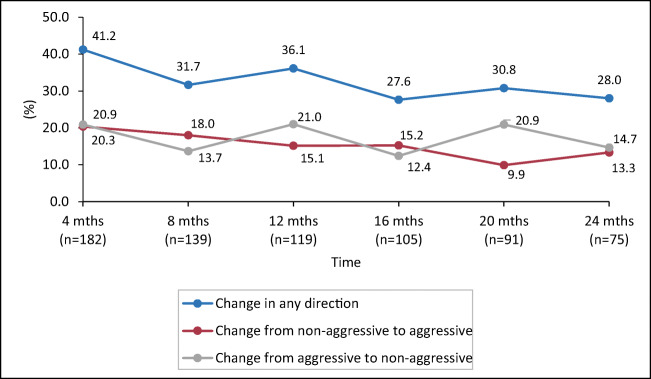
Results: Nearly two thirds (64%) of patients changed their preferred type of EOL care at least once. Proportion of patients changing their stated preference for type of EOL care increased with time and the change was not unidirectional. Patients who understood their prognosis correctly were less likely to change their preference from non-aggressive to aggressive EOL care (OR 0.66, p value 0.07) or to prefer aggressive EOL care (OR 0.53; p value 0.001). On the other hand, patient-surrogate discussion of care preference was associated with a higher likelihood of change in patient preference from aggressive to non-aggressive EOL care (OR 1.83; p value 0.03).
Conclusion: The study provides evidence of instability in HF patients' stated EOL care preference. This undermines the value of an ACP document recorded months before EOL decisions are made unless a strategy exists for easily updating this preference.
Trial registration: ClinicalTrials.gov: NCT02299180.
Keywords: advance care planning; decisional conflict; end-of-life care preference; heart failure; quality of life.
Conflict of interest statement
The authors declare that they do not have a conflict of interest.
Figures
References
-
- Bruera E, Sweeney C, Calder K, Palmer L, Benisch-Tolley S. Patient preferences versus physician perceptions of treatment decisions in cancer care. J Clin Oncol Off J Am Soc Clin Oncol. 2001;19(11):2883–5. - PubMed
-
- Degner LF, Kristjanson LJ, Bowman D, Sloan JA, Carriere KC, O'Neil J, et al. Information Needs and Decisional Preferences in Women With Breast Cancer. JAMA. 1997;277(18):1485–92. - PubMed
-
- Pardon K, Deschepper R, Vander Stichele R, Bernheim J, Mortier F, Schallier D, et al. Are patients’ preferences for information and participation in medical decision-making being met? Interview study with lung cancer patients. Palliat Med. 2010;25(1):62–70. - PubMed
-
- Briggs LA, Kirchhoff KT, Hammes BJ, Song M-K, Colvin ER. Patient-centered advance care planning in special patient populations: a pilot study. J Prof Nurs. 2004;20(1):47–58. - PubMed
Publication types
MeSH terms
Associated data
LinkOut - more resources
Full Text Sources
Medical
Research Materials
Miscellaneous
