


Challenges and trends in apomorphine drug delivery systems for the treatment of Parkinson's disease
- PMID: 32104425
- PMCID: PMC7032113
- DOI: 10.1016/j.ajps.2017.11.004
Challenges and trends in apomorphine drug delivery systems for the treatment of Parkinson's disease
Abstract
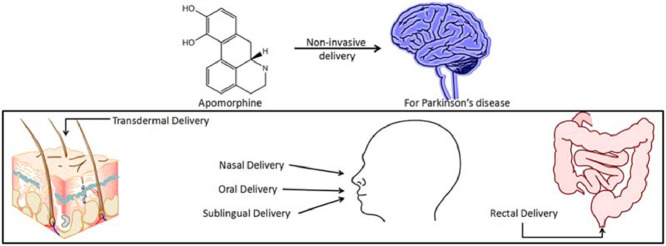
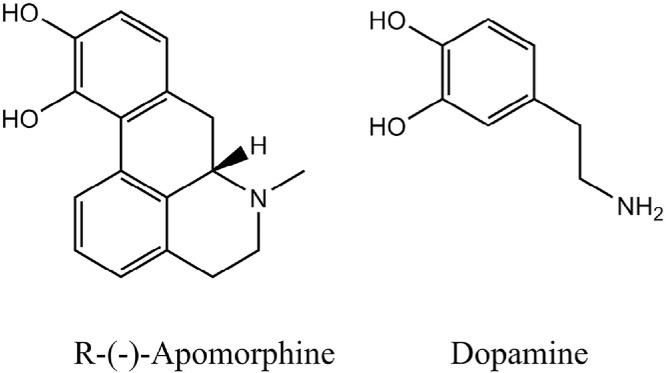
Parkinson's disease (PD) is a chronic debilitating disease affecting approximately 1% of the population over the age of 60. The severity of PD is correlated to the degree of dopaminergic neuronal loss. Apomorphine has a similar chemical structure as the neurotransmitter dopamine and has been used for the treatment of advanced PD patients. In PD patients, apomorphine is normally administered subcutaneously with frequent injections because of the compound's extensive hepatic first-pass metabolism. There is, hence, a large unmet need for alternative administrative routes for apomorphine to improve patient compliance. The present review focuses on the research and development of alternative delivery of apomorphine, aiming to highlight the potential of non-invasive apomorphine therapy in PD, such as sublingual delivery and transdermal delivery.
Keywords: Alternative apomorphine therapy; Apomorphine; Drug delivery; Excipients; L-dopa, Levodopa; Non-invasive delivery; PAA-cys-2MNA, poly(acrylic acid)-cysteine-2-mercaptonicotinic acid; PD, Parkinson's disease; Parkinson's disease; SEDDS, Self-emulsifying drug delivery system.
© 2017 Shenyang Pharmaceutical University. Published by Elsevier B.V.
Figures
References
-
- Taba P., Lees A., Stern G. Erich Harnack (1852–1915) and a short history of apomorphine. Eur Neurol. 2013;69(6):321–324. - PubMed
-
- Harding R.K., Hugenholtz H., Kucharczyk J. Central mechanisms for apomorphine-induced emesis in the dog. Eur J Pharmacol. 1987;144(1):61–65. - PubMed
-
- Raymond M.J. The treatment of addiction by aversion conditioning with apomorphine. Behav Res Ther. 1963;1(2–4):287–291.
-
- Tyne H.L., Parsons J., Sinnott A. A 10 year retrospective audit of long-term apomorphine use in Parkinson's disease. J Neurol. 2004;251(11):1370–1374. - PubMed
-
- Weil E. De l'apomorphine dans certain troubles nerveux. Lyon Med. 1884;48:411–419.
Publication types
LinkOut - more resources
Full Text Sources
Other Literature Sources
