


Electrospun nanofibers as a wound dressing for treating diabetic foot ulcer
- PMID: 32104445
- PMCID: PMC7032134
- DOI: 10.1016/j.ajps.2018.04.004
Electrospun nanofibers as a wound dressing for treating diabetic foot ulcer
Abstract
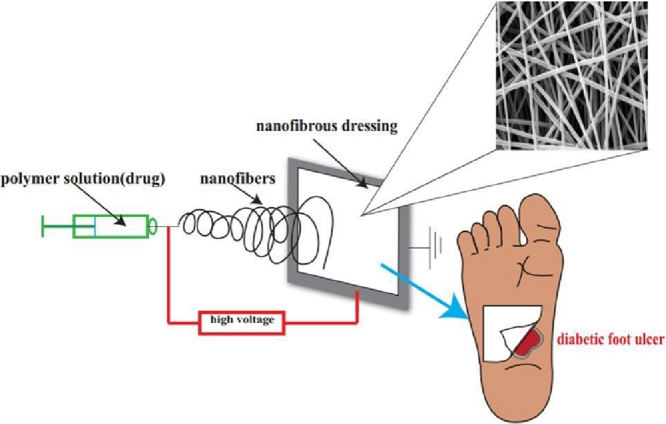
Diabetes is one of the most prevalent diseases in the world with high-mortality and complex complications including diabetic foot ulcer (DFU). It has been reported that the difficulties in repairing the wound related to DFU has much relationship with the wound infection, change of inflammatory responses, lack of extracellular matrix (ECM), and the failure of angiogenesis. Following the development of medical materials and pharmaceutical technology, nanofibers has been developed by electrospinning with huge porosity, excellent humidity absorption, a better oxygen exchange rate, and some antibacterial activities. That is to say, as a potential material, nanofibers must be a wonderful candidate for the DFU treatment with so many benefits. Careful selection of polymers from natural resource and synthetic resource can widen the nanofibrous application. Popular methods applied for the nanofibrous fabrication consist of uniaxial electrospinning and coaxial electrospinning. Furthermore, nanofibers loading chemical, biochemical active pharmaceutical ingredient (API) or even stem cells can be wonderful dosage forms for the treatment of DFU. This review summarizes the present techniques applied in the fabrication of nanofibrous dressing (ND) that utilizes a variety of materials and active agents to offer a better health care for the patients suffering from DFU.
Keywords: Coaxial electrospinning; Diabetic foot ulcer; Nanofibers; Nanofibrous dressing; Uniaxial electrospinning.
© 2018 Shenyang Pharmaceutical University. Published by Elsevier B.V.
Figures

References
-
- Whiting DR, Guariguata L, Weil C, Shaw J. Idf diabetes atlas: global estimates of the prevalence of diabetes for 2011 and 2030. Diabetes Res Clin Pract. 2011;94(3):311–321. - PubMed
-
- Majd SA, Khorasgani MR, Moshtaghian SJ, Talebi A, Khezri M. Application of chitosan/pva nano fiber as a potential wound dressing for streptozotocin-induced diabetic rats. Int J Biol Macromol. 2016;92:1162–1168. - PubMed
-
- Veves A, Falanga V, Armstrong DG, Sabolinski ML, . The Apligraf Diabetic Foot Ulcer Study Graftskin, a human skin equivalent, is effective in the management of noninfected neuropathic diabetic foot ulcers: a prospective randomized multicenter clinical trial. Diabetes Care. 2001;24(2):290–295. - PubMed
-
- Marston WA, Hanft J, Norwood P, Pollak R, Dermagraft Diabetic Foot Ulcer Study Group The efficacy and safety of dermagraft in improving the healing of chronic diabetic foot ulcers – results of a prospective randomized trial. Diabetes Care. 2003;26(6):1701–1705. - PubMed
Publication types
LinkOut - more resources
Full Text Sources
Other Literature Sources
