


Delirium misdiagnosis risk in psychiatry: a machine learning-logistic regression predictive algorithm
- PMID: 32106845
- PMCID: PMC7045404
- DOI: 10.1186/s12913-020-5005-1
Delirium misdiagnosis risk in psychiatry: a machine learning-logistic regression predictive algorithm
Abstract
Background: Delirium is a frequent diagnosis made by Consultation-Liaison Psychiatry (CLP). Numerous studies have demonstrated misdiagnosis prior to referral to CLP. Few studies have considered the factors underlying misdiagnosis using multivariate approaches.
Objectives: To determine the number of cases referred to CLP, which are misdiagnosed at time of referral, to build an accurate predictive classifier algorithm, using input variables related to delirium misdiagnosis.
Method: A retrospective observational study was conducted at Alfred Hospital in Melbourne, collecting data from a record of all patients seen by CLP for a period of 5 months. Data was collected pertaining to putative factors underlying misdiagnosis. A Machine Learning-Logistic Regression classifier model was built, to classify cases of accurate delirium diagnosis vs. misdiagnosis.
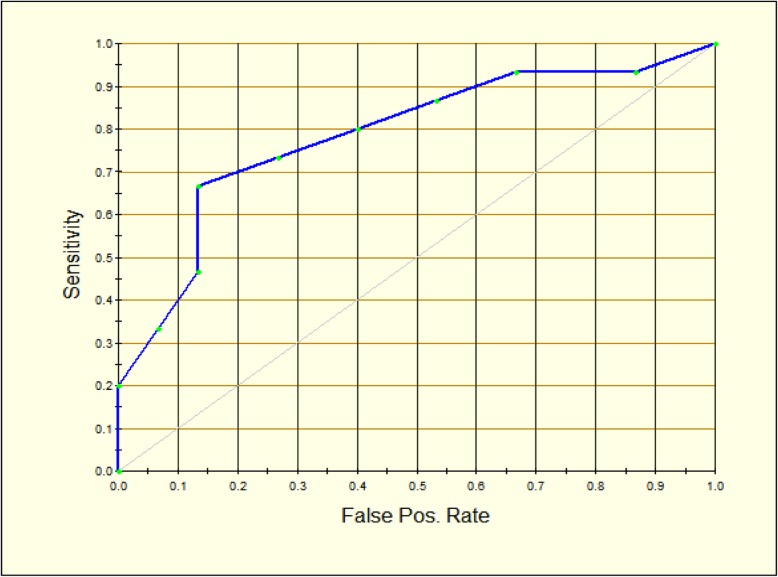
Results: Thirty five of 74 new cases referred were misdiagnosed. The proposed predictive algorithm achieved a mean Receiver Operating Characteristic (ROC) Area under the curve (AUC) of 79%, an average 72% classification accuracy, 77% sensitivity and 67% specificity.
Conclusions: Delirium is commonly misdiagnosed in hospital settings. Our findings support the potential application of Machine Leaning-logistic predictive classifier in health care settings.
Keywords: Delirium; Input variables; Machine learning-logistic classifier; Misdiagnosis.
Conflict of interest statement
The authors declare that they have no competing interests.
Figures
References
Publication types
MeSH terms
LinkOut - more resources
Full Text Sources
Medical
Miscellaneous
