


Endoscopic management of leaks and fistulas after bariatric surgery: a systematic review and meta-analysis
- PMID: 32107632
- PMCID: PMC7886733
- DOI: 10.1007/s00464-020-07471-1
Endoscopic management of leaks and fistulas after bariatric surgery: a systematic review and meta-analysis
Abstract
Background: Endoscopic techniques have become the first-line therapy in bariatric surgery-related complications such as leaks and fistulas. We performed a systematic review and meta-analysis on the effectiveness of self-expandable stents, clipping, and tissue sealants in closing of post-bariatric surgery leak/fistula.
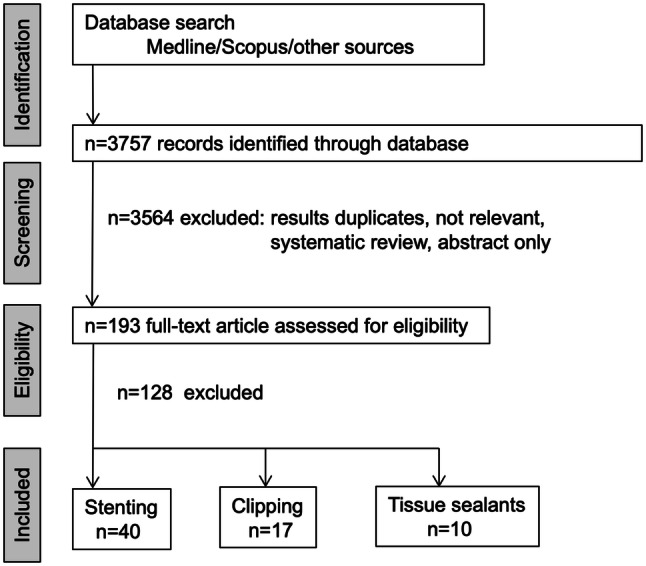
Methods: A systematic literature search of the Medline/Scopus databases was performed to identify full-text articles published up to February 2019 on the use of self-expandable stents, clipping, or tissue sealants as primary endoscopic strategies used for leak/fistula closure. Meta-analysis of studies reporting stents was performed with the PRISMA guidelines.
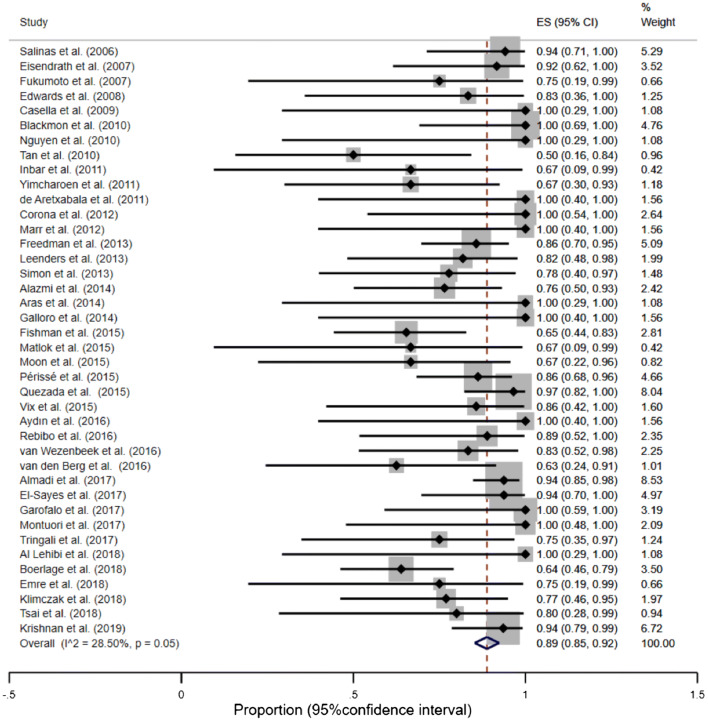
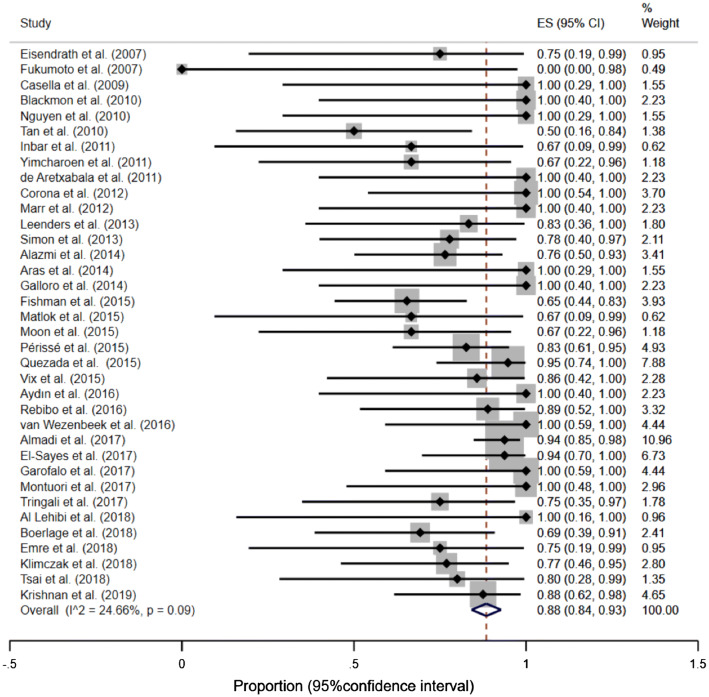
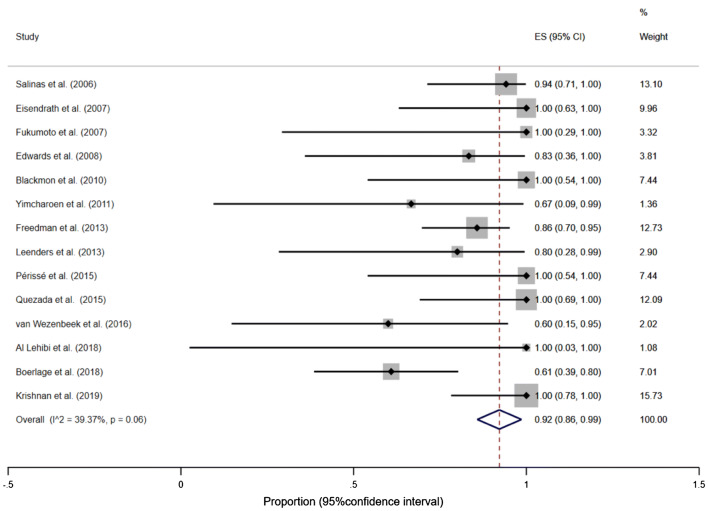
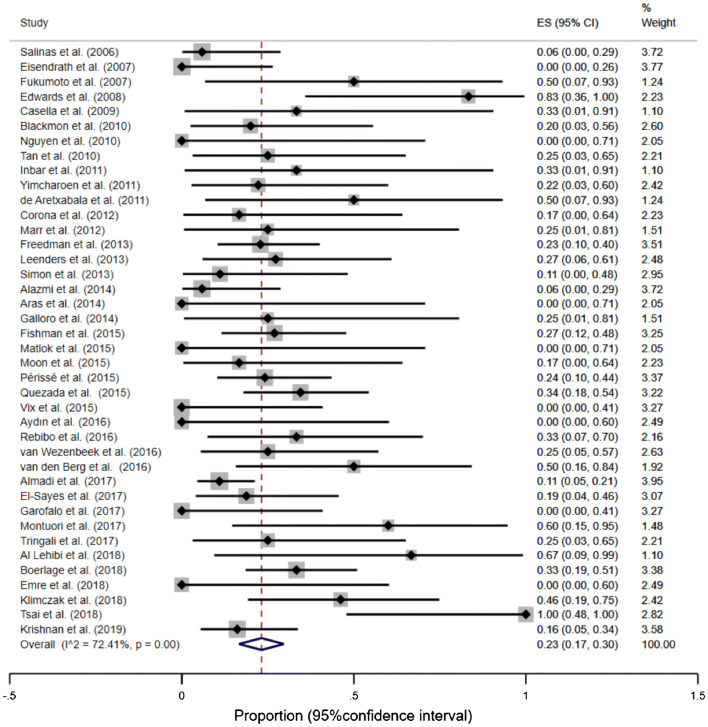
Results: Data concerning the efficacy of self-expanding stents in the treatment of leaks/fistulas after bariatric surgery were extracted from 40 studies (493 patients). The overall proportion of successful leak/fistula closure was 92% (95% CI, 90-95%). The overall proportion of stent migration was 23% (95% CI, 19-28%). Seventeen papers (98 patients) reported the use of clipping: the over-the-scope clips (OTSC) system was used in 85 patients with a successful closure rate of 67.1% and a few complications (migration, stenosis, tear). The successful fistula/leak closure using other than OTSC types was achieved in 69.2% of patients. In 10 case series (63 patients), fibrin glue alone was used with a 92.8-100% success rate of fistula closure that usually required repeated sessions at scheduled intervals. The complications of fibrin glue applications were reported in only one study and included pain and fever in 12.5% of patients.
Conclusions: Endoscopic techniques are effective for management of post-bariatric leaks and fistulas in properly selected patients.
Keywords: Bariatric; Endoscopic; Fistula; Gastric bypass; Leak; Sleeve.
Conflict of interest statement
Pawel Rogalski, Agnieszka Swidnicka-Siergiejko, Justyna Wasielica-Berger, Damian Zienkiewicz, Barbara Wieckowska, Eugeniusz Wroblewski, Andrzej Baniukiewicz, Magdalena Rogalska-Plonska, Grzegorz Siergiejko, Andrzej Dabrowski, Jaroslaw Daniluk have no conflicts of interest or financial ties to disclose.
Figures
References
-
- Hady R, Luba M, Czerniawski M, Wojciak P, Diemieszczyk I, Pawluszewicz P, et al. Progress in bariatric-metabolic surgery. Post N Med. 2018;XXXI:106–113.
-
- Disorders IFftSoOaM (2018) Bariatric Surgery. https://www.ifso.com/bariatric-surgery/. Accessed 2 Feb 2019
-
- Committee ASfMaBSCI American Society for metabolic and bariatric surgery position statement on global bariatric healthcare. Surg Obes Relat Dis. 2011;7(6):669–671. - PubMed
-
- (AHRQ) AfHRaQ (2007) Statistical Brief #23. Bariatric Surgery Utilization and Outcomes in 1998 and 2004. https://www.hcup-us.ahrq.gov/reports/statbriefs/sb23.jsp. Accessed 2 Feb 2019
Publication types
MeSH terms
Substances
LinkOut - more resources
Full Text Sources
Medical
