


Heart failure in single right ventricle congenital heart disease: physiological and molecular considerations
- PMID: 32108525
- PMCID: PMC7191494
- DOI: 10.1152/ajpheart.00518.2019
Heart failure in single right ventricle congenital heart disease: physiological and molecular considerations
Abstract
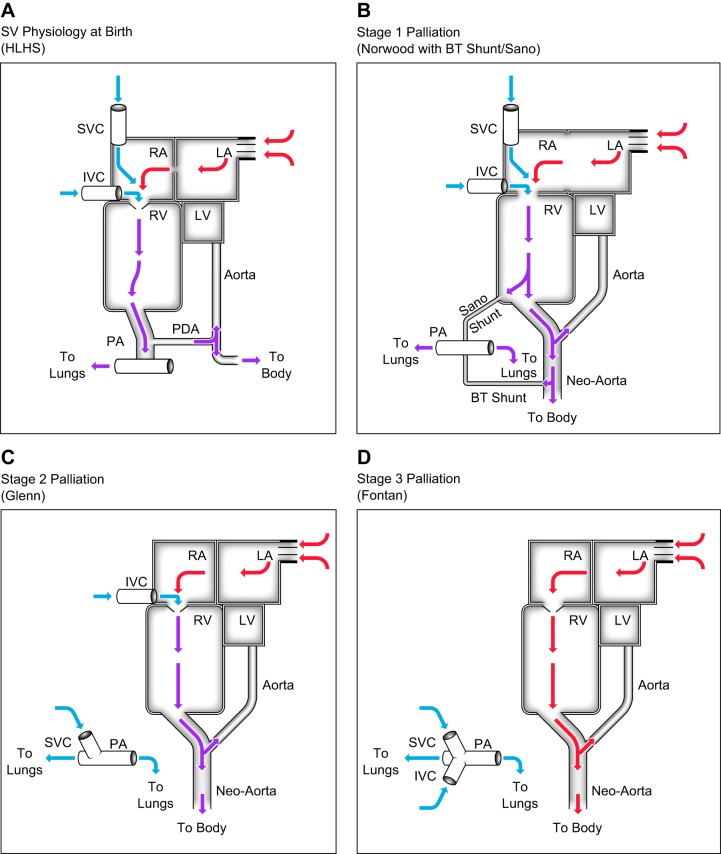
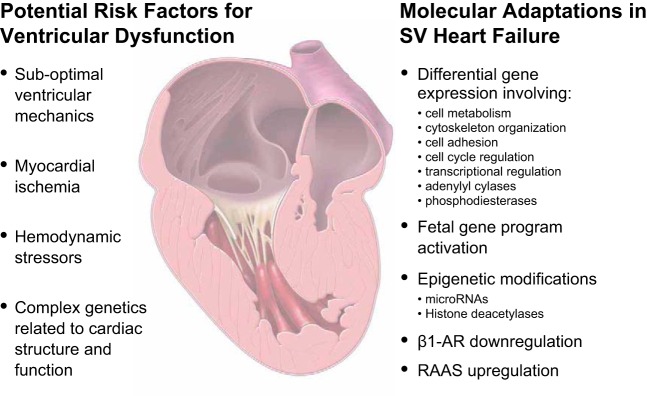
Because of remarkable surgical and medical advances over the past several decades, there are growing numbers of infants and children living with single ventricle congenital heart disease (SV), where there is only one functional cardiac pumping chamber. Nevertheless, cardiac dysfunction (and ultimately heart failure) is a common complication in the SV population, and pharmacological heart failure therapies have largely been ineffective in mitigating the need for heart transplantation. Given that there are several inherent risk factors for ventricular dysfunction in the setting of SV in addition to probable differences in molecular adaptations to heart failure between children and adults, it is perhaps not surprising that extrapolated adult heart failure medications have had limited benefit in children with SV heart failure. Further investigations into the molecular mechanisms involved in pediatric SV heart failure may assist with risk stratification as well as development of targeted, efficacious therapies specific to this patient population. In this review, we present a brief overview of SV anatomy and physiology, with a focus on patients with a single morphological right ventricle requiring staged surgical palliation. Additionally, we discuss outcomes in the current era, risk factors associated with the progression to heart failure, present state of knowledge regarding molecular alterations in end-stage SV heart failure, and current therapeutic interventions. Potential avenues for improving SV outcomes, including identification of biomarkers of heart failure progression, implications of personalized medicine and stem cell-derived therapies, and applications of novel models of SV disease, are proposed as future directions.
Keywords: congenital heart disease; hypoplastic left heart syndrome; pediatric heart failure; single ventricle.
Conflict of interest statement
No conflicts of interest, financial or otherwise, are declared by the authors.
Figures
References
-
- Alsoufi B, Gillespie S, Kim D, Shashidharan S, Kanter K, Maher K, Kogon B. Impact of dominant ventricle morphology on palliation outcomes of single ventricle anomalies Ann Thorac Surg 102: 593–601, 2016. - PubMed
-
- Anderson PA, Sleeper LA, Mahony L, Colan SD, Atz AM, Breitbart RE, Gersony WM, Gallagher D, Geva T, Margossian R, McCrindle BW, Paridon S, Schwartz M, Stylianou M, Williams RV, Clark BJ 3rd; Pediatric Heart Network Investigators . Contemporary outcomes after the Fontan procedure: a Pediatric Heart Network multicenter study. J Am Coll Cardiol 52: 85–98, 2008. doi: 10.1016/j.jacc.2008.01.074. - DOI - PMC - PubMed
Publication types
MeSH terms
Grants and funding
LinkOut - more resources
Full Text Sources
Medical
Miscellaneous
