


The Longitudinal Effects of Comorbid Health Burden on Functional Outcomes for Adults With Moderate to Severe Traumatic Brain Injury
- PMID: 32108718
- PMCID: PMC7335323
- DOI: 10.1097/HTR.0000000000000572
The Longitudinal Effects of Comorbid Health Burden on Functional Outcomes for Adults With Moderate to Severe Traumatic Brain Injury
Abstract
Objective: To evaluate the impact of physical, mental, and total health condition burden on functional outcome and life satisfaction up to 10 years after moderate to severe traumatic brain injury (TBI).
Setting: Six TBI Model Systems centers.
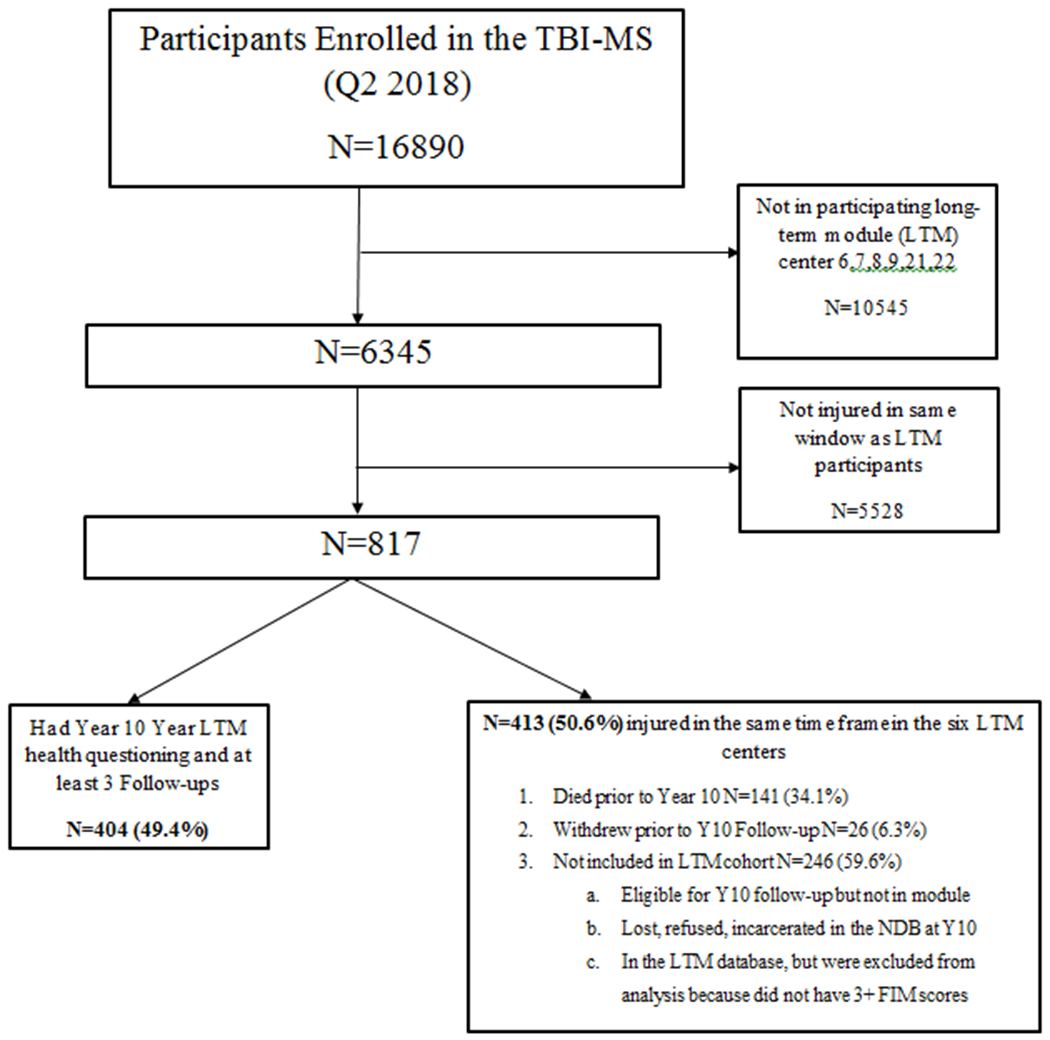
Participants: Three hundred ninety-three participants in the TBI Model Systems National Database.
Design: Retrospective cohort study.
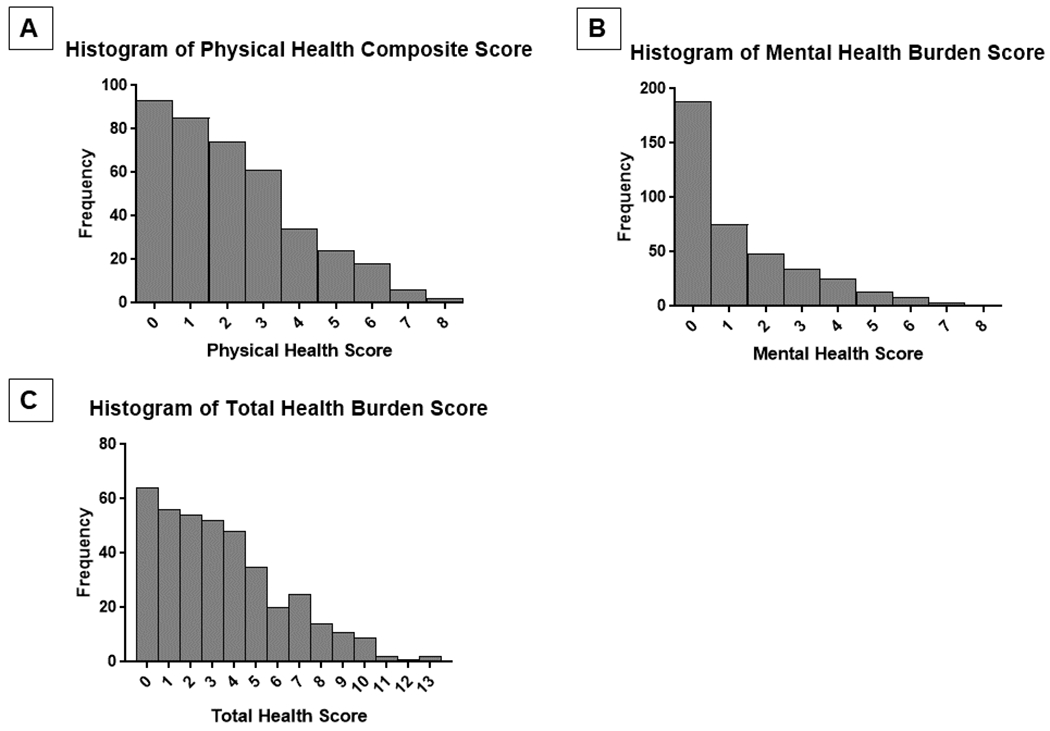
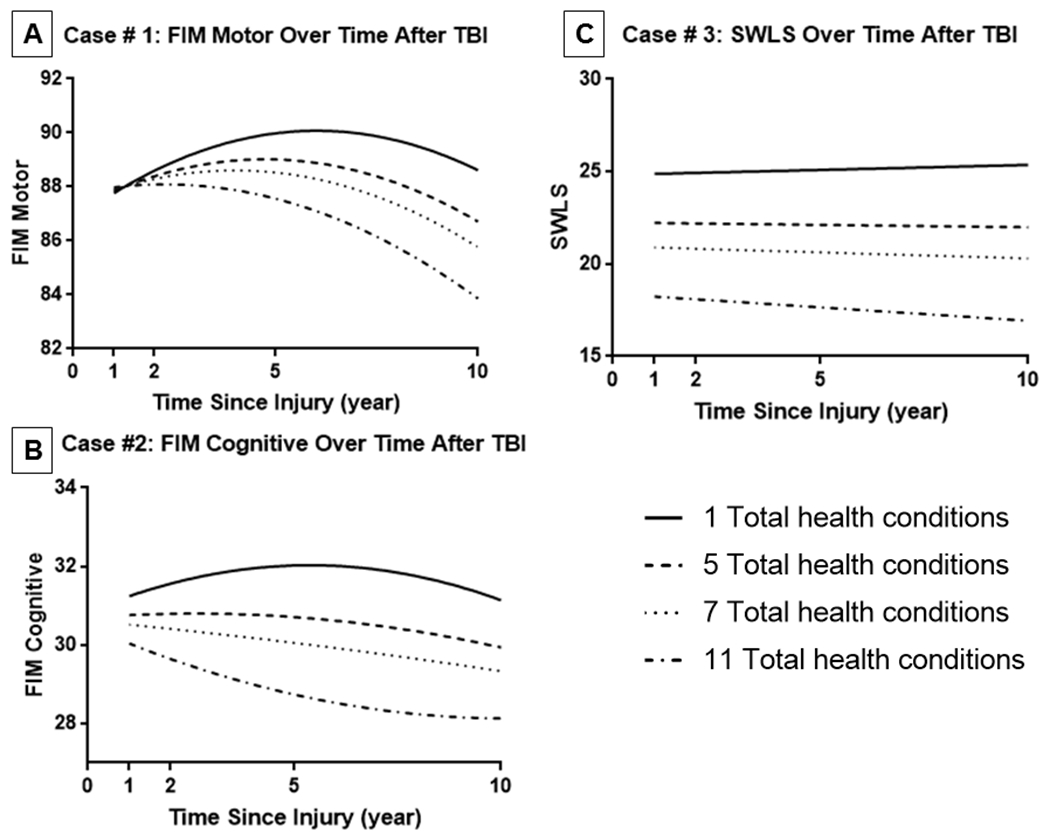
Main measures: Self-reported physical and mental health conditions at 10 years postinjury. Functional Independence Measure Motor and Cognitive subscales and the Satisfaction With Life Scale measured at 1, 2, 5, and 10 years.
Results: In 10-year longitudinal individual growth curve models adjusted for covariates and inverse probability weighted to account for selection bias, greater physical and mental health comorbidity burden was negatively associated with functional cognition and life satisfaction trajectories. Physical, but not mental, comorbidity burden was negatively associated with functional motor trajectories. Higher total health burden was associated with poorer functional motor and cognitive trajectories and lower life satisfaction.
Conclusions: This study offers evidence that comorbidity burden negatively impacts longitudinal functional and life satisfaction outcomes after TBI. The findings suggest that better identification and treatment of comorbidities may benefit life satisfaction, functional outcome, reduce healthcare costs, and decrease reinjury. Specific guidelines are needed for the management of comorbidities in TBI populations.
Conflict of interest statement
Conflict of Interests
We certify that no party having a direct interest in the results of the research supporting this article has or will confer a benefit on us or on any organization with which we are associated. We also certify that all financial and material support for this research and work are clearly identified in the title page of the manuscript.
Figures
References
-
- Corrigan JD, Hammond FM. Traumatic brain injury as a chronic health condition. Arch Phys Med Rehabil. 2013;94(6):1199–1201. - PubMed
-
- Corrigan JD, Cuthbert JP, Harrison-Felix C, et al. US population estimates of health and social outcomes 5 years after rehabilitation for traumatic brain injury. J Head Trauma Rehabil. 2014;29(6):E1–E9. - PubMed
Publication types
MeSH terms
Grants and funding
LinkOut - more resources
Full Text Sources
Medical
