


Structural brain networks in remitted psychotic depression
- PMID: 32109935
- PMCID: PMC7235256
- DOI: 10.1038/s41386-020-0646-7
Structural brain networks in remitted psychotic depression
Abstract
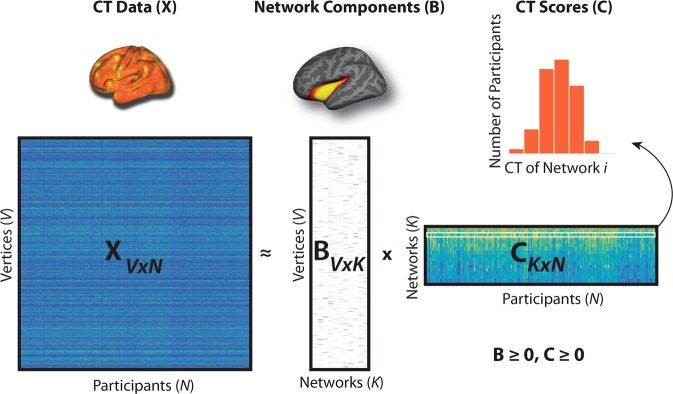
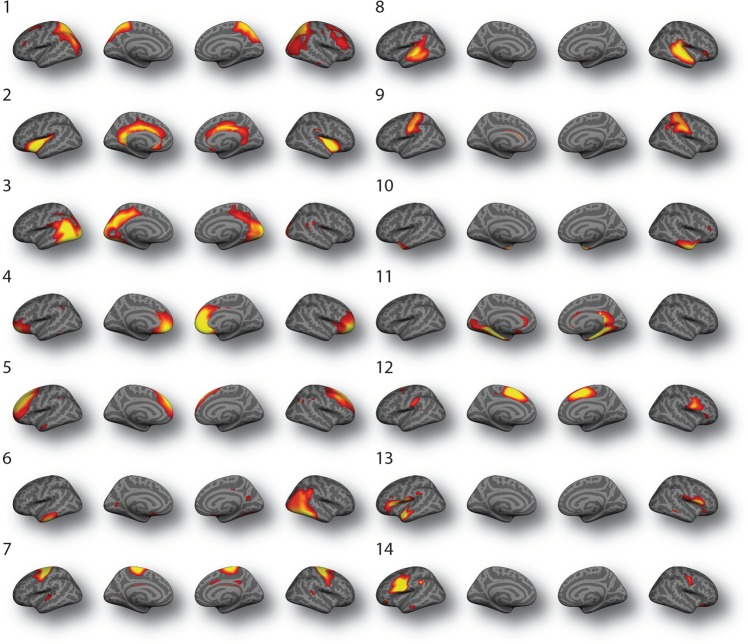
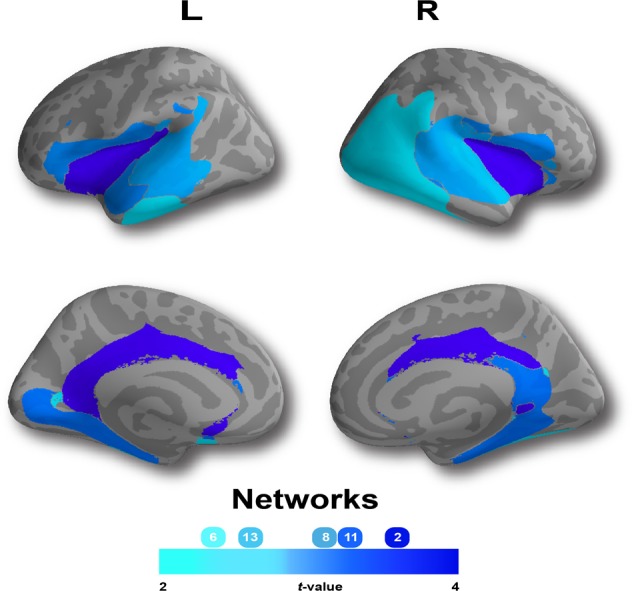
Major depressive disorder with psychotic features (psychotic depression) is a severe disorder. Compared with other psychotic disorders such as schizophrenia, relatively few studies on the neurobiology of psychotic depression have been pursued. Neuroimaging studies investigating psychotic depression have provided evidence for distributed structural brain abnormalities implicating the insular cortex and limbic system. We examined structural brain networks in participants (N = 245) using magnetic resonance imaging. This sample included healthy controls (n = 159) and the largest cross-sectional sample of patients with remitted psychotic depression (n = 86) collected to date. All patients participated in the Study of Pharmacotherapy of Psychotic Depression II randomized controlled trial. We used a novel, whole-brain, data-driven parcellation technique-non-negative matrix factorization-and applied it to cortical thickness data to derive structural covariance networks. We compared patients with remitted psychotic depression to healthy controls and found that patients had significantly thinner cortex in five structural covariance networks (insular-limbic, occipito-temporal, temporal, parahippocampal-limbic, and inferior fronto-temporal), confirming our hypothesis that affected brain networks would incorporate cortico-limbic regions. We also found that cross-sectional depression and severity scores at the time of scanning were associated with the insular-limbic network. Furthermore, the insular-limbic network predicted future severity scores that were collected at the time of recurrence of psychotic depression or sustained remission. Overall, decreased cortical thickness was found in five structural brain networks in patients with remitted psychotic depression and brain-behavior relationships were observed, particularly between the insular-limbic network and illness severity.
Figures
References
-
- Jääskeläinen E, Juola T, Korpela H, Lehtiniemi H, Nietola M, Korkeila J, et al. Epidemiology of psychotic depression—systematic review and meta-analysis. Psychol Med. 2018;48:905–18. - PubMed
-
- American Psychiatric Association. Diagnostic and statistical manual of mental disorders (DSM-5®). Arlington: American Psychiatric Publishing; 2013.
-
- Fleming SK, Blasey C, Schatzberg AF. Neuropsychological correlates of psychotic features in major depressive disorders: a review and meta-analysis. J Psychiatr Res. 2004;38:27–35. - PubMed
-
- Coryell W, Pfohl B, Zimmerman M. The clinical and neuroendocrine features of psychotic depression. J Nerv Ment Dis. 1984;172:521–8. - PubMed
-
- Lykouras E, Malliaras D, Christodouiou GN, Moussas G, Christodoulou D. Delusional depression: phenomenology and response to treatment. Psychopathology. 1986;19:157–64. - PubMed
Publication types
MeSH terms
Grants and funding
LinkOut - more resources
Full Text Sources
Medical
