


Study of atopic multimorbidity in subjects with rhinitis using multiplex allergen component analysis
- PMID: 32110380
- PMCID: PMC7033937
- DOI: 10.1186/s13601-020-0311-6
Study of atopic multimorbidity in subjects with rhinitis using multiplex allergen component analysis
Abstract
Background: Rhinitis is a common problem within the population. Many subjects with rhinitis also have atopic multimorbidity, such as asthma and eczema. The purpose of this investigation was to compare subjects with only rhinitis to those that have rhinitis, asthma and/or eczema in relation to immunoglobulin E (IgE) sensitization, inflammatory markers, family history, lung function and body mass index (BMI).
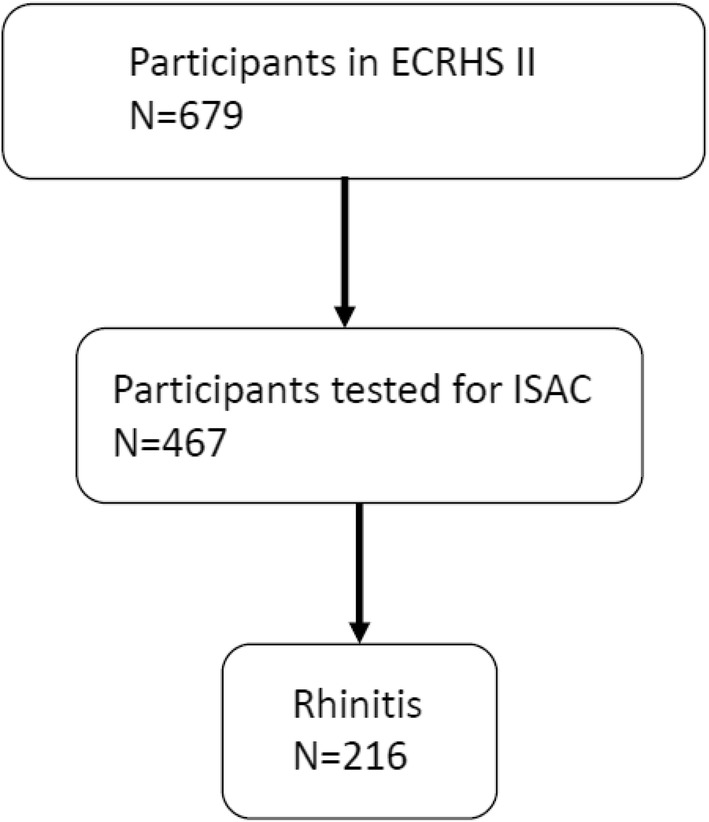
Methods: A total of 216 adult subjects with rhinitis from the European Community Respiratory Health Survey II were investigated with multiplex component allergen analysis (103 allergen components), total IgE, C-reactive protein, eosinophilic cationic protein, fractional exhaled nitric oxide and spirometry. Rhinitis, eczema, asthma and parental allergy were questionnaire-assessed.
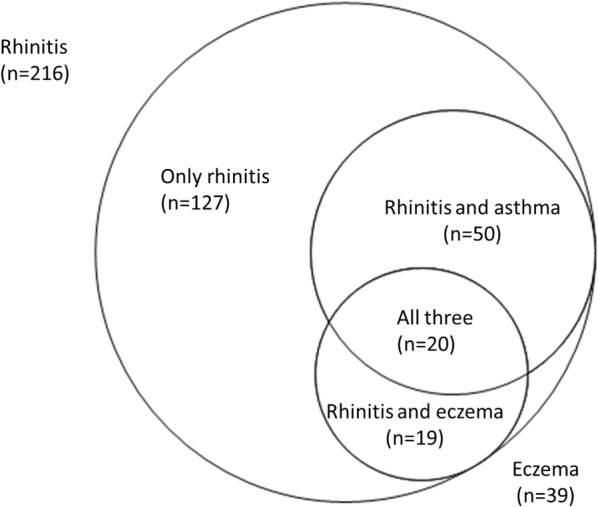
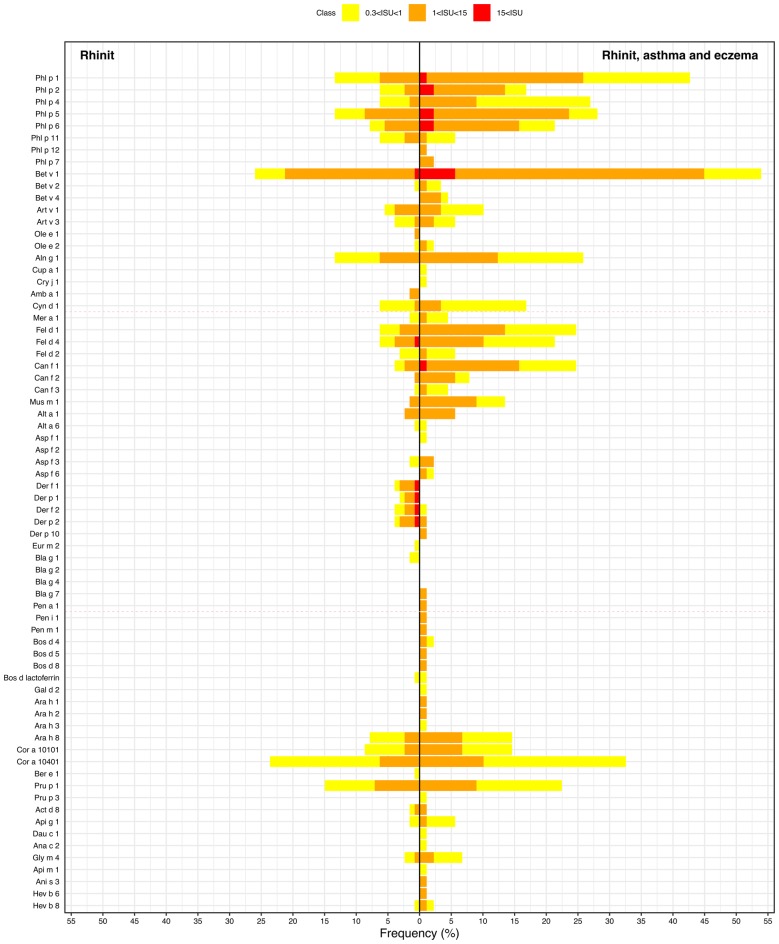
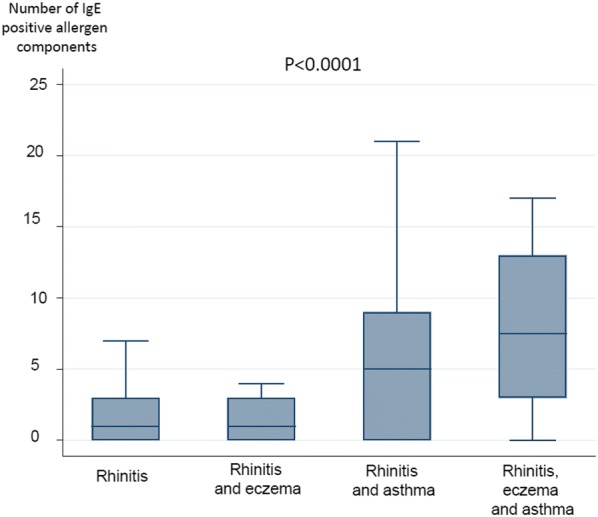
Results: Of the 216 participants with rhinitis, 89 also had asthma and/or eczema. Participants with rhinitis that also had asthma or eczema were more likely to be IgE-sensitized (3.44, odds ratio, OR: 95% CI 1.62-7.30, adjusted for sex, age, mother's allergy, total IgE and forced expiratory volume (FEV1)). The number of IgE-positive components was independently associated with atopic multimorbidity (1.11, OR: 95% Cl 1.01-1.21) adjusted for sex, age, mother's allergy, total IgE and FEV1. When analysing different types of sensitization, the strongest association with atopic multimorbidity was found in participants that were IgE-sensitized both to perennial and seasonal allergens (4.50, OR: 95% CI 1.61-12.5). Maternal allergy (2.75, OR: 95% CI 1.15-4.46), high total IgE (2.38, OR: 95% CI 1.21-4.67) and lower FEV1 (0.73, OR: 95% CI 0.58-0.93) were also independently associated with atopic multimorbidity, while no association was found with any of the other inflammatory markers.
Conclusion: IgE polysensitization, to perennial and seasonal allergens, and levels of total IgE seem to be the main determinants of atopic multimorbidity in subjects with rhinitis. This indicates that disease-modifying treatment that targets IgE sensitization may be of value when decreasing the risk of developing atopic multimorbidity.
Keywords: Asthma; Atopic multimorbidity; Eczema; Multiplex component analysis; Rhinitis.
© The Author(s) 2020.
Conflict of interest statement
Competing interestsMagnus P. Borres is affiliated with Thermofisher Scientific (Sweden) that also provided financial support for this study. No other author has reported any conflict of interest.
Figures
References
LinkOut - more resources
Full Text Sources
Research Materials
