Educating patients of diabetes mellitus for diabetic foot care
- PMID: 32110620
- PMCID: PMC7014829
- DOI: 10.4103/jfmpc.jfmpc_861_19
Educating patients of diabetes mellitus for diabetic foot care
Abstract
Background and purpose: Diabetes mellitus (DM) is a global pandemic. Among the spectrum of diabetic complications, diabetic foot is a leading cause of morbidity and hence awareness and education regarding primary healthcare inclusive of self-care pertaining to diabetic foot care is of paramount importance.
Aim: The aim of the study was to educate patients of DM regarding the disease and its associated complications, specifically pertaining to diabetic foot care.
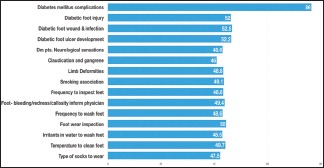
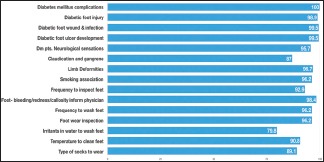
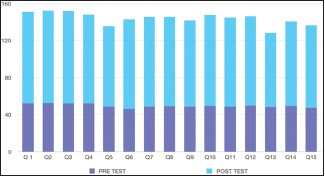
Methodology: The study was carried out in three phases, first was to assess the diabetic patients related to their awareness on disease complications and diabetic foot care, through pretest questionnaire, the second phase was to sensitize patients and educate them on the same, the third phase was to re assess the knowledge gained by the patients through posttest assessment.
Results: The study evaluated the absolute and relative learning gain regarding the awareness and knowledge of foot care among diabetic individuals. The absolute learning gain was 40.92% and the relative learning gain was 76.48% and normalized learning gain was 0. 88, the normalized gain was assessed to be high.
Conclusion: The study concluded that training and sensitizing individuals with diabetes will definitely help reduce morbidity of diabetic foot and hence the medical and paramedical staff need to spread awareness regards the same.
Keywords: Absolute learning gain; complications; diabetes mellitus; diabetic foot; normalized learning gain; relative learning gain.
Copyright: © 2020 Journal of Family Medicine and Primary Care.
Conflict of interest statement
There are no conflicts of interest.
Figures
References
-
- Mohan V, Mathur P, Deepa R, Deepa M, Shukla DK, Menon GR, et al. Urban rural differences in prevalence of self-reported diabetes in India–The WHO–ICMR Indian NCD risk factor surveillance. Diabetes Res Clin Pract. 2008;80:159–68. - PubMed
-
- Dixit S, Maiya A, Khetrapal H, Agrawal B, Vidyasagar S, Umakanth S. A questionnaire based survey on awareness of diabetic foot care in Indian population with diabetes: A cross-sectional multicentre study. Indian J Med Sci. 2011;65:411–23. - PubMed
-
- Abbott CA, Carrington AL, Ashe H, Bath S, Every LC, Griffiths J, et al. The North-West diabetes foot care study: Incidence of, and risk factors for, new diabetic foot ulceration in a community-based patient cohort. Diabetic Med. 2002;19:377–84. - PubMed
-
- Ramsey SD, Newton K, Blough D, McCulloch DK, Sandhu N, Reiber GE, et al. Incidence, outcomes, and cost of foot ulcers in patients with diabetes. Diabetes Care. 1999;22:382–7. - PubMed
-
- Boulton AJ, Armstrong DG, Albert SF, Frykberg RG, Hellman R, Kirkman MS, et al. Comprehensive foot examination and risk assessment: A report of the task force of the foot care interest group of the American diabetes association, with endorsement by the American association of clinica endocrinologists. Diabetes Care. 2008;31:1679–85. - PMC - PubMed