


Evaluation of the Genotoxic and Oxidative Damage Potential of Silver Nanoparticles in Human NCM460 and HCT116 Cells
- PMID: 32120830
- PMCID: PMC7084348
- DOI: 10.3390/ijms21051618
Evaluation of the Genotoxic and Oxidative Damage Potential of Silver Nanoparticles in Human NCM460 and HCT116 Cells
Abstract
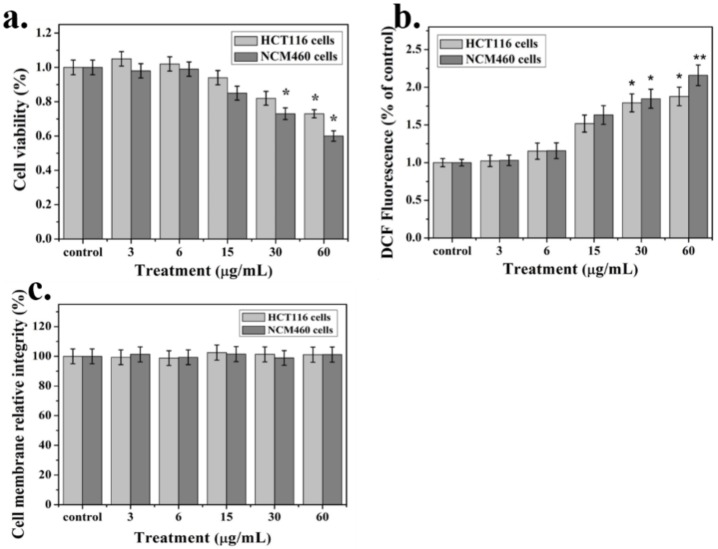
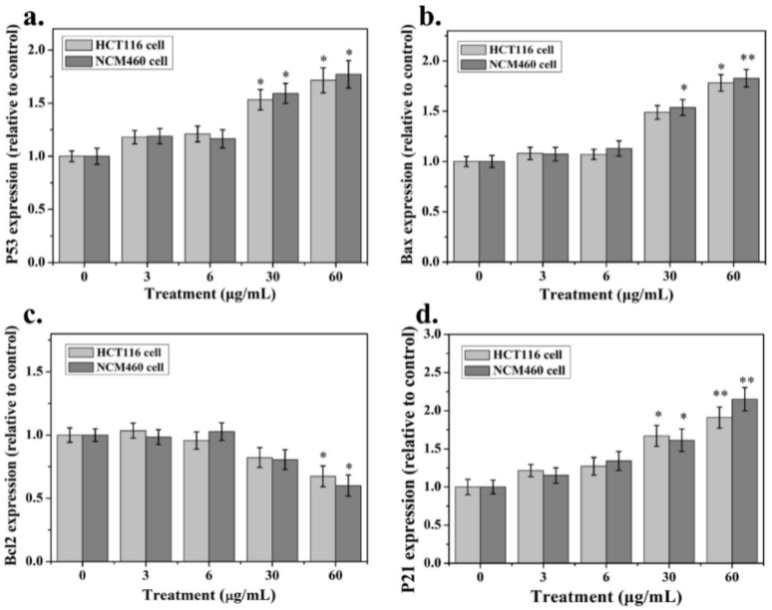
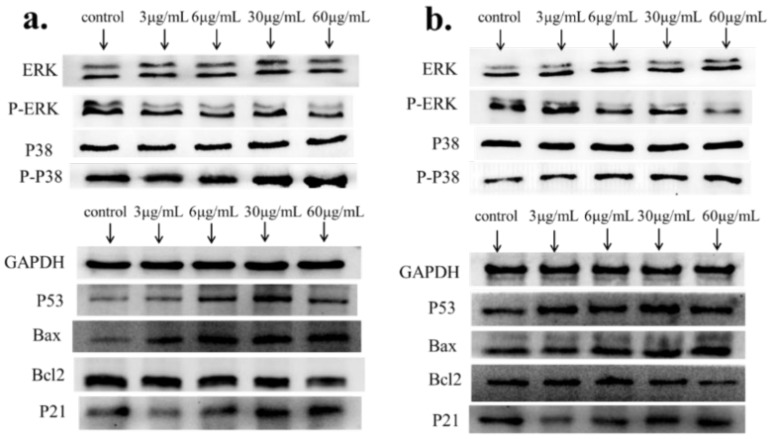
Nano Ag has excellent antibacterial properties and is widely used in various antibacterial materials, such as antibacterial medicine and medical devices, food packaging materials and antibacterial textiles. Despite the many benefits of nano-Ag, more and more research indicates that it may have potential biotoxic effects. Studies have shown that people who ingest nanoparticles by mouth have the highest uptake in the intestinal tract, and that the colon area is the most vulnerable to damage and causes the disease. In this study, we examined the toxic effects of different concentrations of Ag-NPs on normal human colon cells (NCM460) and human colon cancer cells (HCT116). As the concentration of nanoparticles increased, the activity of the two colon cells decreased and intracellular reactive oxygen species (ROS) increased. RT-qPCR and Western-blot analyses showed that Ag NPs can promote the increase in P38 protein phosphorylation levels in two colon cells and promote the expression of P53 and Bax. The analysis also showed that Ag NPs can promote the down-regulation of Bcl-2, leading to an increased Bax / Bcl-2 ratio and activation of P21, further accelerating cell death .This study showed that a low concentration of nano Ag has no obvious toxic effect on colon cells, while nano Ag with concentrations higher than 15 μg/mL will cause oxidative damage to colon cells.
Keywords: biological toxicity; colon cells; nano-Ag; oxidative damage.
Conflict of interest statement
The authors declare no conflict of interest.
Figures
References
MeSH terms
Substances
Grants and funding
- 2018YFE0110200 ,2015BAD05B02/National Key R&D Program of China
- 51774128/the National Natural Science Foundation of China
- 2018JJ4061, 2018JJ2090,2018JJ4009/the Natural Science Foundation of Hunan Province of China
- 2016NK2096, 2019NK2111 ,2019SK2121/the key program of Hunan Provincial Department of science and technology
- 2019TJ-Q01/Hunan Scientific Talents Promotion Program of Hunan Association for Science and Technology
LinkOut - more resources
Full Text Sources
Medical
Research Materials
Miscellaneous
