


The clinical promise of biomarkers of synapse damage or loss in Alzheimer's disease
- PMID: 32122400
- PMCID: PMC7053087
- DOI: 10.1186/s13195-020-00588-4
The clinical promise of biomarkers of synapse damage or loss in Alzheimer's disease
Abstract
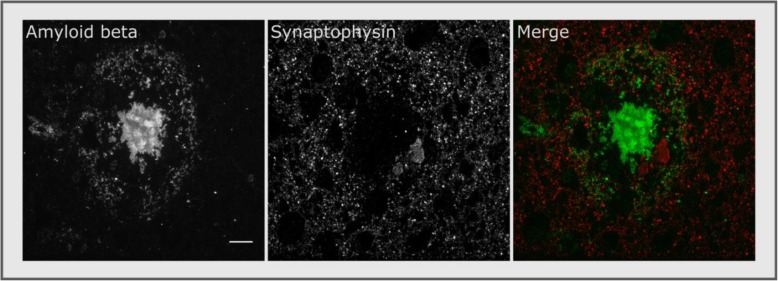
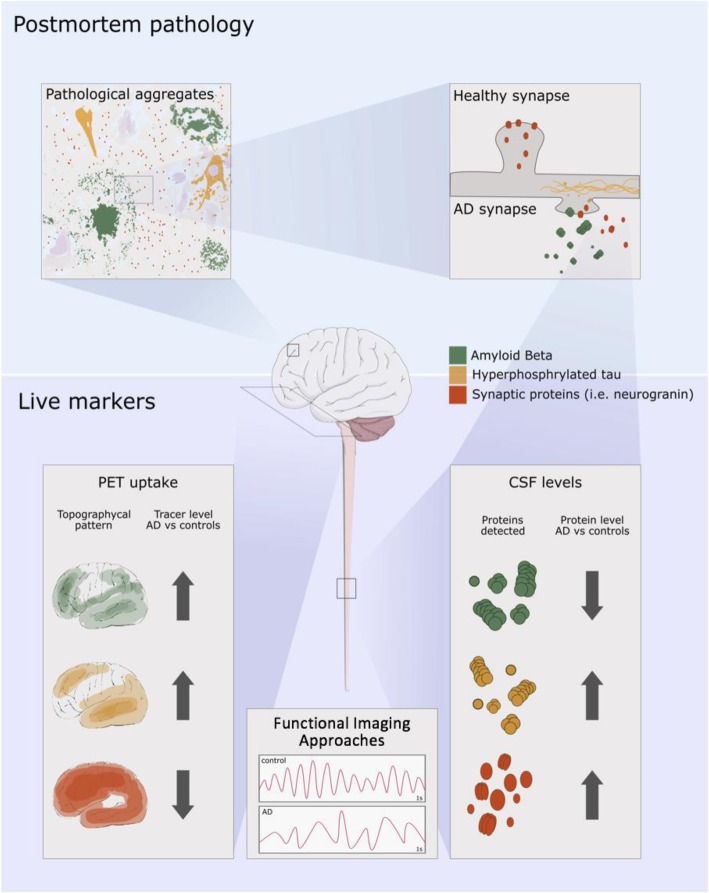
Background: Synapse damage and loss are fundamental to the pathophysiology of Alzheimer's disease (AD) and lead to reduced cognitive function. The goal of this review is to address the challenges of forging new clinical development approaches for AD therapeutics that can demonstrate reduction of synapse damage or loss. The key points of this review include the following: Synapse loss is a downstream effect of amyloidosis, tauopathy, inflammation, and other mechanisms occurring in AD.Synapse loss correlates most strongly with cognitive decline in AD because synaptic function underlies cognitive performance.Compounds that halt or reduce synapse damage or loss have a strong rationale as treatments of AD.Biomarkers that measure synapse degeneration or loss in patients will facilitate clinical development of such drugs.The ability of methods to sensitively measure synapse density in the brain of a living patient through synaptic vesicle glycoprotein 2A (SV2A) positron emission tomography (PET) imaging, concentrations of synaptic proteins (e.g., neurogranin or synaptotagmin) in the cerebrospinal fluid (CSF), or functional imaging techniques such as quantitative electroencephalography (qEEG) provides a compelling case to use these types of measurements as biomarkers that quantify synapse damage or loss in clinical trials in AD.
Conclusion: A number of emerging biomarkers are able to measure synapse injury and loss in the brain and may correlate with cognitive function in AD. These biomarkers hold promise both for use in diagnostics and in the measurement of therapeutic successes.
Keywords: Alzheimer’s disease; Biomarker; Cerebrospinal fluid; Electroencephalography; Positron emission tomography; Synapse.
Conflict of interest statement
Anthony Caggiano, Nicholas Izzo, and Susan Catalano are employees or have financial interest in Cognition Therapeutics, Inc. Henrik Zetterberg has served at scientific advisory boards for Cognition Therapeutics, Roche Diagnostics, Wave and Samumed; has given lectures in symposia sponsored by Biogen and Alzecure; and is a co-founder of Brain Biomarker Solutions in Gothenburg AB, a GU Ventures-based platform company at the University of Gothenburg. Tara Spires-Jones is a scientific advisory board member of Cognition Therapeutics and receives collaborative grant funding from two pharmaceutical companies. John Harrison has received consultancy payments and honoraria from the following organizations in the past 2 years: 23andMe, Alzecure, Aptinyx, Athira Pharma, Axon Neuroscience, Axovant, Biogen, Boehringer Ingelheim, CRF Bracket, Cognition Therapeutics, Compass Therapeutics, Curasen, DeNDRoN, EIP Pharma, Eisai, Eli Lilly, GfHEu, Heptares, Johnson & Johnson, Lundbeck, Lysosome Therapeutics, Merck, Neurodyn, Neurotrack, Novartis, Nutricia, Probiodrug, Regeneron, Rodin Therapeutics, Roivant, Sanofi, Takeda, vTv Therapeutics, and Winterlight Labs. Kaj Blennow has served as a consultant or at advisory boards for Alector, Biogen, Cognition Therapeutics, Lilly, MagQu, Novartis, and Roche Diagnostics and is a co-founder of Brain Biomarker Solutions in Gothenburg AB, a GU Ventures-based platform company at the University of Gothenburg. Christopher van Dyck has served as a consultant or scientific advisor in the past 2 years for Roche, Eisai, and Kyowa Kirin and received grant support for clinical trials from Roche, Genentech, Eisai, Biogen, Eli Lilly, Novartis, Merck, Biohaven, and Janssen. Lon Schneider reports grants and personal fees from Eli Lilly, personal fees from Avraham, Ltd., personal fees from Boehringer Ingelheim, grants and personal fees from Merck, personal fees from Neurim, Ltd., personal fees from Neuronix, Ltd., personal fees from Cognition Therapeutics, personal fees from Eisai, personal fees from Takeda, personal fees from vTv, grants and personal fees from Roche/Genentech, grants from Biogen, grants from Novartis, personal fees from Abbott, and grants from Biohaven, outside the submitted work. Philip Scheltens reports consultancies with Axon Neuroscience, Cognition Therapeutics, Vivoryon, and Novartis, as well as a DSMB membership with Genentech. Michael Grundman is a paid consultant to Cognition Therapeutics. Howard Fillit has been a consultant to Axovant, vTv, Lundbeck, Otsuka, Lilly, Biogen (RTI), Roche, Genentech, Merck, Samus, Pfizer, and Alector in the past 5 years and has no conflicts that are related to this manuscript. Steven T. DeKosky is a member of the Neuroscience Advisory Board for Amgen, Chair of the Medical Scientific Advisory Board for Acumen, Chair of the Drug Monitoring Committee for Biogen, Chair of the Medical Advisory Board for Cognition Therapeutics, and Editor for Dementia for UpToDate. Martí Colom Cadena and Willem de haan declare that they have no competing interests.
Figures
References
-
- Nichols E, Szoeke CEI, Vollset SE, Abbasi N, Abd-Allah F, Abdela J, et al. Global, regional, and national burden of Alzheimer’s disease and other dementias, 1990–2016: a systematic analysis for the Global Burden of Disease Study 2016. Lancet Neurol. 2019;18(1):88–106. doi: 10.1016/S1474-4422(18)30403-4. - DOI - PMC - PubMed
-
- Association A. 2018 Alzheimer’s disease facts and figures. Alzheimer’s Dement. Elsevier; 2018; 14(3):367–429 [cited 2018 Jun 18]. Available from: https://www.sciencedirect.com/science/article/pii/S1552526018300414.
Publication types
MeSH terms
Substances
Grants and funding
LinkOut - more resources
Full Text Sources
Medical
