


Concentrations of 137Cs radiocaesium in the organs and tissues of low-dose-exposed wild Japanese monkeys
- PMID: 32122403
- PMCID: PMC7053083
- DOI: 10.1186/s13104-020-04972-z
Concentrations of 137Cs radiocaesium in the organs and tissues of low-dose-exposed wild Japanese monkeys
Abstract
Objectives: Following the massive earthquake that struck eastern Japan on March 11, 2011, a large amount of radioactive material was released into the environment from the damaged reactor of the Fukushima Daiichi Nuclear Power Plant (FDNPP). After the FDNPP accident, radiocaesium was first detected in muscle samples from wild Japanese monkeys exposed to radioactive materials, and haematologic effects, changes in head size, and delayed body weight gain were also reported, but little is known about the distribution of 137Cs in the organs and tissues of wild Japanese monkeys.
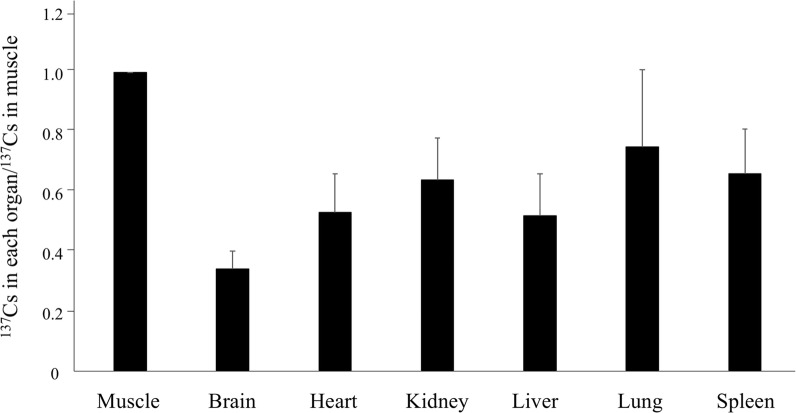
Results: We detected the 137Cs in various organ and tissue samples of 10 wild Japanese monkeys inhabiting the forested areas of Fukushima City that were captured between July and August 2012. Among muscle, brain, heart, kidney, liver, lung, and spleen, muscle exhibited the highest and the brain the lowest 137Cs concentration. The concentration (mean ± SD) of 137Cs in muscle, brain, heart, kidney, liver, lung, and spleen was 77 ± 66, 26 ± 22, 41 ± 35, 49 ± 41, 41 ± 38, 53 ± 41, and 53 ± 51 Bq/kg, respectively. These results can help us understand the biological effects of long-term internal radiation exposure in non-human primates.
Keywords: Caesium; Fukushima Daiichi Nuclear disaster; Japanese monkeys; Radioactive contamination.
Conflict of interest statement
The authors declare that they have no competing interests.
Figures
References
MeSH terms
Substances
LinkOut - more resources
Full Text Sources
