


Structural Determinants of Black MSM HIV Testing Coverage (2011-2016)
- PMID: 32124108
- PMCID: PMC7444860
- DOI: 10.1007/s10461-020-02814-4
Structural Determinants of Black MSM HIV Testing Coverage (2011-2016)
Abstract
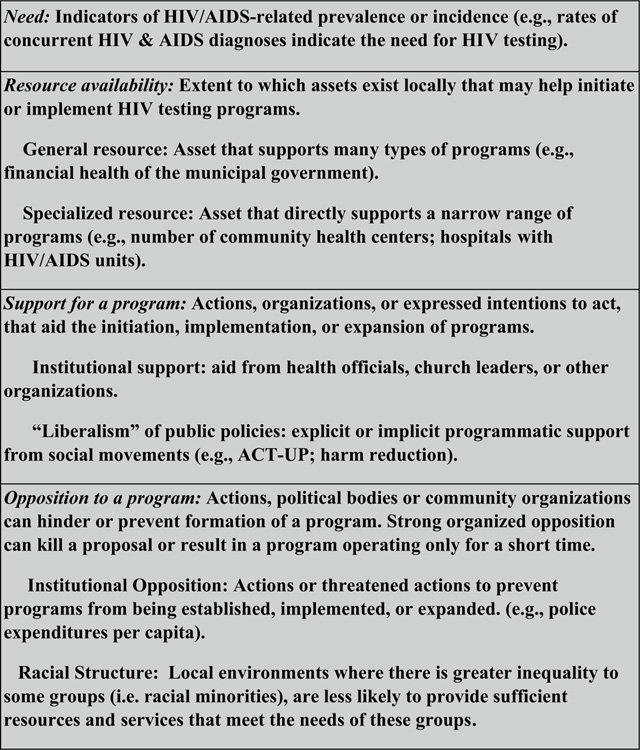
Over 30 years into the US HIV/AIDS epidemic, Black men who have sex with men (BMSM) continue to carry the highest burden of both HIV and AIDS cases. There is then, an urgent need to expand access to HIV prevention and treatment for all gay and bisexual men, underscoring the importance of the federal initiative 'Ending the Epidemic: A Plan for America'. This research examines structural factors associated with BMSM HIV testing coverage over time (2011-2016) in 85 US Metropolitan Statistical Areas (MSAs). We calculated MSA-specific annual measures of BMSM HIV testing coverage (2011-2016). Variables suggested by the Theory of Community Action (i.e., need, resource availability, institutional opposition and organized support) were analyzed as possible predictors of coverage using multilevel modeling. Relationships between BMSM HIV testing and the following covariates were positive: rates of BMSM living with HIV (b = 0.28), percent of Black residents employed (b = 0.19), Black heterosexual testing rate (b = 0.46), health expenditures per capita (b = 0.16), ACT UP organization presence in 1992 (b = 0.19), and syringe service presence (b = 0.12). Hard drug arrest rates at baseline (b = - 0.21) and change since baseline (b = - 0.10) were inversely associated with the outcome. Need, resources availability, organized support and institutional opposition are important determinants of place associated with BMSM HIV testing coverage. Efforts to reduce HIV incidence and lessen AIDS-related disparities among BMSM in the US require improved and innovative HIV prevention approaches directed toward BMSM including a fuller understanding of structural factors that may influence place variation in BMSM testing patterns and risk behavior in places of high need.
Keywords: Black MSM; HIV testing; Place research; Structural determinants; Theory of community action; US Metropolitan Statistical Areas.
Figures
References
-
- Centers for Disease Control and Prevention. HIV infection risk, prevention, and testing behaviors among men who have sex with men—National HIV Behavioral Surveillance, 23 U.S. Cities, 2017. HIV Surveillance Special Report 22. https://www.cdc.gov/hiv/library/reports/hiv-surveillance.html. Published February 2019. Accessed July 2019.
-
- Centers for Disease Control and Prevention. HIV Surveillance Report, Diagnoses of HIV Infection in the United States and Dependent Areas, 2017, Vol. 29; November 2018. HIV diagnosis data are estimates from 50 states, the District of Columbia, and 6 U.S. dependent areas.
-
- Centers for Disease Control and Prevention. Estimated HIV incidence and prevalence in the United States, 2010–2016: New HIV Infections among Gay and Bisexual Men. HIV Surveillance Supplemental Report June 2019; 24.
-
- Centers for Disease Control and Prevention. HIV infection risk, prevention, and testing behaviors among men who have sex with men—National HIV Behavioral Surveillance, 20 U.S. cities, 2014. HIV Surveillance Special Report. 2016;15.
MeSH terms
Grants and funding
LinkOut - more resources
Full Text Sources
Medical
