


Variation in photosynthetic induction between rice accessions and its potential for improving productivity
- PMID: 32124982
- PMCID: PMC7383871
- DOI: 10.1111/nph.16454
Variation in photosynthetic induction between rice accessions and its potential for improving productivity
Abstract
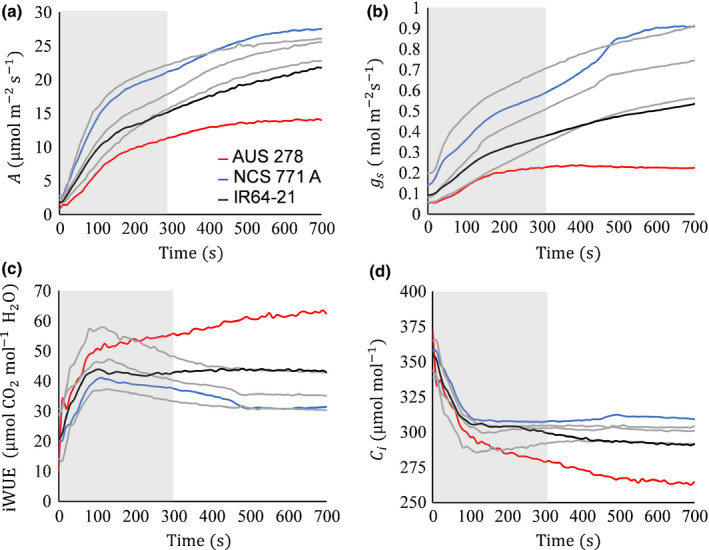
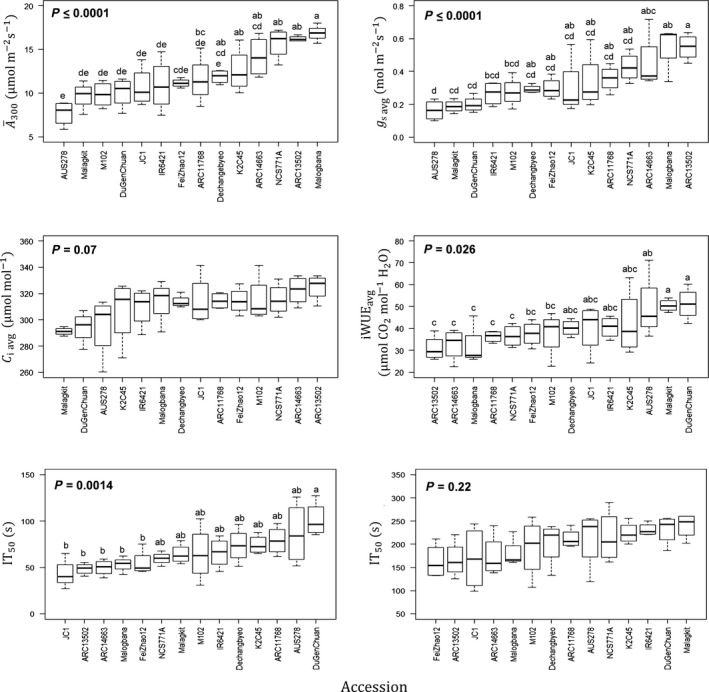
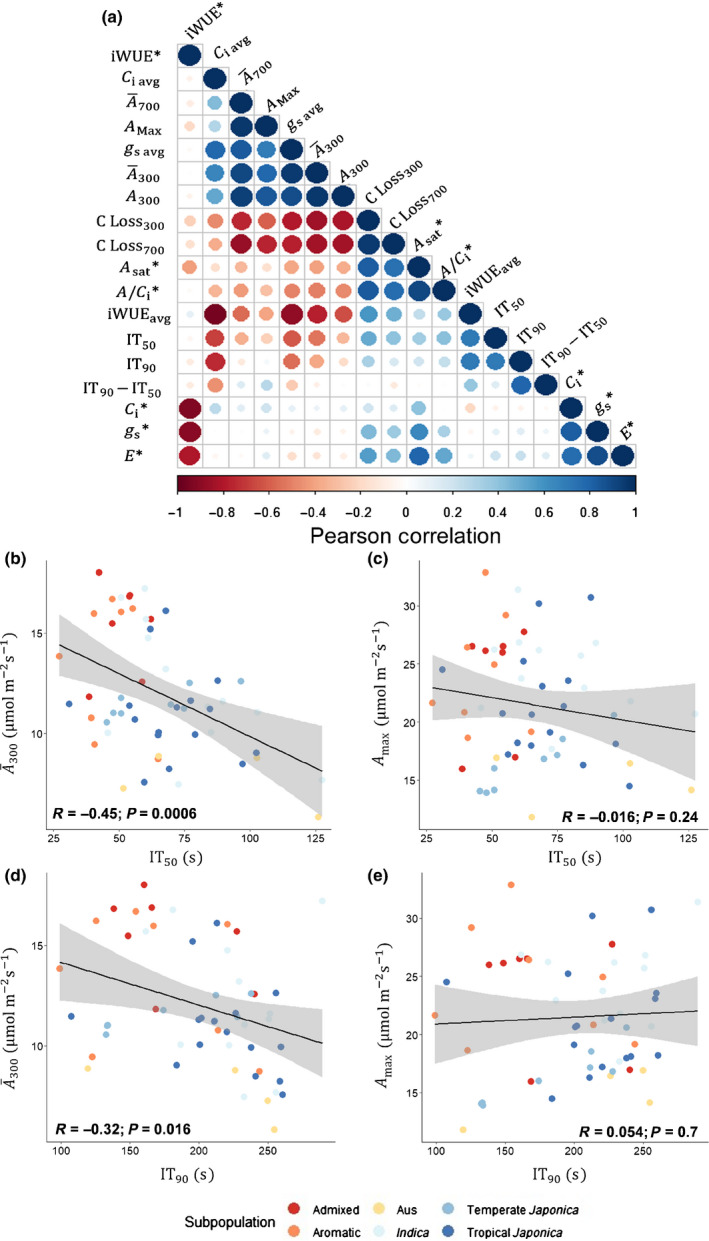
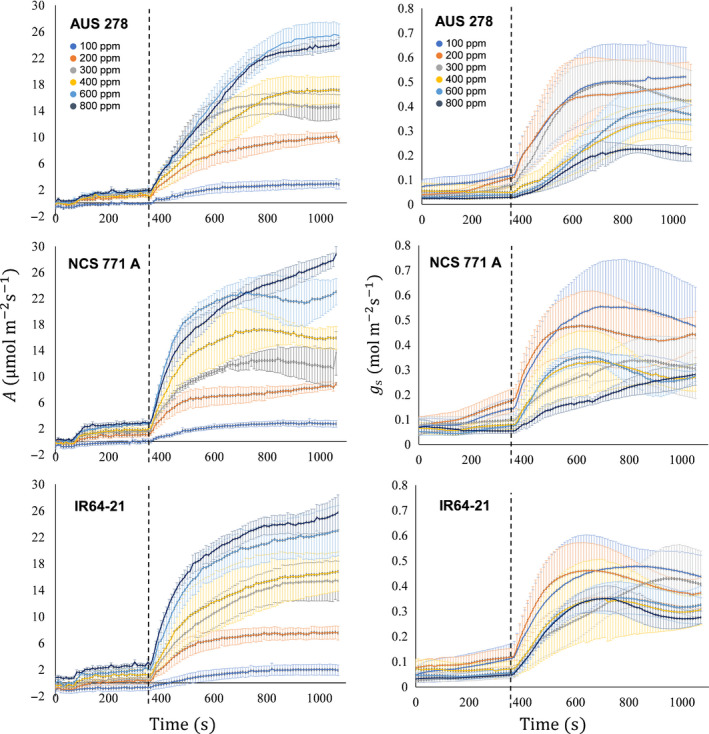
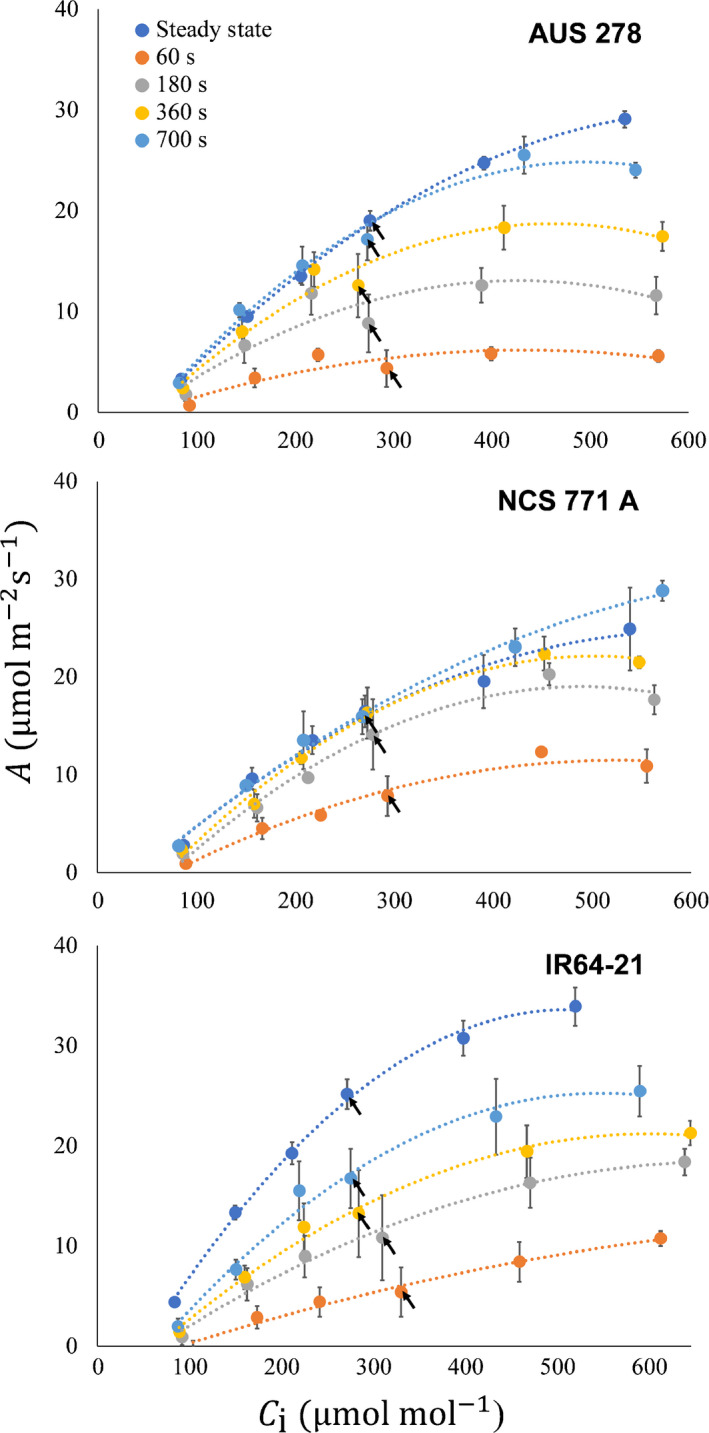
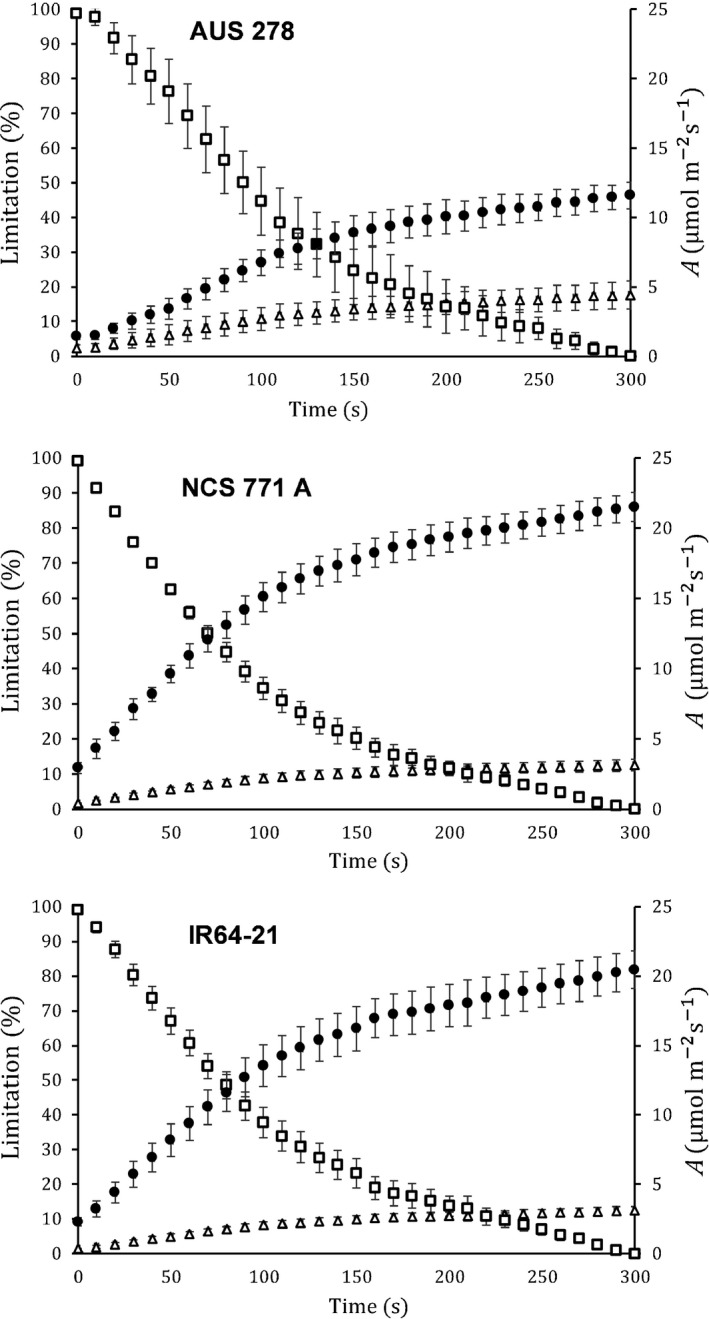
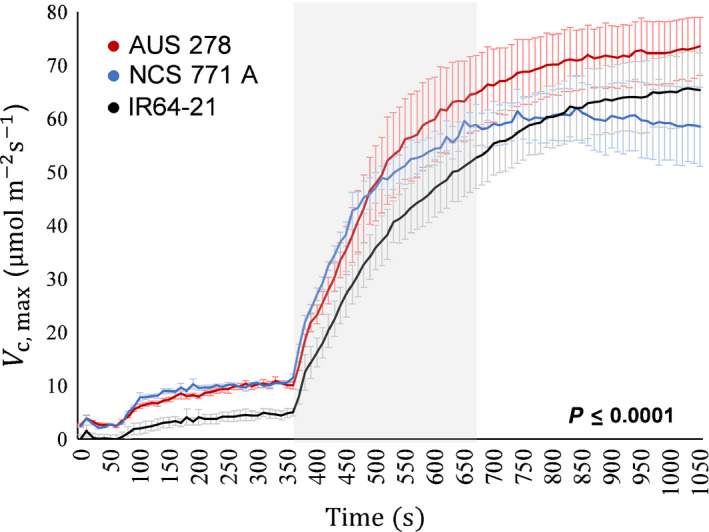
Photosynthetic induction describes the transient increase in leaf CO2 uptake with an increase in light. During induction, efficiency is lower than at steady state. Under field conditions of fluctuating light, this lower efficiency during induction may cost > 20% of potential crop assimilation. Accelerating induction would boost photosynthetic and resource-use efficiencies. Variation between rice accessions and potential for accelerating induction was analysed by gas exchange. Induction during shade to sun transitions of 14 accessions representing five subpopulations from the 3000 Rice Genome Project Panel (3K RGP) was analysed. Differences of 109% occurred in the CO2 fixed during the first 300 s of induction, 117% in the half-time to completion of induction, and 65% in intrinsic water-use efficiency during induction, between the highest and lowest performing accessions. Induction in three accessions with contrasting responses (AUS 278, NCS 771 A and IR64-21) was compared for a range of [CO2 ] to analyse limitations. This showed in vivo capacity for carboxylation at Rubisco (Vc,max ), and not stomata, as the primary limitation to induction, with significant differences between accessions. Variation in nonsteady-state efficiency greatly exceeded that at steady state, suggesting a new and more promising opportunity for selection of greater crop photosynthetic efficiency in this key food crop.
Keywords: Rubisco activase; dynamic photosynthesis; food security; photosynthesis; photosynthetic induction; rice; stomata; water-use efficiency.
© 2020 The Authors. New Phytologist © 2020 New Phytologist Trust.
Figures
Comment in
-
Start me up; harnessing natural variation in photosynthetic induction to improve crop yields.New Phytol. 2020 Aug;227(4):989-991. doi: 10.1111/nph.16634. Epub 2020 May 22. New Phytol. 2020. PMID: 32441779 No abstract available.
References
-
- Ainsworth EA. 2008. Rice production in a changing climate: a meta‐analysis of responses to elevated carbon dioxide and elevated ozone concentration. Global Change Biology 14: 1642–1650.
-
- von Caemmerer S, Farquhar GD. 1981. Some relationships between the biochemistry of photosynthesis and the gas‐exchange of leaves. Planta 153: 376–387. - PubMed
-
- Cai C, Yin X, He S, Jiang W, Si C, Struik PC, Luo W, Li G, Xie Y, Pan G. 2015. Responses of wheat and rice to factorial combinations of ambient and elevated CO2 and temperature in FACE experiments. Global Change Biology 22: 856–874. - PubMed
-
- Carmo‐Silva E, Scales JC, Madgwick PJ, Parry MAJ. 2014. Optimizing Rubisco and its regulation for greater resource use efficiency. Plant, Cell & Environment 38: 1817–1832. - PubMed
Publication types
MeSH terms
Substances
LinkOut - more resources
Full Text Sources
Other Literature Sources
