


Trichoderma from Brazilian garlic and onion crop soils and description of two new species: Trichoderma azevedoi and Trichoderma peberdyi
- PMID: 32130211
- PMCID: PMC7055844
- DOI: 10.1371/journal.pone.0228485
Trichoderma from Brazilian garlic and onion crop soils and description of two new species: Trichoderma azevedoi and Trichoderma peberdyi
Abstract
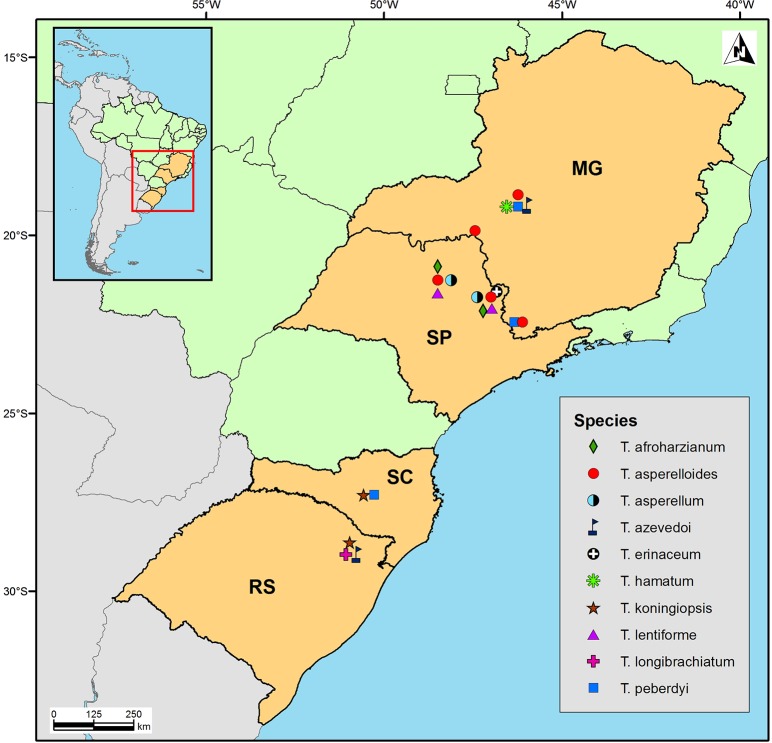
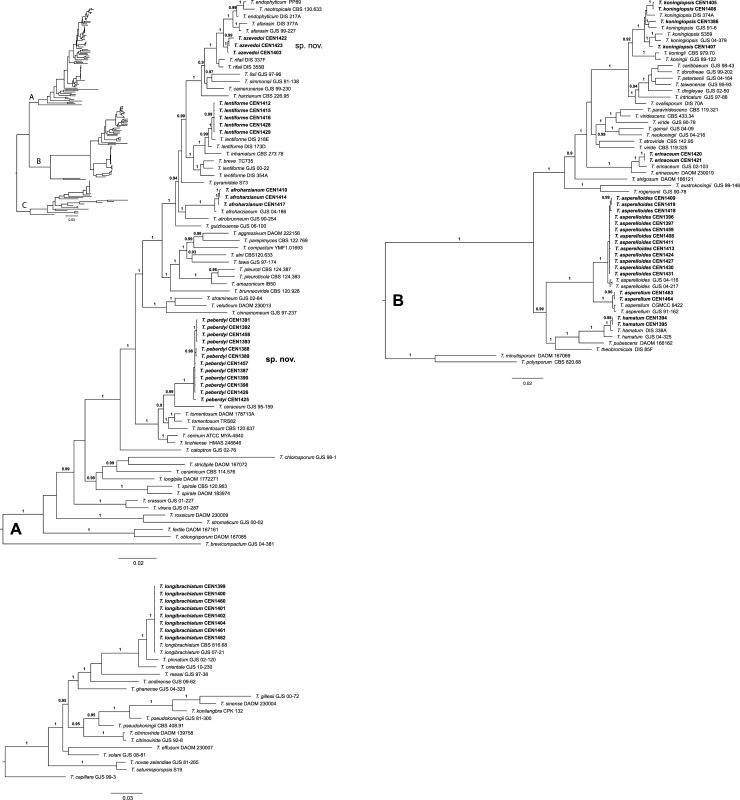
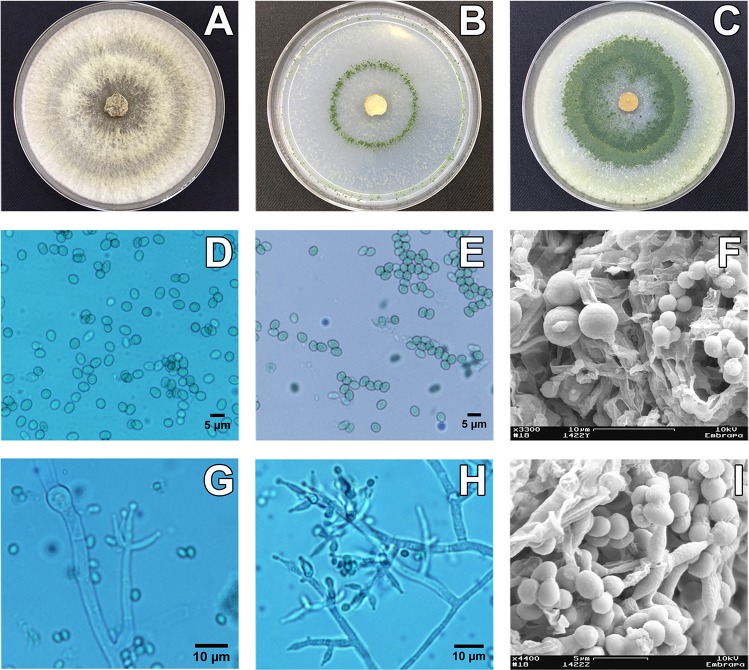
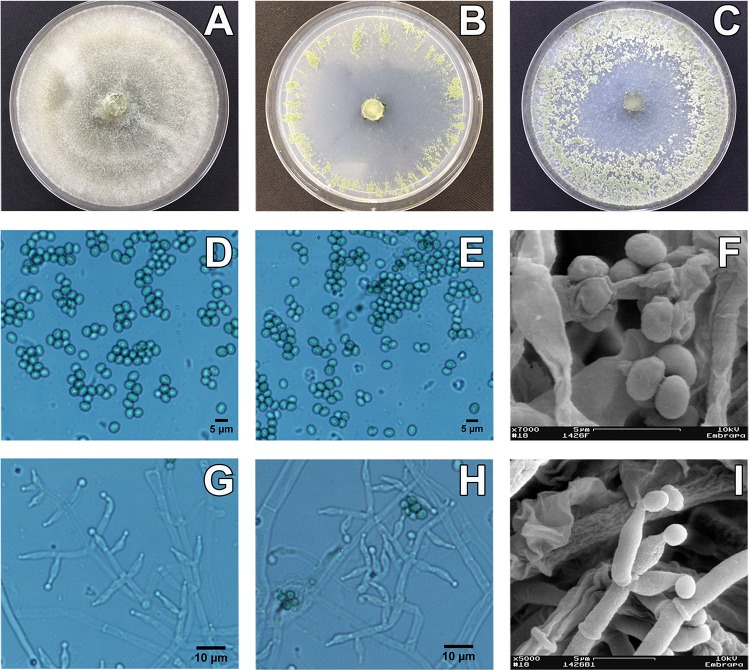
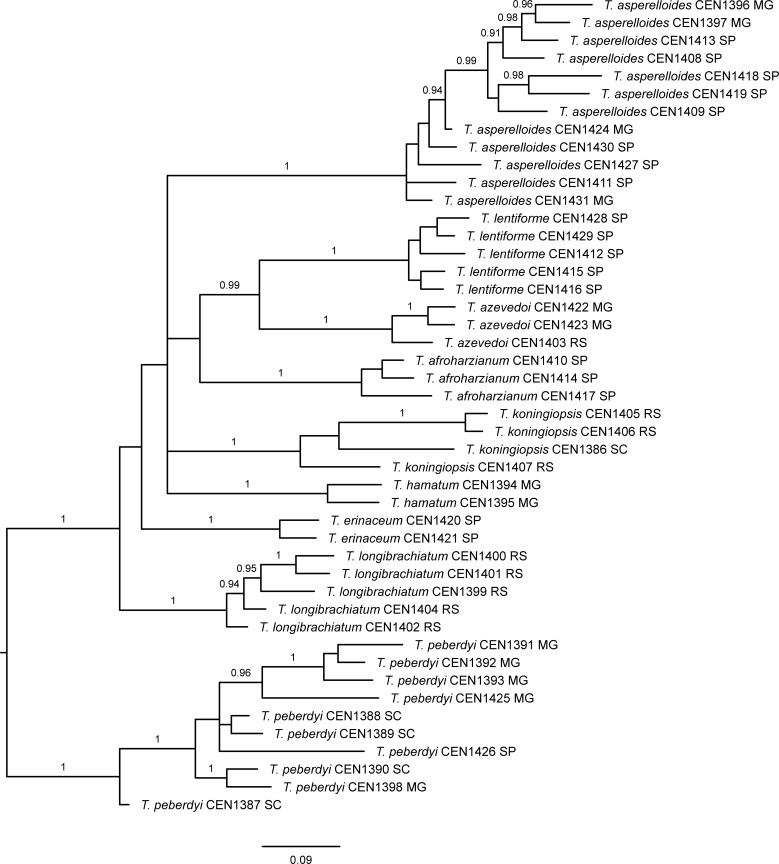
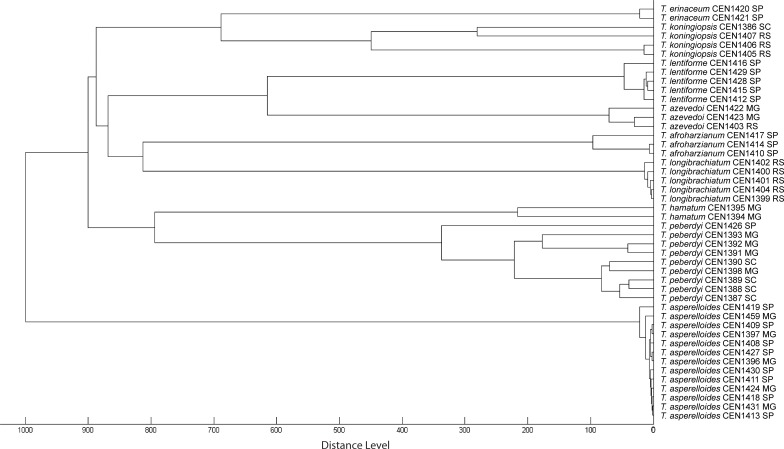
Fifty four Trichoderma strains were isolated from soil samples collected from garlic and onion crops in eight different sites in Brazil and were identified using phylogenetic analysis based on combined ITS region, tef1-α, cal, act and rpb2 sequences. The genetic variability of the recovered Trichoderma species was analysed by AFLP and their phenotypic variability determined using MALDI-TOF. The strain clusters from both typing techniques coincided with the taxonomic determinations made from phylogenetic analysis. The phylogenetic analysis showed the occurrence of Trichoderma asperellum, Trichoderma asperelloides, Trichoderma afroharzianum, Trichoderma hamatum, Trichoderma lentiforme, Trichoderma koningiopsis, Trichoderma longibrachiatum and Trichoderma erinaceum, in the soil samples. We also identified and describe two new Trichoderma species, both in the harzianum clade of section Pachybasium, which we have named Trichoderma azevedoi sp. nov. and Trichoderma peberdyi sp. nov. The examined strains of both T. azevedoi (three strains) and T. peberdyi (12 strains) display significant genotypic and phenotypic variability, but form monophyletic clades with strong bootstrap and posterior probability support and are morphologically distinct from their respective most closely related species.
Conflict of interest statement
The authors have declared that no competing interests exist.
Figures
References
-
- Entwistle AR. Root diseases In: Rabinowitch HD editor. Onions and Allied Crops. CRC Press, Boca Raton, Florida; 1990. pp. 103–154. 10.1201/9781351075169 - DOI
-
- Oliveira ML, De Marchi BR, Mituti T, Pavan MA, Krause-Sakate R. Identification and sequence analysis of five allexiviruses species infecting garlic crops in Brazil. Trop Plant Pathol. 2014;39: 483–489. 10.1590/S1982-56762014000600011 - DOI
-
- Resende JTV de, Morales RGF, Zanin DS, Resende F V, Paula JT de, Dias DM, et al. Caracterização morfológica, produtividade e rendimento comercial de cultivares de alho. Hortic Bras. 2013;31: 157–162. 10.1590/S0102-05362013000100025 - DOI
-
- Clarkson JP, Payne T, Mead A, Whipps JM. Selection of fungal biological control agents of Sclerotium cepivorum for control of white rot by sclerotial degradation in a UK soil. Plant Pathol. 2002;51: 735–745. 10.1046/j.1365-3059.2002.00787.x - DOI
Publication types
MeSH terms
Substances
LinkOut - more resources
Full Text Sources
