


The epidemiology of chronic kidney disease (CKD) in rural East Africa: A population-based study
- PMID: 32130245
- PMCID: PMC7055898
- DOI: 10.1371/journal.pone.0229649
The epidemiology of chronic kidney disease (CKD) in rural East Africa: A population-based study
Abstract
Background: Chronic kidney disease (CKD) may be common among individuals living in sub-Saharan Africa due to the confluence of CKD risk factors and genetic predisposition.
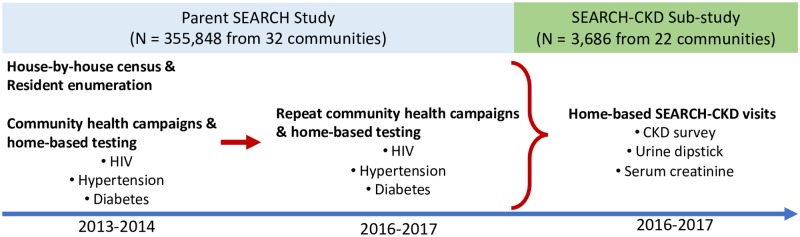
Methods: We ascertained the prevalence of CKD and its risk factors among a sample of 3,686 participants of a population-based HIV trial in rural Uganda and Kenya. Prevalent CKD was defined as a serum creatinine-based estimated glomerular filtration rate <60 mL/min/1.73m2 or proteinuria (urine dipstick ≥1+). We used inverse-weighting to estimate the population prevalence of CKD, and multivariable log-link Poisson models to assess the associations of potential risk factors with CKD.
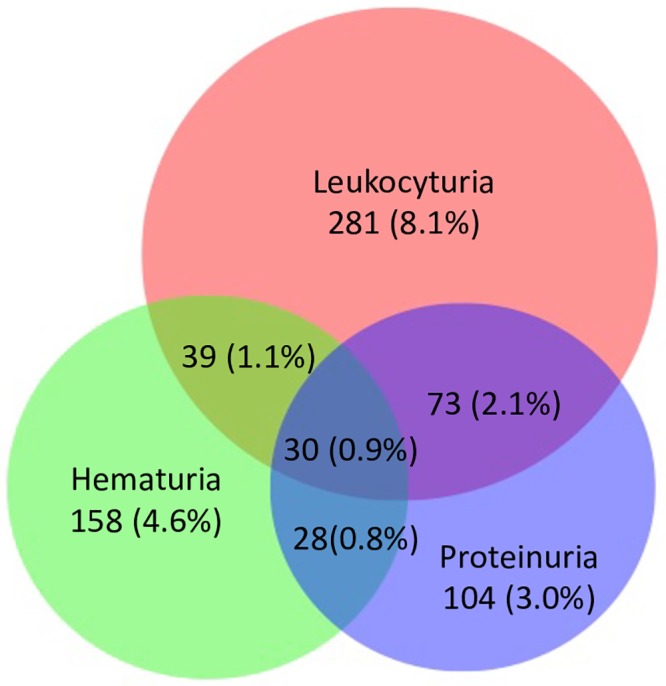
Results: The estimated CKD prevalence was 6.8% (95% CI 5.7-8.1%) overall and varied by region, being 12.5% (10.1-15.4%) in eastern Uganda, 3.9% (2.2-6.8%) in southwestern Uganda and 3.7% (2.7-5.1%) in western Kenya. Risk factors associated with greater CKD prevalence included age ≥60 years (adjusted prevalence ratio [aPR] 3.5 [95% CI 1.9-6.5] compared with age 18-29 years), HIV infection (aPR 1.6 [1.1-2.2]), and residence in eastern Uganda (aPR 3.9 [2.6-5.9]). However, two-thirds of individuals with CKD did not have HIV, diabetes, or hypertension as risk factors. Furthermore, we noted many individuals who did not have proteinuria had dipstick positive leukocyturia or hematuria.
Conclusion: The prevalence of CKD is appreciable in rural East Africa and there are considerable regional differences. Conventional risk factors appear to only explain a minority of cases, and leukocyturia and hematuria were common, highlighting the need for further research into understanding the nature of CKD in sub-Saharan Africa.
Conflict of interest statement
We hereby acknowledge as a Competing Interests Statement that Gilead Sciences, a commercial funder, provided nonfinancial support via medication donations to the parent SEARCH study, and previously provided an honorarium to one of the co-authors (Dr. Estrella). Gilead Sciences did not have any additional role in the study design, data collection and analysis, decision to publish, preparation of the manuscript or in any other way. The specific roles of Dr. Estrella are articulated in the ‘author contributions’ section. This acknowledgement does not alter the authors’ adherence to PLOS ONE policies on sharing data and materials.
Figures
References
-
- GBD 2015 Disease and Injury Incidence and Prevalence Collaborators. Global, regional, and national incidence, prevalence, and years lived with disability for 310 diseases and injuries, 1990–2015: a systematic analysis for the Global Burden of Disease Study 2015. Lancet. 2016;388(10053):1545–602. Epub 2016/10/14. 10.1016/S0140-6736(16)31678-6 - DOI - PMC - PubMed
