


The screening score of Mini Nutritional Assessment (MNA) is a useful routine screening tool for malnutrition risk in patients on maintenance dialysis
- PMID: 32130271
- PMCID: PMC7055863
- DOI: 10.1371/journal.pone.0229722
The screening score of Mini Nutritional Assessment (MNA) is a useful routine screening tool for malnutrition risk in patients on maintenance dialysis
Abstract
Purpose: Malnutrition is prevalent in patients on dialysis and is associated with morbidity and mortality. Nutritional status can be assessed by a variety of biochemical and physical parameters or nutritional assessment scores. Most of these methods are expensive or cumbersome to use and are not suitable for routine repetitive follow-up in dialysis patients. The Mini Nutritional Assessment (MNA) has a short form screening set (MNA-SF), which would be suitable as a screening tool, but has not been validated yet in dialysis patients. We aimed to assess whether the MNA is an appropriate tool for identifying nutritional problems in dialysis patients.
Method: MNA, routine biochemistry, physical parameters, comorbidities were assessed in cross-sectional multicentric cohorts of hemodialysis and peritoneal dialysis patients with a longitudinal follow up of 2 years for mortality.
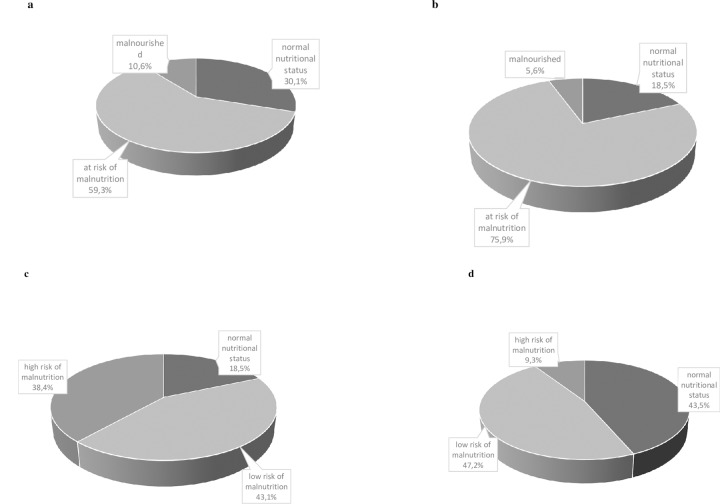
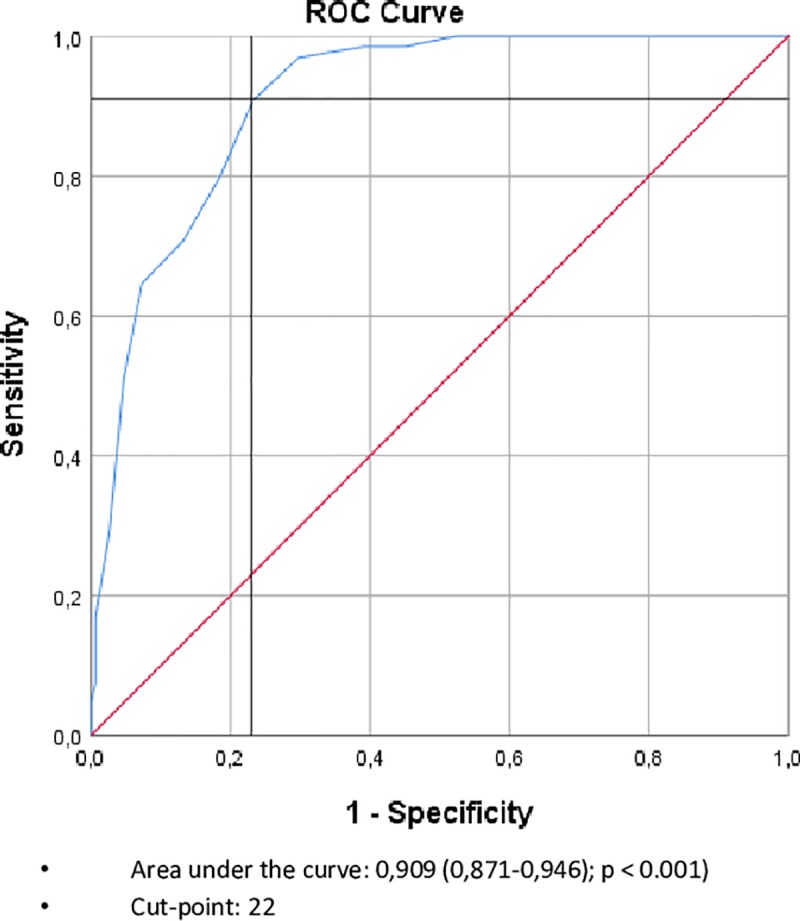
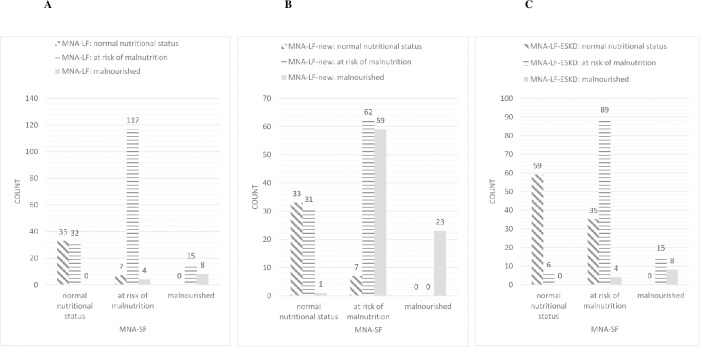
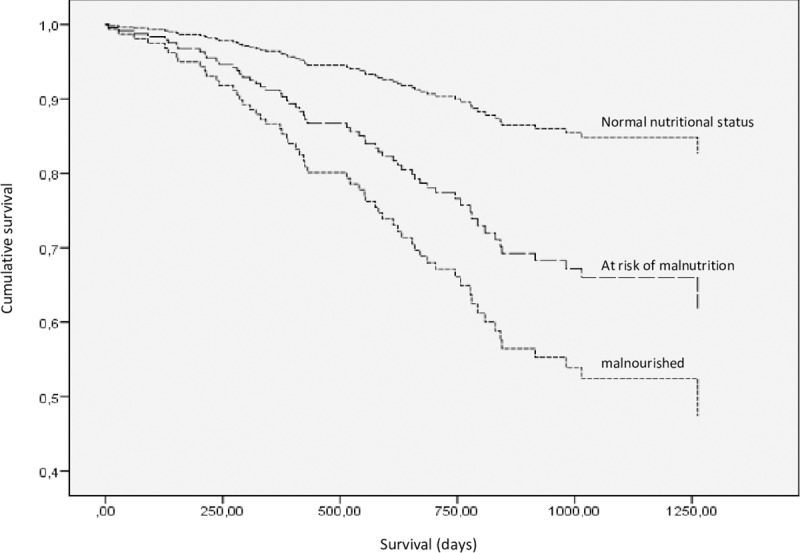
Results: In this cohort of 216 patients, mortality was 27.3% at a follow up of 750±350 days. The mean MNA-SF score was 9.9±1.8, with 30.1%, 59.3% and 10.6% of patients categorized as having normal nutritional status, at risk for malnutrition and malnourished, respectively. The screening score was associated with mortality (HR 0.86, 95% CI 0.75-0.98 per point). With normal nutrition as reference, adjusted mortality was 2.50 (95% CI 1.16-5.37) and 3.89 (95% CI 1.48-10.13) for patients at risk for malnutrition and with malnutrition, respectively. After recalibrating the MNA full score for the specificity of some of its domains for dialysis patients, the MNA-SF had a good sensitivity and specificity for not being well nourished (0.95 and 0.63 respectively) in the full score, and a high negative predictive value (0.91).
Conclusion: The MNA-SF is independently associated with 2 year mortality in dialysis patients. It has a high negative predictive value for excluding being at risk or having malnutrition in the full score. Therefore, it can be advocated as a screening tool for nutritional status in dialysis patients.
Conflict of interest statement
The authors have declared that no competing interests exists.
Figures
References
-
- Bilgic A, Akgul A, Sezer S, Arat Z, Ozdemir FN, Haberal M. Nutritional status and depression, sleep disorder, and quality of life in hemodialysis patients. Journal of renal nutrition: the official journal of the Council on Renal Nutrition of the National Kidney Foundation. 2007;17(6):381–8. Epub 2007/11/01. 10.1053/j.jrn.2007.08.008 . - DOI - PubMed
-
- Laws RA, Tapsell LC, Kelly J. Nutritional status and its relationship to quality of life in a sample of chronic hemodialysis patients. Journal of renal nutrition: the official journal of the Council on Renal Nutrition of the National Kidney Foundation. 2000;10(3):139–47. Epub 2000/08/02. 10.1053/jren.2000.7412 . - DOI - PubMed
-
- Piccoli GB, Moio MR, Fois A, Sofronie A, Gendrot L, Cabiddu G, et al. The Diet and Haemodialysis Dyad: Three Eras, Four Open Questions and Four Paradoxes. A Narrative Review, Towards a Personalized, Patient-Centered Approach. Nutrients. 2017;9(4). Epub 2017/04/11. 10.3390/nu9040372 - DOI - PMC - PubMed
Publication types
MeSH terms
LinkOut - more resources
Full Text Sources
Medical
